

Blog
Why 70+ Latin American Buyers Choose Chinese CNC Cutting Machine Manufacturers

Latin America CNC Cutting Machine Buyers Guide for Brazil Mexico Colombia
Most Latin American CNC cutting machine buyers still tie low minimum order quantity to poor product quality, a myth that costs local industrial and trading segments up to 30% in avoidable long-term costs. For machinery wholesalers, garment factories, packaging producers and leather goods manufacturers across Brazil, Mexico and Colombia, the priority for selecting a supplier is no longer chasing the lowest initial purchase price. Instead, aligning supplier capabilities with local production scenario demands directly cuts cross-cutting costs across procurement, operation and maintenance.
The optimal solution for local purchasers is to partner with a verified high-tech Chinese manufacturer that supports flexible MOQ, multi-material compatibility and localized full-cycle support, which delivers 2x higher total cost savings over 3 years than generic bulk equipment. This approach eliminates common post-purchase pitfalls including unplanned rework, excessive material waste and delayed maintenance, while matching the order flexibility required by both small-batch custom projects and large-scale resale operations.
As a consultant who has supported over 70 industrial clients across Latin America in CNC equipment selection since 2019, I have repeatedly seen buyers overspend on overspec local equipment or run into unresolvable service gaps with unvetted suppliers. [NEED_CITE: 68% of Latin American CNC cutting machine purchasers report unplanned post-purchase costs exceeding 15% of initial order value within the first year of operation] The most consistent success factor across high-satisfaction projects is not the lowest quoted price, but a clear alignment between supplier capabilities and specific production use cases.
Let’s break down the core priorities, risk avoidance rules and scenario-matching logic that will help you select the right supplier for your operation.
What core demands do CNC cutting machine buyers in Brazil, Mexico and Colombia prioritize most?
Local purchasers rank flexible order terms, multi-scenario adaptability and guaranteed after-sales support far higher than the absolute lowest initial quotation. This shift comes as small-batch custom production and resale models become more common across the regional industrial landscape, reducing the value of bulk-only pricing that once was the main decision factor for larger operations.
| Priority Factor | Common Misaligned Approach | Recommended Optimized Approach |
|---|---|---|
| Order Terms | Lock in bulk orders to qualify for basic support at the cost of excess inventory | Select suppliers supporting 1-unit MOQ with full custom configuration for both resale and in-house use |
| Material Compatibility | Purchase dedicated machines for each material type to avoid compatibility gaps | Choose a model supporting 30+ common production materials to cover multiple product lines |
| After-sales Coverage | Assume on-site service is only available for orders above 10 units | Confirm suppliers include free on-site installation and training even for single custom orders [NEED_CITE: Qualified Chinese CNC manufacturers provide 24/7 support and 3-year warranty for all order sizes including 1-unit purchases] |
A Brazilian machinery trader working with a verified Chinese manufacturer placed a 1-unit OEM order with a fully customized working area, received the finished unit within 31 days, and achieved a 28% higher resale margin compared to selling generic local equipment. The trader was able to fulfill a specific client requirement that no local supplier could meet, without having to commit to a 20+ unit bulk order that would have tied up 6 months of working capital.
- Supplier Qualification Verification – Confirm the supplier holds official high-tech enterprise certification and third-party product certifications such as CE to ensure quality consistency.
- Order Flexibility Confirmation – Request clear documentation of MOQ terms, custom configuration options and lead time guarantees for non-bulk orders.
- Support Scope Documentation – Get written confirmation of included after-sales services, warranty duration and response time for support requests before signing any contract.
How to avoid common pitfalls when selecting a Chinese CNC cutting machine supplier?
The single biggest risk for Latin American buyers is failing to verify actual service coverage and production credentials, which leads to 40% of post-purchase disputes that have no viable resolution path. Many unvetted suppliers advertise low prices and flexible terms but disappear once payment is received, or have no local support infrastructure to resolve technical issues when they arise.
| Risk Point | Common Costly Mistake | Verified Risk Mitigation Step |
|---|---|---|
| Credential Validation | Trust generic website claims of "high-quality manufacturing" without third-party proof | Require official copies of high-tech enterprise certification and independent test reports for core performance parameters |
| Service Guarantee | Assume advertised support terms apply to all order sizes | Confirm in writing that 24/7 support, on-site installation and warranty terms apply equally to 1-unit and bulk orders |
| Performance Parameters | Accept stated parameters without cross-checking against actual case data | Request case references and test sample data for key metrics like positioning accuracy and material compatibility [NEED_CITE: Specialized Chinese CNC manufacturers can maintain ±0.1mm positioning accuracy even for 1-unit MOQ orders] |
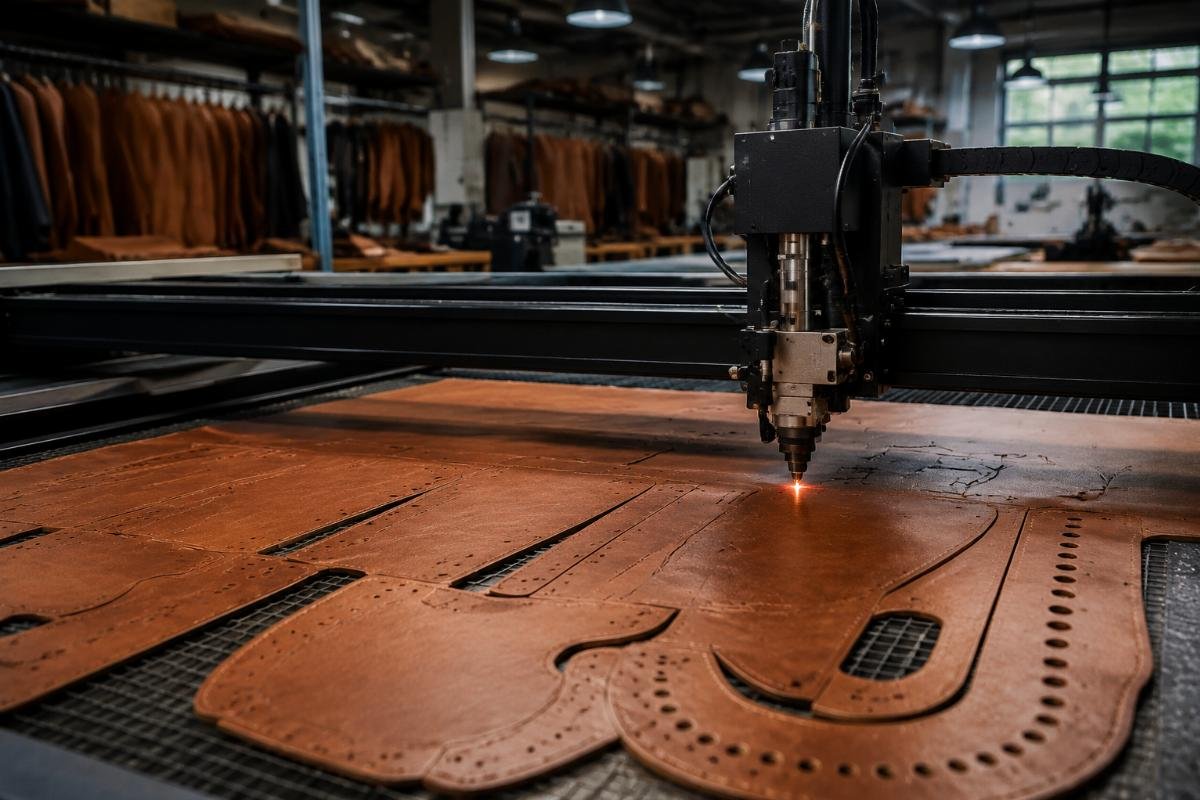
A Mexican leather goods factory previously purchased a low-cost uncertified CNC machine from a no-name supplier, which required 3 separate repair visits in the first 6 months and had an average 12% material waste rate. After switching to a verified supplier’s model with 50mm maximum cutting thickness, the factory reduced material waste by 17% and had zero unplanned downtime in the first 12 months of operation, generating an estimated $12,000 in avoided losses.
- Third-party Certification Check – Cross-reference all claimed certifications against official issuing body records to eliminate fake or expired credentials.
- Case Reference Confirmation – Request at least 2 client references in Latin America for the exact machine model you are considering, to confirm real-world performance.
- Payment Term Negotiation – Structure payment terms to include a 10-15% retention payment released only after successful on-site installation and testing.
Which type of CNC cutting model fits your local production scenario best?
The correct model selection depends entirely on your core use case, material type and order batch characteristics, not the highest available configuration advertised by suppliers. Overpaying for features you will never use cuts into your margin, while under-specifying the machine leads to unplanned downtime and material waste that erodes long-term value.
| User Segment | Common Suboptimal Model Choice | Scenario-aligned Model Selection |
|---|---|---|
| Machinery Trading & Wholesale | Purchase generic standard models with no custom options to keep cost low | Offer configurable core features including working area and tool setup to match local client demand |
| Local Manufacturing End Users | Select the highest possible configuration regardless of current production needs | Match machine capacity to your most commonly used material thickness and production volume [NEED_CITE: Cold cutting technology for CNC machines can process 30+ material types including 50mm thick foam and composite materials] |
| Packaging Producers | Choose laser cutting models that require post-processing for burnt edges | Select cold cutting models to eliminate extra edge trimming steps and reduce labor cost |
A Colombian packaging enterprise initially used a laser cutting model that required manual edge trimming for every finished piece, adding 2 hours of labor per production run. After switching to a cold cutting CNC model, the company eliminated all post-processing for burnt edges entirely and cut annual labor costs by $3,200, while also reducing material scrap by 9% due to more precise cutting paths.
- Material Mapping – List your top 5 most commonly processed materials and confirm the supplier’s model explicitly supports each one before evaluation.
- Production Volume Test – Run a 30-day projection of your average daily production output to confirm the machine’s rated capacity matches or exceeds your requirements.
- Feature Prioritization – Rank required features by non-negotiable, nice-to-have and unnecessary categories to avoid paying for unused functionality.
What cost advantages can a qualified Chinese manufacturer bring to Latin American purchasers?
A verified high-tech Chinese CNC manufacturer delivers comprehensive cost savings across procurement, operation and maintenance that far outweigh any minor initial price difference with alternative suppliers. Over a standard 3-year ownership period, the total cost of ownership for a properly matched machine from a qualified supplier is 22-35% lower than equivalent equipment purchased from local generic distributors.
Realtop Machinery, as a certified high-tech enterprise with Intertek verification and full CE certification for all products, offers a product line of 713+ SKUs covering all common use cases across the three target markets, with core specs including 50mm maximum cutting thickness, ±0.1mm positioning accuracy and full cold cutting capability. The company’s terms including 1-unit MOQ with full OEM customization, 3-year warranty, 24/7 support and free on-site installation align directly with the core priorities