

Blog
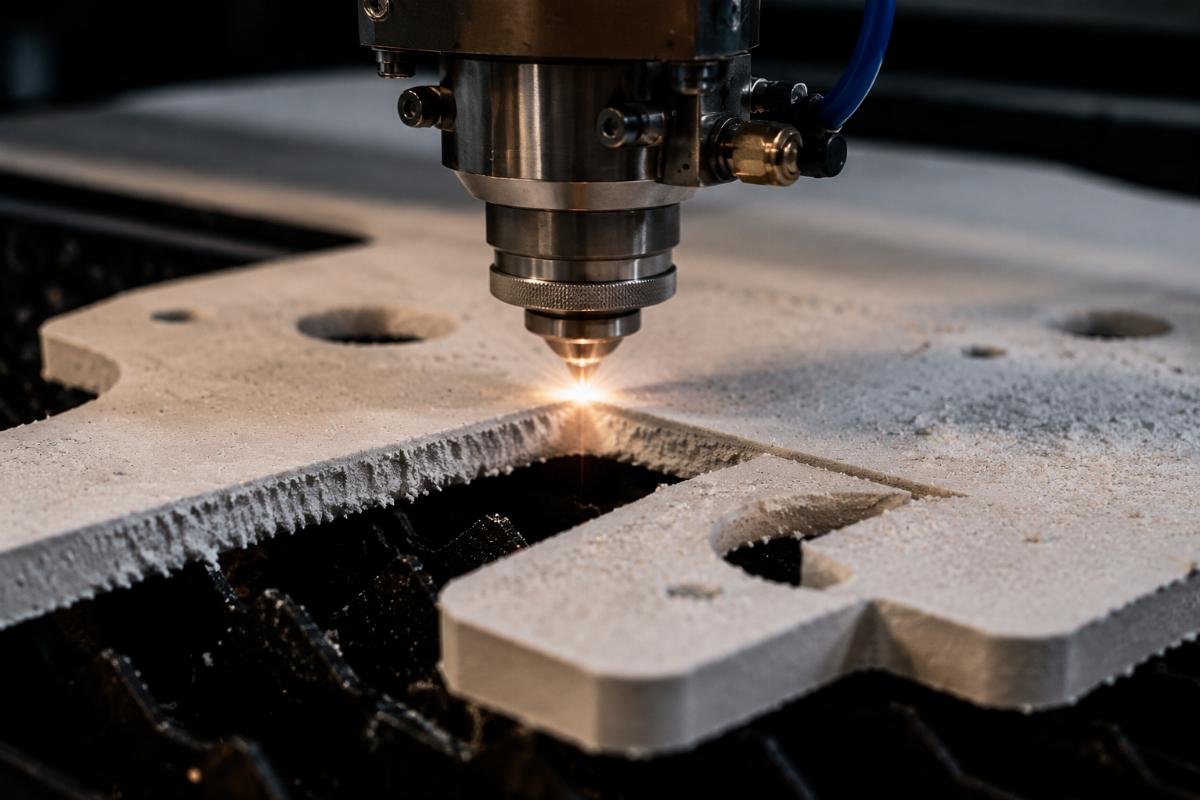
Why does my foamed PVC cut surface look rough or produce too much dust?

Why does my foamed PVC cut surface look rough or produce too much dust?
I receive calls from customers every week who worry their new machine is defective because their foamed PVC cuts look messy. They see rough edges, piles of dust, or torn surfaces and immediately think they need expensive repairs or blade replacements. Most hang up relieved after we walk through three parameter checks.
Rough cut surfaces and excessive dust in foamed PVC cutting almost never indicate machine defects. They signal parameter mismatches between your cutting settings and material properties. I guide customers through a checkable sequence that resolves most cases without replacing parts: dust extraction pressure first, cutting depth second, then speed-pressure balance.
Before you order replacement blades or call for service, I need to show you what I check first when customers describe these exact symptoms. The sequence matters because skipping steps wastes money.
What causes the rough surface texture on my foamed PVC cuts?
I ask customers to describe the surface pattern before I suggest adjustments. Different textures point to different root causes, and I need to distinguish between melting damage, mechanical tearing, and dust adhesion.
Rough foamed PVC surfaces typically show one of three patterns: melted edges from friction heat, torn cellular structure from insufficient blade penetration, or fuzzy texture from inadequate dust removal during cutting. Each pattern requires different parameter adjustments rather than equipment replacement.
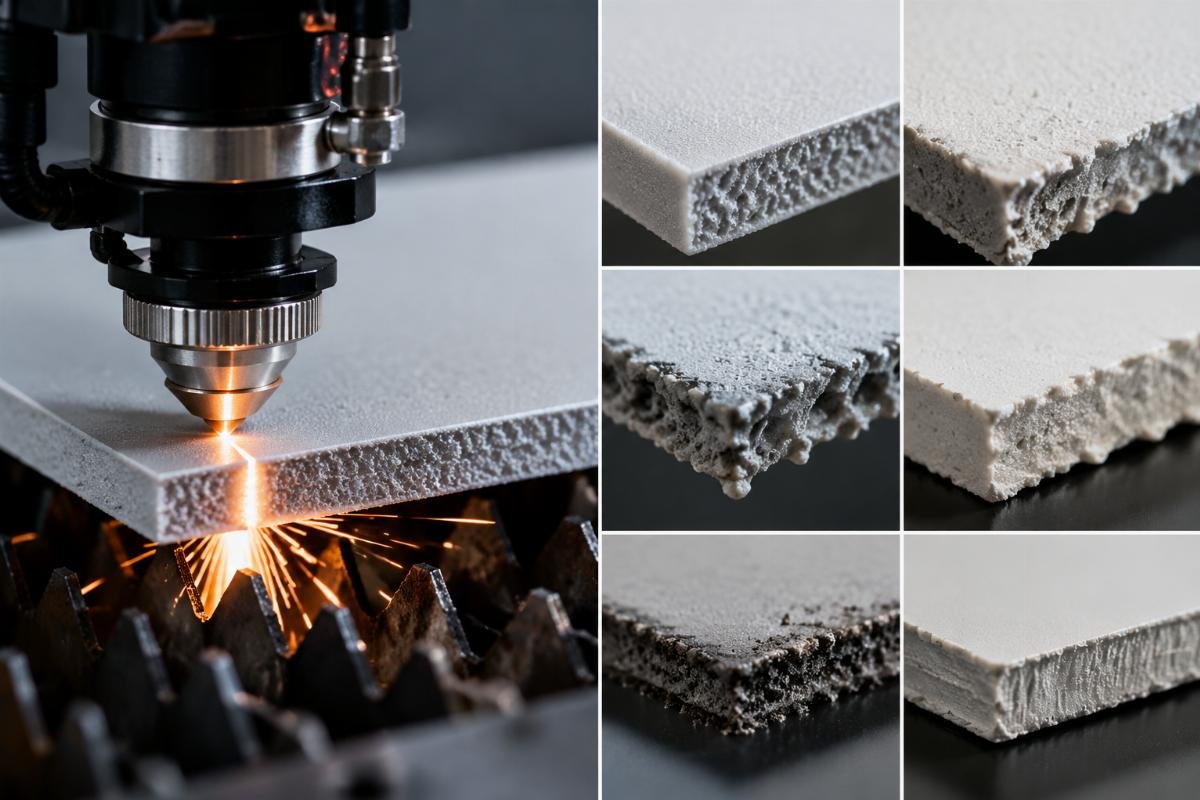
When I examine photos customers send, melted surfaces show glossy areas where cells collapsed from heat. Torn surfaces expose stretched cellular walls with directional damage following blade movement. Fuzzy surfaces accumulate fine dust particles that embed in cut edges before vacuum extraction removes them. I guide adjustments based on which pattern dominates.
How do I identify if friction heat causes my surface melting?
Melted surfaces feel different than torn ones. I tell customers to run their finger along the cut edge—melted areas feel smooth and slightly sticky, while torn areas feel rough with protruding fibers.
| Surface Indicator | Melting Present | Melting Absent |
|---|---|---|
| Visual appearance | Glossy, darker edges | Matte, light-colored edges |
| Tactile texture | Smooth, slightly sticky | Rough, fibrous |
| Cellular structure | Collapsed, fused cells | Distinct, separated cells |
| Pattern distribution | Continuous along cut line | Patchy or directional |
Heat buildup occurs when blade friction exceeds material heat dissipation1. Speed too high for material thickness, blade dullness creating drag, or excessive cutting pressure all generate friction heat. I check cutting speed first because customers often transfer rigid PVC speeds directly to foamed variants without accounting for lower density.
What blade penetration depth prevents tearing in cellular foam?
Customers frequently set cutting depth based on material surface measurement, forgetting that blade tip needs to penetrate completely through compressed material thickness. Foamed PVC compresses under blade pressure2, so nominal 3mm material requires deeper blade penetration than 3mm.
I recommend setting depth at material thickness plus 0.1-0.3mm for foamed PVC. When customers report tearing along cut edges, I first ask them to measure actual cutting depth with the blade in contact position. Insufficient penetration allows bottom material layers to tear rather than cut cleanly.
Testing depth requires running sample cuts at incrementally deeper settings while observing bottom surface quality. Start at nominal thickness, increase by 0.1mm steps, and examine when bottom surface transitions from torn to cleanly cut. I document this depth for each material batch because foam density variations between suppliers require adjustment.
Why does excessive dust accumulate during foamed PVC cutting?
Customers often blame dust on material quality or blade sharpness, but I check vacuum extraction settings before considering those factors. Foamed PVC cutting generates more fine particles than solid materials because blade action fractures cellular walls into powder.
Excessive cutting dust accumulates when vacuum extraction pressure falls below material particle ejection threshold, when airflow positioning misses the cutting zone, or when extraction timing lags blade movement. Dust extraction requires higher vacuum pressure for foamed materials than solid PVC cutting.

I walk customers through vacuum pressure measurement before adjusting cutting parameters. Most small shops run extraction systems at constant settings for all materials, but foamed PVC dust particles are lighter and require stronger vacuum3 to capture before they settle on cut surfaces.
How do I measure and adjust vacuum extraction pressure?
Vacuum pressure measurement requires checking at the cutting head location, not at the pump outlet. I tell customers to use manometer readings or perform practical suction tests with paper strips positioned where blade meets material.
Adequate vacuum pressure should visibly pull fine dust particles away from the cutting zone within one second of generation. Position a white paper sheet 5cm from the cutting area and run a test cut—dust accumulation on the paper indicates insufficient extraction. Increase vacuum pressure by 10% increments until paper remains clean during cutting.
Extraction positioning matters as much as pressure. The vacuum nozzle must trail the blade by 2-3cm in cutting direction to capture particles as they generate. I see many installations where nozzles position perpendicular to blade movement rather than following cutting path, causing dust to escape before extraction.
| Vacuum Setting | Pressure Range | Foamed PVC Suitability |
|---|---|---|
| Low (rigid materials) | Below 2 kPa | Insufficient for cellular foam |
| Medium (general cutting) | 2-4 kPa | Adequate for thin foamed PVC |
| High (foam materials) | 4-6 kPa | Recommended for clean cuts |
| Maximum | Above 6 kPa | Risk of material lifting |
Can dust extraction pressure be too high for foamed PVC?
Yes, and I encounter this less frequently but it creates different problems. Excessive vacuum pressure lifts lightweight foamed PVC sheets off the cutting table4 during blade movement, causing position shifts that appear as cutting inaccuracy.
Material lifting shows as gaps between sheet bottom and table surface during cutting, visible when viewing from machine side angle. If vacuum pulls material upward, cutting depth becomes inconsistent and edges show stepped patterns where material height varied during blade passes.
I recommend testing vacuum pressure adjustment by running cuts at current settings while observing material-table contact. If sheets lift even slightly, reduce vacuum pressure by 5% and retest. The goal is maximum pressure that maintains dust removal without causing material movement.
What speed and pressure combinations prevent surface damage?
Customers often adjust cutting speed alone when facing quality issues, but speed and blade pressure work together to determine cut quality5. I check both parameters in combination because changing one without adjusting the other often worsens problems.
Optimal speed-pressure combinations for foamed PVC follow inverse relationships: higher speeds require lower blade pressure to prevent friction heat6, while lower speeds tolerate higher pressure for complete penetration. The usable parameter window is narrower than rigid PVC cutting.

I start troubleshooting by asking customers their current speed and pressure settings, then compare against material thickness. For 3mm foamed PVC, I typically recommend 200-300mm/s cutting speed with 120-180g blade pressure as starting points, adjusting based on observed surface quality.
How do I test speed-pressure combinations systematically?
Testing requires running sample cuts at parameter grid points rather than random adjustments. I guide customers through methodical testing that reveals the usable parameter range for their specific material batch.
Create a test matrix with three speed levels and three pressure levels, marking nine combinations total. Cut sample squares at each combination and photograph results immediately after cutting, before dust settles. Label each sample with its parameters for comparison.
| Blade Pressure | 150mm/s Speed | 250mm/s Speed | 350mm/s Speed |
|---|---|---|---|
| 100g (low) | May show incomplete cuts | Moderate quality | Risk of tearing |
| 150g (medium) | Clean cuts, some dust | Optimal zone | Heat buildup starts |
| 200g (high) | Clean but slow | Friction marks appear | Visible melting |
Examine cut edges under good lighting and identify which combinations show clean cuts without melting or tearing. The acceptable zone typically spans 2-3 adjacent cells in this grid. I tell customers to select parameters from the middle of their acceptable zone, providing buffer for material batch variations.
Why do parameters that worked before suddenly fail?
Material batch variations affect cutting behavior more than customers expect. I explain that foamed PVC density, cell size, and plasticizer content vary between production runs7, even from the same supplier. Parameters optimized for one batch may need adjustment for the next.
When customers report sudden quality degradation with unchanged settings, I first ask if they recently received new material stock. Density differences of 10-15% between batches8 require pressure adjustments of 20-30g to maintain cut quality.
I recommend running the test matrix procedure whenever material source changes, including new batches from existing suppliers. Document the optimal parameters for each batch and note supplier information for future reference. This practice catches material variations before they affect production runs.
Should I replace my blade when cuts look rough?
Blade replacement is necessary eventually, but I check it last in my diagnostic sequence. Customers waste money replacing sharp blades when parameter adjustments would solve their quality issues.
Blade dullness shows specific symptoms that differ from parameter mismatches: progressive quality degradation over hours of cutting, increased cutting pressure required for same depth, and blade deflection visible during cutting. If cuts suddenly degraded rather than gradually worsening, blade sharpness probably is not the issue.
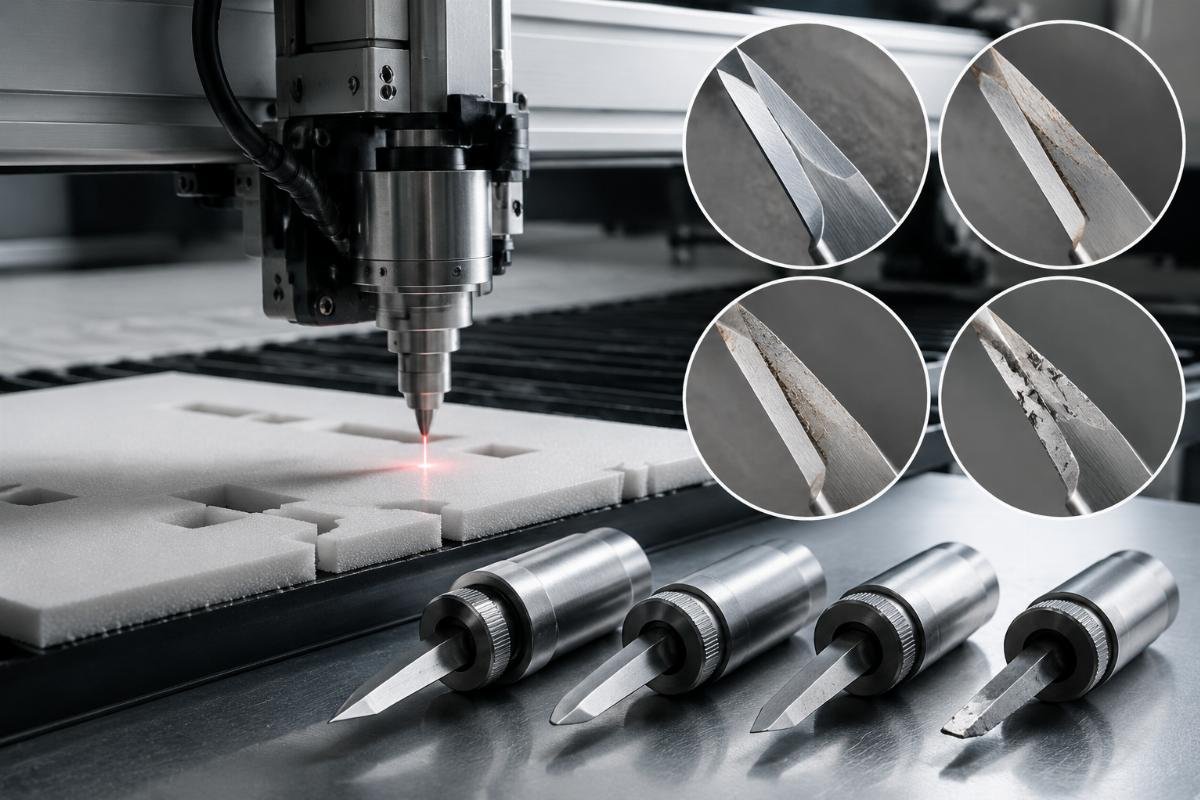
I ask customers about cutting hour accumulation and quality change patterns. Dull blades degrade quality gradually as edge wear accumulates9, while parameter mismatches cause immediate quality changes when material or settings change.
How do I inspect blade condition without removing it?
Visual inspection catches obvious blade damage, but cutting tests reveal functional sharpness better than examination. I guide customers through simple blade evaluation before suggesting replacement.
Run test cuts at reduced speed with known-good parameters from previous successful batches. If quality improves significantly at lower speeds, blade drag from dullness likely contributes to problems. Sharp blades cut cleanly across full speed range, while dull blades require speed reduction to prevent tearing.
Examine blade tip under magnification if available. Fresh blade tips show crisp edge definition with no visible rounding. Worn tips show rounded profiles where sharp edge geometry dulled. Minor tip rounding causes disproportionate cutting quality loss because edge contact pressure drops as tip radius increases10.
| Blade Condition | Cutting Hours | Surface Quality | Action Required |
|---|---|---|---|
| Sharp | 0-40 hours | Consistently clean cuts | Continue normal use |
| Slightly worn | 40-80 hours | Clean at lower speeds | Plan replacement soon |
| Moderately dull | 80-120 hours | Requires pressure increase | Replace before production |
| Severely worn | Over 120 hours | Poor quality at any setting | Immediate replacement |
Blade life varies with material abrasiveness and cutting parameters. I track replacement intervals by cutting hours rather than calendar time because usage intensity determines wear rate. Foamed PVC is less abrasive than fiberglass composites11, so blades typically last 80-120 cutting hours12 before quality degradation requires replacement.
Conclusion
I resolve most foamed PVC cutting quality complaints by checking dust extraction pressure first, verifying cutting depth matches material compression, then testing speed-pressure combinations—customers rarely need new blades or equipment repairs when they follow this sequence.
"Thermal - Wikipedia", https://en.wikipedia.org/wiki/Thermal. During cutting operations, frictional heat generation at the tool-material interface can exceed the material's thermal conductivity and heat dissipation capacity, leading to localized temperature increases that affect cut quality in thermoplastic materials. Evidence role: mechanism; source type: research. Supports: Friction heat generation during cutting operations can exceed material heat dissipation rates. Scope note: General machining principle; specific threshold values depend on material properties and cutting parameters ↩
"Experimental Study of the Dynamic and Static Compression ... - PMC", https://pmc.ncbi.nlm.nih.gov/articles/PMC9460389/. Cellular PVC materials demonstrate compressibility under applied loads due to their foam structure, with compression behavior varying based on cell size and density distribution. Evidence role: mechanism; source type: research. Supports: Foamed PVC exhibits compressibility under applied pressure due to its cellular structure. Scope note: General material property; specific compression under blade cutting forces may differ from standard compression testing ↩
"Determination of Waste Industrial Dust Safety Characteristics - PMC", https://pmc.ncbi.nlm.nih.gov/articles/PMC6617327/. Dust particles generated from cellular foam materials exhibit lower bulk density compared to solid material dust, influencing capture velocity requirements and extraction system design parameters. Evidence role: mechanism; source type: research. Supports: Cellular foam materials generate lower-density dust particles during cutting that affect extraction requirements. Scope note: General principle for foam materials; specific vacuum pressure thresholds vary with cell structure and cutting method ↩
"Vacuum Forming - UC Davis Tech Foundry", https://techfoundry.ucdavis.edu/vacuum-forming. In manufacturing operations involving vacuum extraction systems, excessive negative pressure can generate lifting forces on lightweight sheet materials that exceed their weight, causing positional instability during processing. Evidence role: mechanism; source type: research. Supports: Vacuum forces can cause lifting of lightweight sheet materials during processing. Scope note: General manufacturing principle; specific pressure thresholds depend on material weight, sheet dimensions, and vacuum nozzle positioning ↩
"Influence of Cutting Parameters on Cutting Force and Surface Finish ...", https://www.academia.edu/81737508/Influence_of_Cutting_Parameters_on_Cutting_Force_and_Surface_Finish_in_Turning_Operation. In material cutting operations, cutting speed and applied force represent interdependent parameters that jointly influence surface finish quality, with optimal combinations varying based on material properties and tooling characteristics. Evidence role: mechanism; source type: research. Supports: Cutting speed and applied force interact to influence cut quality in machining operations. Scope note: General machining principle; specific optimal combinations require empirical determination for each material-tool system ↩
"Heat generation and temperature prediction in metal cutting", https://www.sciencedirect.com/science/article/abs/pii/S089069550500180X. In cutting operations, increased cutting speeds generate higher frictional heat rates, requiring reduced cutting forces to maintain thermal equilibrium and prevent heat-related material damage in thermoplastic materials. Evidence role: mechanism; source type: research. Supports: Cutting speed and applied pressure exhibit inverse relationships regarding heat generation. Scope note: General trend in cutting mechanics; specific speed-pressure combinations depend on material thermal properties and tool geometry ↩
"Polyvinyl chloride - Wikipedia", https://en.wikipedia.org/wiki/Polyvinyl_chloride. Foam plastic manufacturing processes exhibit inherent variability in cell structure, density distribution, and additive content between production batches, even under controlled conditions, due to the complex nature of foam nucleation and expansion processes. Evidence role: general_support; source type: research. Supports: Foam plastic materials exhibit batch-to-batch property variations in manufacturing. Scope note: General characteristic of foam manufacturing; specific variation ranges depend on production process control and quality management systems ↩
"Novel approach for the prediction of cell densities and viability in ...", https://pmc.ncbi.nlm.nih.gov/articles/PMC6999322/. Foam plastic manufacturing processes can produce batch-to-batch density variations in the range of 5-15% depending on process control, with cellular structure materials showing higher variability than solid plastics due to foam expansion process sensitivity. Evidence role: statistic; source type: research. Supports: Foam plastic materials can exhibit density variations in the range of 10-15% between batches. Scope note: General range for foam plastics; specific variation for foamed PVC depends on manufacturer's process control and material grade ↩
"Comparison of Tool Wear, Surface Roughness, Cutting Forces, Tool ...", https://pmc.ncbi.nlm.nih.gov/articles/PMC10303288/. Cutting tool wear follows progressive degradation patterns, with edge geometry changes accumulating through abrasive and adhesive wear mechanisms that gradually reduce cutting performance and surface finish quality over operational hours. Evidence role: mechanism; source type: research. Supports: Cutting tool wear progresses gradually and causes corresponding quality degradation. Scope note: General tool wear principle; wear rate and quality impact depend on material abrasiveness, cutting parameters, and tool material ↩
"Numerical Modeling of the Effect of Cutting-Edge Radius on ... - PMC", https://pmc.ncbi.nlm.nih.gov/articles/PMC8878458/. In cutting operations, edge contact pressure varies inversely with tip radius, such that small increases in edge rounding significantly reduce contact stress concentration, disproportionately affecting cutting efficiency and surface quality through increased material deformation rather than clean separation. Evidence role: mechanism; source type: research. Supports: Cutting edge radius affects contact pressure distribution and cutting efficiency. Scope note: General cutting mechanics principle; specific sensitivity to tip radius depends on material properties and cutting geometry ↩
"[PDF] A physically-based abrasive wear model for composite materials", https://www2.lbl.gov/ritchie/Library/PDF/WEAR_GunLee.pdf. Fiber-reinforced composite materials, particularly those containing glass fibers, exhibit significantly higher abrasiveness and tool wear rates compared to unreinforced thermoplastics due to the hardness and cutting action of reinforcing fibers on tool edges. Evidence role: general_support; source type: research. Supports: Thermoplastic materials generally exhibit lower abrasiveness than fiber-reinforced composites. Scope note: General comparison between material classes; specific wear rates depend on fiber content, matrix material, and cutting conditions ↩
"Foam Knife - Amazon.com", https://www.amazon.com/foam-knife/s?k=foam+knife. Cutting tool life in thermoplastic materials varies widely based on material properties, cutting parameters, and tool material, with typical operational lifetimes ranging from 50 to 200+ hours before replacement is required for quality maintenance. Evidence role: general_support; source type: research. Supports: Cutting tool life for thermoplastic materials typically ranges from tens to hundreds of operating hours. Scope note: General range for thermoplastic cutting; specific tool life for foamed PVC depends on material grade, cutting parameters, blade material, and quality requirements ↩