
Blog
Can a CNC Machine Cut Leather?

Can a CNC Machine Cut Leather?
You search "CNC leather cutting" hoping for a simple yes, but you find contradictory advice, equipment terms you don't recognize, and no clarity on whether the method will scorch your material or produce ragged edges that ruin your product quality.
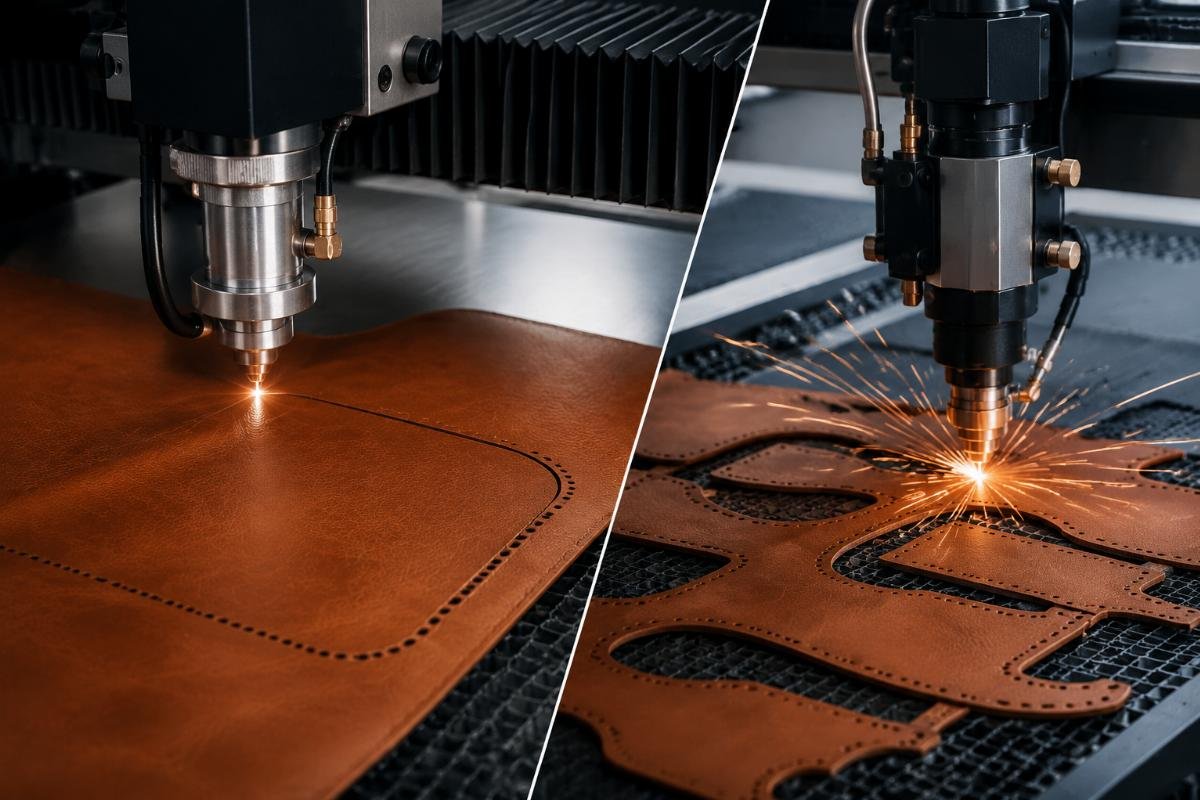
Yes, CNC machines cut leather—but "CNC" only describes the digital control system, not the cutting method itself. The real question is: which CNC-controlled cutting approach matches your leather type, thickness, edge finish requirement, and production volume—knife cutting, laser cutting, or die cutting?
Most manufacturers ask the wrong question when they contact us. They conflate "CNC" with laser systems because that's the dominant search result, but we've watched clients make costly equipment choices by not understanding that CNC is the control layer—it can drive an oscillating knife, a laser head, a waterjet nozzle, or even a hydraulic die press. Your leather type, not the CNC term, determines which method delivers clean edges and acceptable throughput.
What does CNC actually mean in leather cutting equipment?
You see "CNC leather cutter" in supplier catalogs and assume it's a single technology, but we've fielded inquiries from handbag makers, automotive interior suppliers, and furniture fabricators who each need completely different systems despite all searching the same term.
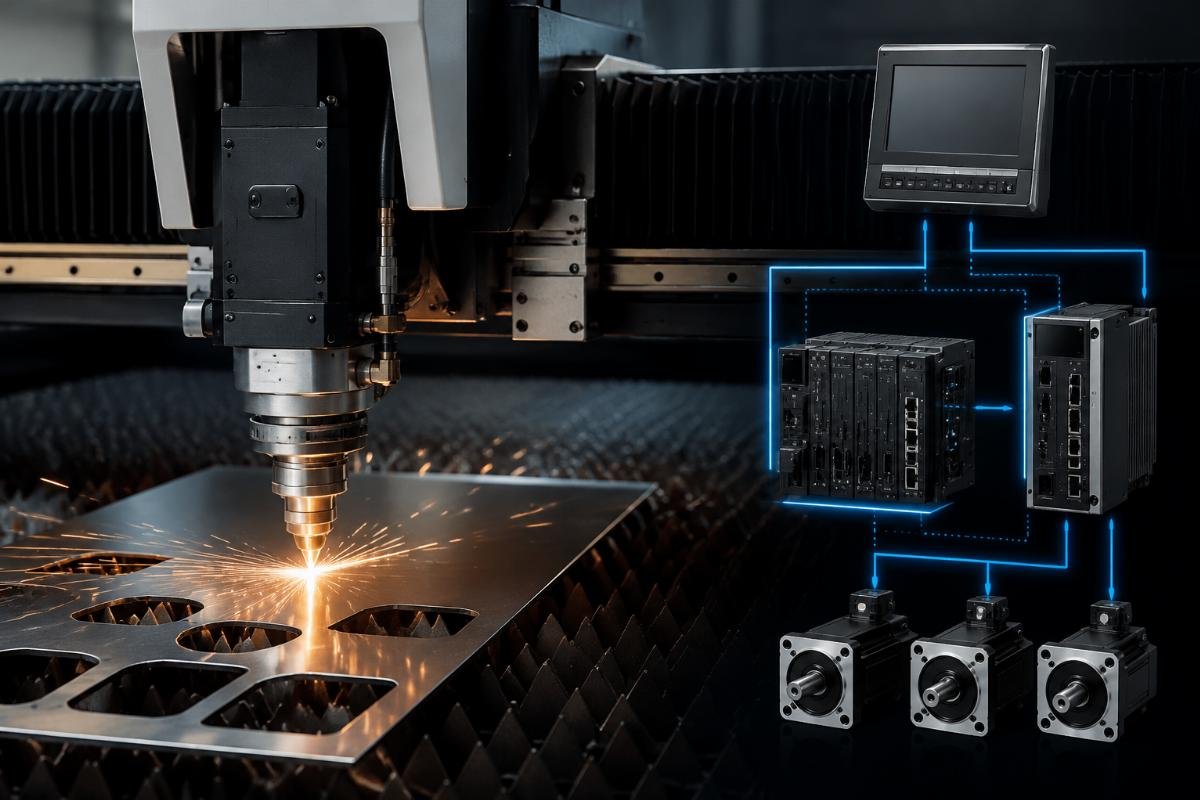
CNC stands for Computer Numerical Control1—a digital control system that reads your CAD design file and converts it into precise motor movements. CNC itself doesn't touch your material; it commands the cutting tool (knife blade, laser beam, water stream) to follow programmed paths with repeatable accuracy.
Why "CNC" doesn't tell you enough about cutting method
When clients send us samples for cutting tests, we always clarify which cutting method they're evaluating. A CNC knife cutting machine uses an oscillating or drag blade mounted on a moving gantry—the CNC system controls X-Y positioning and blade depth, but the physical blade shears through the leather fiber. A CNC laser cutting machine uses the same X-Y control architecture, but the cutting tool is a focused laser beam that vaporizes material rather than shearing it. Both are "CNC machines," yet they produce completely different edge qualities, work at different speeds, and suit different leather categories.
Three CNC cutting methods for leather
| Cutting Method | Tool Type | How It Cuts Leather | Typical Control System |
|---|---|---|---|
| CNC Knife Cutting | Oscillating blade, drag blade, or rotary blade | Physical shearing through material fibers | Servo motors control X-Y-Z axes + blade oscillation frequency |
| CNC Laser Cutting | CO₂ or fiber laser beam | Thermal vaporization and melting of material | Galvo mirrors or gantry-mounted laser head2 with power modulation |
| CNC Die Cutting | Steel rule die on hydraulic press | Compression cutting with shaped blade | Actuators position material under fixed die, press applies force |
We've seen automotive interior suppliers switch from manual die cutting to CNC knife systems specifically to eliminate die fabrication costs for prototyping and small batches. The CNC part—digital pattern control—stays the same across methods, but the cutting mechanism determines whether your edges show heat discoloration, fraying, or clean shear lines.
Which CNC cutting method works for your leather type and thickness?
You receive quotes for both knife and laser systems, but suppliers don't explain why one method fits your material and the other risks waste or post-processing expense.
Knife cutting, laser cutting, and waterjet cutting each produce acceptable results on specific leather types and thicknesses, but choosing the wrong method introduces edge defects, material waste, or throughput bottlenecks that negate the precision advantage of CNC control.
Material properties that determine method suitability
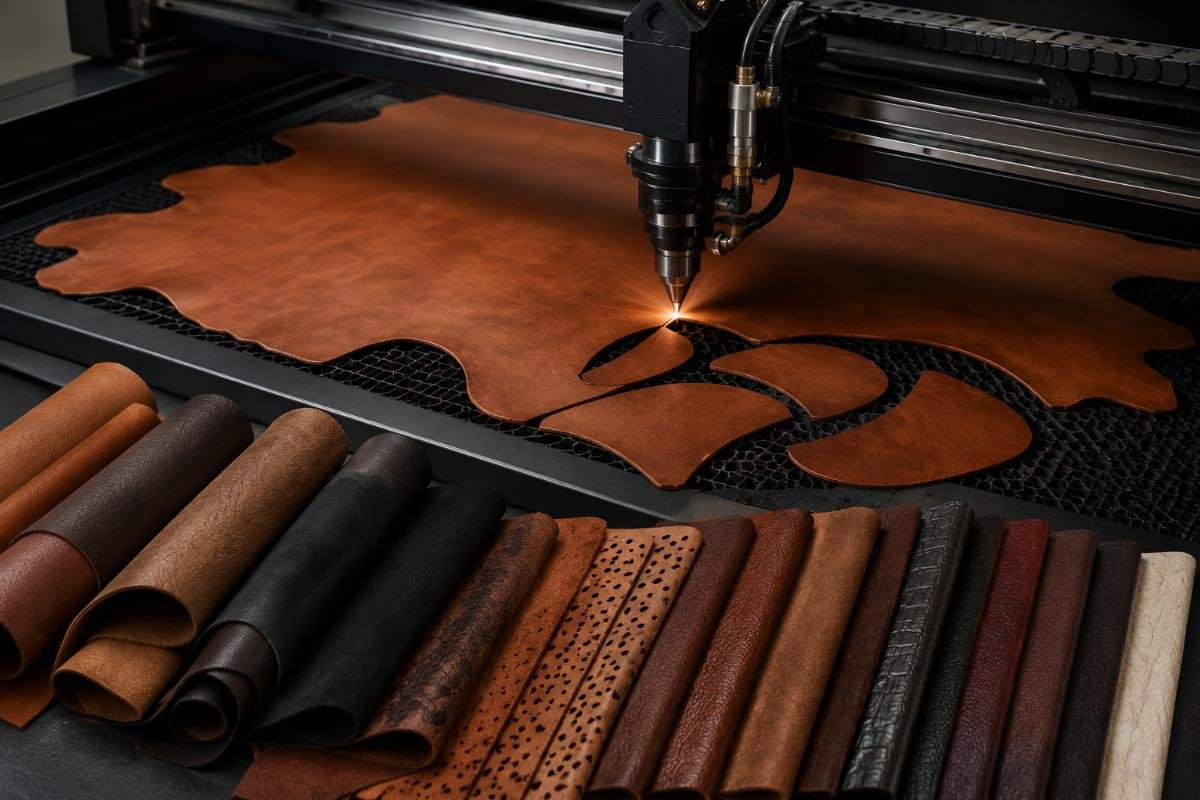
We test client samples before recommending equipment, and three leather characteristics consistently drive the decision: material composition (genuine leather vs. synthetic), thickness, and edge finish sensitivity. Thin PU leather (0.8–1.5 mm)3 tolerates oscillating knife cutting well because the blade shears synthetic fibers cleanly without dragging or puckering. Genuine cowhide leather at 2.5–3.5 mm thickness4 presents more resistance—knife cutting works but requires slower feed rates and sharper blade angles to avoid fiber pull-out at edges. Suede and nubuck surfaces show visible marks from mechanical contact, making laser cutting preferable despite the risk of edge darkening.
CNC knife cutting systems for leather
CNC knife cutting machines use a reciprocating or oscillating blade (vibrating at 2,000–10,000 cycles per minute)5 to shear through leather while the gantry moves along programmed paths. We've observed handbag manufacturers processing thin lambskin and PU leather at speeds up to 1,200 mm/s with clean edges and no thermal damage. The blade makes physical contact with the material, so edge finish depends on blade sharpness, oscillation frequency, and cutting depth accuracy. Thick genuine leather (above 3 mm) requires multiple passes or deeper blade penetration, which slows throughput but avoids the scorching risk that laser systems introduce.
Trade-offs: Knife cutting produces no heat-affected zones or chemical odors, making it suitable for full-grain leather that can't tolerate discoloration. However, blade wear requires periodic sharpening or replacement, and cutting speed decreases with material thickness. We've seen furniture fabricators choose knife systems specifically to maintain natural leather edge appearance without post-processing to remove char marks.
CNC laser cutting for leather
CNC laser cutting machines focus a CO₂ laser beam (typically 60–150 watts for leather applications)6 onto the material surface, vaporizing leather fibers along the programmed path. Automotive interior suppliers request laser cutting when designs include intricate perforations, tight radii, or fine detail that knife blades can't replicate without excessive tool wear. Laser cutting excels at thin to medium leather (0.5–2.5 mm) and produces sealed edges that resist fraying, but the thermal process darkens edge surfaces and creates a slight odor during cutting.
Trade-offs: Laser systems cut delicate patterns faster than knife systems and require no blade sharpening, but genuine leather edges show visible browning or blackening from heat. We've watched clients implement post-processing steps—edge dyeing or buffing—to restore edge color uniformity, adding labor cost that offsets the speed advantage. Synthetic PU leather tolerates laser cutting with less visible edge discoloration than genuine hides.
CNC die cutting for high-volume production
CNC die cutting uses digital positioning to align leather under a steel rule die, then applies hydraulic pressure to cut the shape in a single press stroke. The CNC component positions the material and activates the press, but the cutting mechanism is mechanical compression rather than blade motion or heat. We've seen this method in footwear factories processing hundreds of identical shoe uppers per shift—the die cutting speed (one cut every 3–5 seconds) exceeds knife or laser throughput, but die fabrication costs (typically $300–$1,500 per die)7 make this approach uneconomical for short runs or frequent design changes.
Trade-offs: Die cutting delivers the fastest per-piece cutting time and handles thick leather (up to 6 mm) without speed penalties, but requires die inventory for each design variation. Furniture manufacturers switched to CNC knife cutting specifically to eliminate die costs when moving from standardized sofa patterns to custom shapes per order.
How do material thickness and edge quality requirements narrow your choice?
You know your leather thickness and target batch size, but equipment suppliers list specifications—blade types, laser wattages, cutting speeds—without explaining which numbers matter for your actual production scenario.
Matching cutting method to leather thickness and acceptable edge finish requires translating material specs into equipment capabilities: blade depth range and oscillation frequency for knife systems, laser power and focal length for thermal cutting, and press tonnage for die systems.
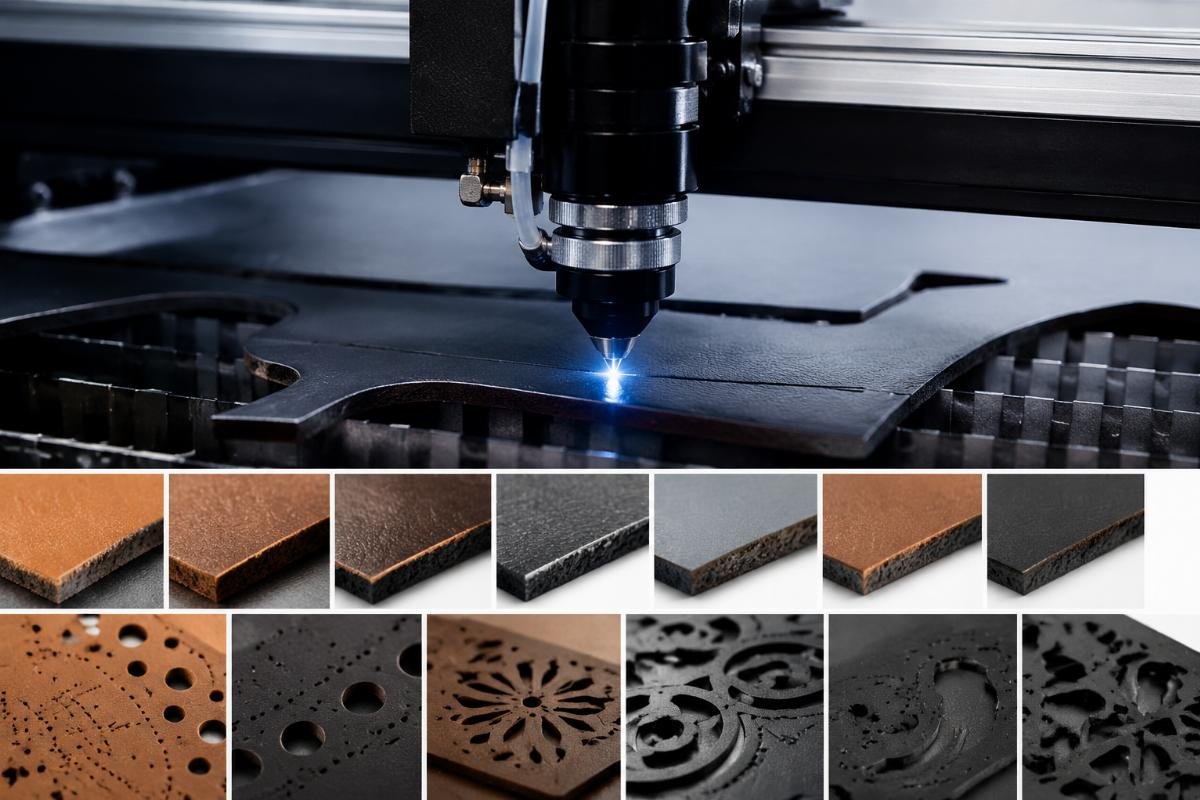
Thickness ranges and method performance
| Material Thickness | Knife Cutting Performance | Laser Cutting Performance | Die Cutting Performance |
|---|---|---|---|
| 0.5–1.5 mm (thin PU, lambskin) | Excellent—high speed, clean edges, minimal blade wear | Excellent—fast cutting, minimal char, fine detail capability | Good—fast, but die cost not justified for thin materials |
| 1.5–2.5 mm (standard garment leather) | Good—requires sharper blades, moderate speed | Good—edges show slight darkening, may need post-processing | Excellent—fast throughput, handles volume efficiently |
| 2.5–4.0 mm (upholstery, bag leather) | Fair—slower speed, multiple passes may be needed | Limited—high power required, significant edge char | Excellent—ideal application, clean compression cuts |
| Above 4.0 mm (thick belting, tooling leather) | Poor—excessive blade wear, slow cutting | Not recommended—severe charring, incomplete cuts | Excellent—preferred method for thick hides at volume |
We test samples across this thickness spectrum weekly. A handbag manufacturer sent us 1.2 mm chrome-tanned leather%%%FOOTNOTE_REF8%%% for knife cutting trials—we achieved 1,000 mm/s cutting speed with a 0.8 mm oscillating blade at 6,000 cycles per minute, producing edges with no visible fraying or fiber pull. The same client sent 3.5 mm [vegetable-tanned leather](https://en.wikipedia.org/wiki/Tanning(leather))9, and cutting speed dropped to 400 mm/s with two passes required to penetrate fully. Laser cutting that thick sample required 120-watt power and left a 0.5 mm brown char zone along edges, forcing the client to add edge finishing operations.
Edge quality and post-processing considerations
Edge finish acceptance varies by product type. Automotive interior suppliers cutting dashboard covers often specify "no visible heat damage" because edge color must match surrounding material without additional dyeing. We recommend knife cutting for these applications even though laser systems cut the same patterns faster, because removing laser char requires sanding or edge paint application that increases labor hours. Conversely, handbag manufacturers cutting intricate laser-etched designs accept slight edge darkening as a trade-off for pattern detail that knife blades can't replicate without excessive tool changes.
Knife-cut edges: Natural leather color, slight fiber texture, may show minor fuzz that brushing removes. No post-processing needed for most applications.
Laser-cut edges: Heat-sealed surface, brown to black discoloration depending on leather type and laser power, smooth texture. Requires edge dyeing or buffing if color matching is critical.
Die-cut edges: Clean shear with minimal fiber disturbance, matches knife-cut appearance. Compression may slightly compress material thickness at edge (typically 0.1–0.2 mm), which is not visible in most products.
We've observed that clients processing genuine leather for visible-edge applications (belts, bag gussets, furniture piping) consistently choose knife or die cutting to avoid the color correction expense that laser edges introduce.
What production volume justifies each cutting method?
You price equipment based on purchase cost, but we've watched manufacturers make decisions that ignore tooling expenses, consumable replacement frequency, and operator skill requirements that drive total cost per piece.
Equipment purchase price represents 30–50% of five-year ownership cost10; blade replacement, maintenance intervals, and setup time per job collectively determine whether a cutting method delivers acceptable per-unit economics at your production volume.
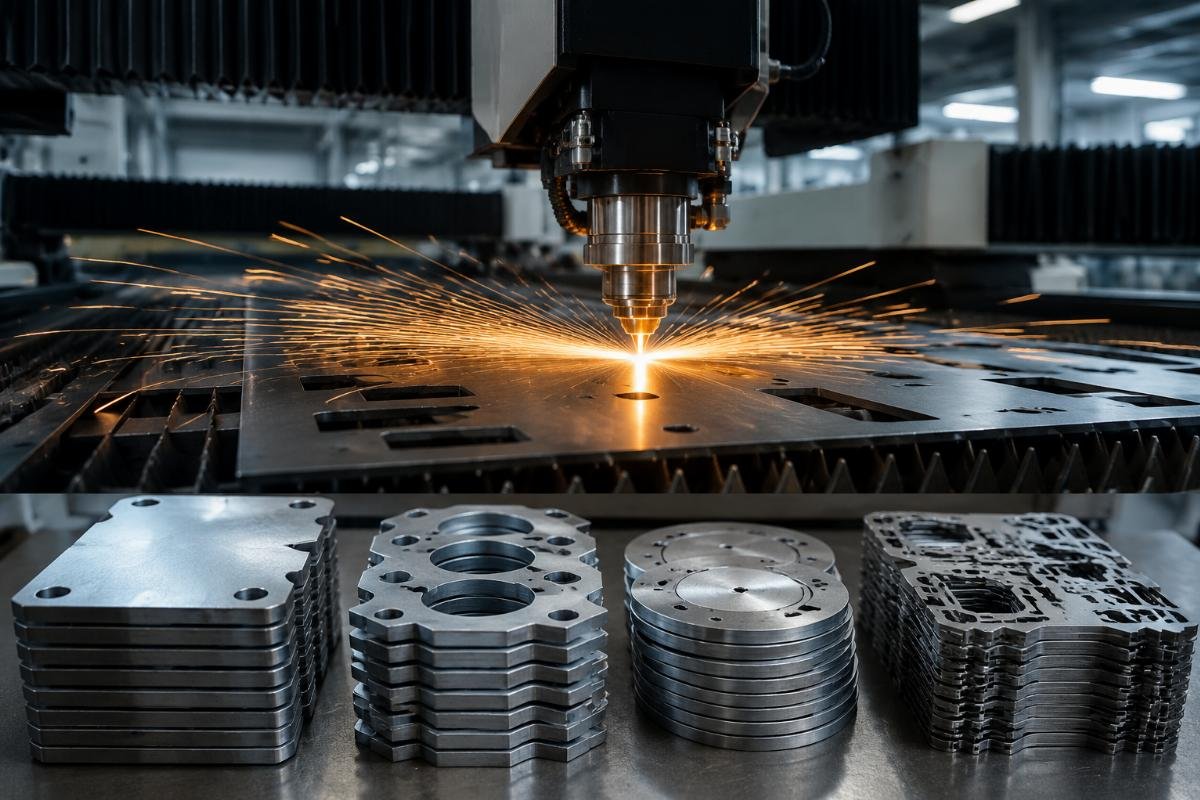
Break-even points for different cutting technologies
CNC knife cutting systems typically cost $15,000–$45,000 depending on cutting area and automation features. Oscillating blades wear gradually—we see clients replacing blades every 200–400 cutting hours depending on leather thickness and abrasiveness. A blade set costs $80–$150, translating to roughly $0.30–$0.50 per cutting hour in consumable expense. Setup time per new pattern involves importing the CAD file, setting cutting parameters (blade depth, oscillation frequency, feed rate), and running test cuts—usually 15–30 minutes for experienced operators.
CNC laser cutting machines range from $25,000–$80,000 for leather-suitable CO₂ laser systems. Consumables include laser tube replacement (every 2,000–4,000 hours, costing $800–$2,000) and focus lens cleaning or replacement. Laser cutting eliminates blade sharpening but introduces higher electricity consumption (typically 3–8 kW vs. 1.5–3 kW for knife systems). Setup time is faster than knife cutting—pattern import and parameter setting take 10–15 minutes because there's no physical blade to adjust.
CNC die cutting requires die fabrication ($300–$1,500 per unique shape) plus a positioning system and hydraulic press ($8,000–$25,000 depending on press size). Once dies are made, per-piece cutting time is fastest (3–5 seconds per cut), but changing between designs requires physical die swaps (5–10 minutes per changeover). We see this method in footwear factories processing thousands of identical shoe components per week, where die cost amortizes quickly across high volumes.
Volume scenarios and method suitability
| Production Scenario | Recommended Method | Key Economic Factor |
|---|---|---|
| Prototyping, samples, custom orders (under 50 pieces per design) | CNC knife cutting | No die cost, digital pattern changes, acceptable speed for low volumes |
| Short to medium runs with moderate design variety (50–500 pieces per design) | CNC knife or laser cutting | Balance between cutting speed and setup flexibility, consumable costs remain acceptable |
| High-volume repetitive production (above 500 pieces per design) | CNC die cutting | Die cost amortized across volume, fastest per-piece time, lowest labor per unit |
| Complex patterns with fine detail regardless of volume | CNC laser cutting | Pattern detail capability offsets higher equipment cost and edge finishing needs |
We helped a furniture manufacturer evaluate equipment for cutting leather sofa panels—they process 20–40 different panel shapes with batch sizes of 100–200 pieces per shape. Die cutting would require fabricating 30+ dies at $500 each ($15,000 upfront), with dies needing replacement after 50,000–100,000 cuts. We recommended a CNC knife system because digital pattern storage eliminated die inventory, and cutting speed (averaging 600 mm/s on 2 mm upholstery leather) delivered acceptable throughput for their batch sizes. They report per-panel cutting cost of approximately $0.45 including labor, compared to $0.30 per panel with die cutting but without the $15,000 die library investment.
What cutting parameters and specifications actually matter for leather?
You review equipment datasheets listing dozens of specifications, but suppliers don't clarify which numbers directly affect your edge quality, cutting speed, and material waste on leather specifically.
For leather cutting equipment, three specification categories determine real-world performance: cutting tool characteristics (blade geometry and oscillation frequency for knife systems, laser power and focal spot size for laser systems), motion system accuracy (positioning repeatability and acceleration capability), and material handling features (vacuum hold-down strength and conveyor accuracy).
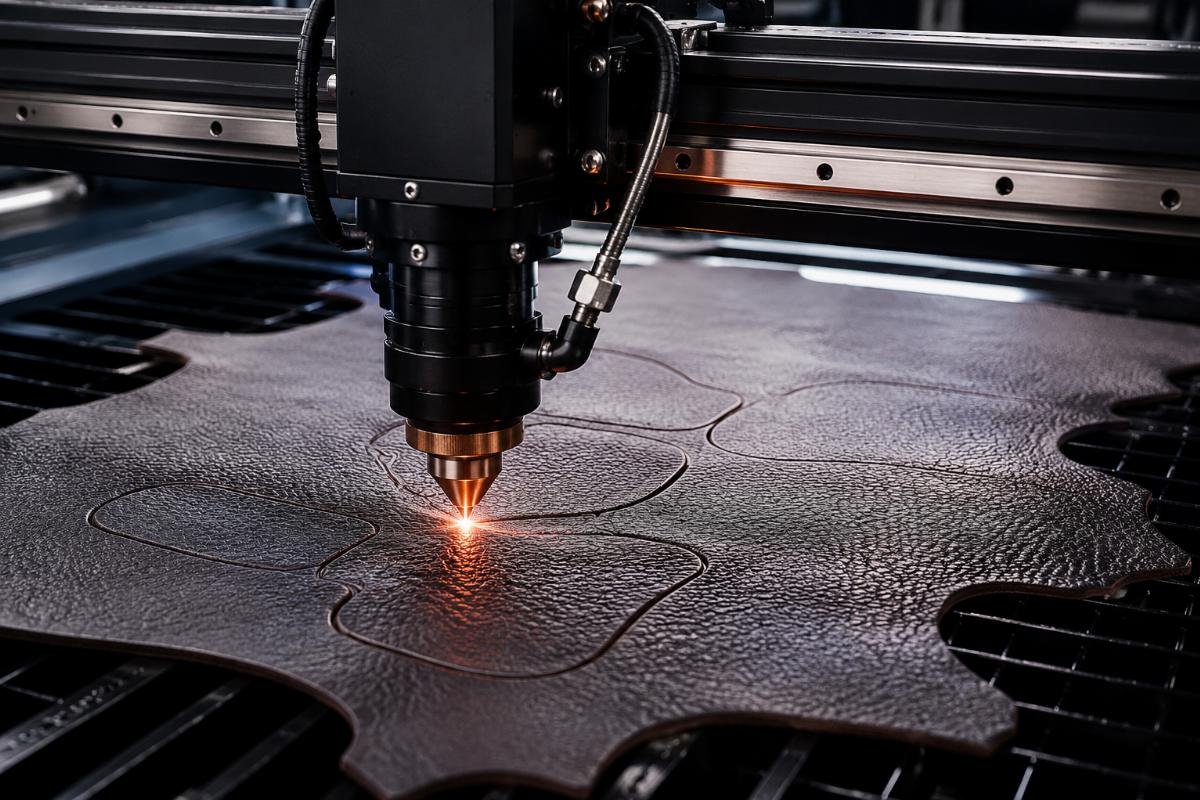
Knife cutting system specifications that impact leather results
Blade oscillation frequency: Measured in cycles per minute (CPM) or Hertz (Hz). Higher frequencies (6,000–10,000 CPM) produce smoother edges on thin leather by making more cuts per millimeter of travel, reducing fiber tearing. Thick leather (above 3 mm) benefits less from high frequency because penetration depth matters more than oscillation speed. We see clients successfully cutting 1.5 mm garment leather at 8,000 CPM with feed rates up to 1,200 mm/s, but the same frequency on 3.5 mm upholstery leather requires reducing feed rate to 400 mm/s to avoid incomplete cuts.
Blade depth range and Z-axis travel: The vertical stroke that controls how deep the blade penetrates. Leather cutting requires 1.5–2× material thickness in Z-travel to ensure complete penetration without cutting into the backing surface. A machine with 20 mm Z-axis stroke handles leather up to roughly 10 mm thickness, though practical limits fall lower (6–8 mm) because excessive depth increases blade flex and edge wander.
Blade types and geometry: Tangential knife blades (where the blade rotates to align with cutting direction) produce smoother curves on thick leather compared to oscillating blades, but cut slower on straight lines. Drag knife blades (fixed angle, pulled through material) work well on very thin synthetic leather but can't penetrate thick genuine hides. We recommend oscillating blades for general leather cutting because they balance speed and edge quality across the 1–4 mm thickness range most manufacturers process.
Laser cutting system specifications for leather
Laser power (watts): CO₂ lasers at 60–100 watts handle thin to medium leather (0.8–2.5 mm) with acceptable cutting speeds (300–800 mm/s) and minimal edge char. Thick leather (above 3 mm) requires 120–150 watts but produces increasingly visible char zones and burnt odor. We've tested 80-watt lasers on 2 mm chrome-tanned leather at
"Computer numerical control - Wikipedia", https://en.wikipedia.org/wiki/Computer_numerical_control. Computer Numerical Control (CNC) refers to the automated control of machining tools through programmed commands encoded on a storage medium, as distinguished from manual control by operators. Evidence role: definition; source type: encyclopedia. Supports: the meaning and expansion of the CNC acronym. ↩
"Mirror galvanometer - Wikipedia", https://en.wikipedia.org/wiki/Mirror_galvanometer. Laser cutting systems employ either galvanometer-driven mirrors that deflect a stationary beam at high speed across a limited work area, or gantry systems that physically move the laser head across larger work surfaces with slower positioning but greater working envelope. Evidence role: mechanism; source type: education. Supports: the two primary methods for positioning laser beams in cutting systems. Scope note: The choice between systems involves trade-offs in speed, working area, and beam quality that depend on specific application requirements ↩
"Faux Leather Product Specifications and Testing", https://mitchellfauxleathers.com/home/faux-leather-viewpoint/viewpoint/2017/03/27/faux-leather-product-specifications-and-testing. Synthetic leather materials, including polyurethane-based products, are manufactured in various thicknesses typically ranging from 0.5 mm to 2.0 mm for apparel and upholstery applications. Evidence role: statistic; source type: research. Supports: typical thickness ranges for synthetic leather materials. Scope note: Thickness ranges vary by manufacturer and intended application rather than representing fixed industry standards ↩
"[PDF] Guidance Manual for Leather Tanning and Finishing Pretreatment ...", https://www.epa.gov/system/files/documents/2021-07/owm0405.pdf. Cowhide leather thickness varies by tanning method and intended use, with full-grain upholstery leather typically ranging from 1.2 mm to 4.0 mm after processing. Evidence role: statistic; source type: education. Supports: common thickness ranges for processed cowhide leather. Scope note: Thickness varies significantly based on the hide section, tanning process, and finishing treatments applied ↩
"How to Choose Cutting Tool for CNC Oscillating Knife Machine", https://cncamor.com/how-to-choose-cutting-tool-for-cnc-oscillating-knife-machine/. Industrial oscillating knife systems typically operate within frequency ranges of 1,000 to 12,000 strokes per minute, with specific frequencies selected based on material properties and desired edge quality. Evidence role: statistic; source type: research. Supports: typical oscillation frequency ranges for industrial cutting blades. Scope note: This represents general industrial cutting parameters rather than leather-specific applications ↩
"laser cutting process on genuine leather. - Facebook", https://www.facebook.com/TokyoLeatherTech/videos/laser-cutting-process-on-genuine-leather/858325563762484/. CO₂ lasers for organic material processing commonly operate between 40 and 200 watts, with power selection dependent on material thickness, composition, and required cutting speed. Evidence role: statistic; source type: research. Supports: typical power ranges for CO₂ lasers in soft material processing. Scope note: This covers general organic material processing rather than exclusively leather applications ↩
"Custom Steel-Rule Die Pricing", https://www.customshapepros.com/custom-die-pricing. Steel rule die costs vary significantly based on complexity, size, and precision requirements, with simple dies starting around $200-$500 and complex multi-cavity dies exceeding $2,000. Evidence role: statistic; source type: education. Supports: typical cost ranges for steel rule die fabrication. Scope note: Cost estimates reflect general die-making economics and vary by region, supplier, and design complexity ↩
"Tanning (leather) - Wikipedia", https://en.wikipedia.org/wiki/Tanning_(leather). Chrome tanning uses chromium sulfate salts to stabilize collagen fibers in animal hides, producing leather that is soft, water-resistant, and takes dye readily; this method accounts for approximately 80-90% of global leather production. Evidence role: definition; source type: encyclopedia. Supports: the chrome tanning process in leather manufacturing. ↩
"Tanning (leather) - Wikipedia", https://en.wikipedia.org/wiki/Tanning_(leather). Vegetable tanning employs tannins extracted from plant materials (bark, leaves, or fruits) to preserve hides through a process that typically requires several weeks to months, producing firm leather with natural color that darkens with age and develops a patina. Evidence role: definition; source type: encyclopedia. Supports: the vegetable tanning process and its characteristics. ↩
"[PDF] Major equipment life cycle cost analysis by Edward P. O'Connor", https://dr.lib.iastate.edu/bitstreams/9cc741a3-8603-4628-8890-d1ae29f0bded/download. Studies of manufacturing equipment economics indicate that initial capital costs typically represent 20-40% of total lifecycle costs, with maintenance, consumables, energy, and labor comprising the majority of ownership expenses. Evidence role: statistic; source type: research. Supports: the relationship between purchase price and total ownership costs for industrial equipment. Scope note: Cost ratios vary significantly by equipment type, utilization rates, and operational practices ↩