

Blog
How to Pick a China CNC Cutter for 30+ Materials Without Overspending

Expanding into New Materials: Can Your Current CNC Cutter Handle the Job?
Most production teams only swap blades when switching to new cutting materials, but the real bottleneck lies in your cutter’s base positioning accuracy and toolpath algorithm. When you first start testing new flexible materials for product lines, it’s common to assume a simple blade replacement will fix uneven cuts or excess waste, but this quick fix rarely resolves consistent quality issues across multiple material types.
80% of standard general-purpose CNC cutters only support 2 to 3 common material types, and cannot meet the compatibility, precision and tooling requirements for multi-category new material expansion.
After working with more than 700 global production and trade clients across 12 years of flexible material cutting solutions, we’ve seen teams waste tens of thousands of dollars on scrapped materials and delayed orders because they skipped basic compatibility checks before scaling into new product lines. [NEED_CITE: 80% of general CNC cutters only support 2-3 common flexible materials and cannot meet multi-category expansion requirements]
With that context, let’s break down the hidden costs of forcing your existing cutter to handle untested materials, and how to select a solution that works for 30+ material types without overspending.
Is your current CNC cutter actually compatible with your new material expansion plans?
Forcing an incompatible cutter to run new materials will raise scrap and defect rates by 15-30% while doubling downtime for maintenance. Most teams only test a single material sample before committing to bulk production, and miss edge cases like variable material thickness or required tool switching that cause consistent failures at scale.
| Evaluation Factor | Common Inefficient Practice | Recommended Standard |
|---|---|---|
| Core Technology | Using heat-based cutting that creates burnt edges and toxic fumes | Cold cutting technology with no heat-related material damage [NEED_CITE: Cold cutting technology eliminates burnt edges and toxic fumes for 30+ flexible material types] |
| Positioning Accuracy | Accepting ±0.3mm or lower repeat positioning tolerance | Minimum ±0.1mm repeat positioning accuracy for consistent cuts |
| Material Support | Only confirming support for 1-2 target test materials | Verified compatibility for 30+ common flexible material types |
We recently supported a South Asian textile factory that was upgrading to multi-layer fabric cutting for uniform production. They tested 3 different standard CNC cutters before selecting a solution pre-configured for 10 common fabric types, and saw a 15% improvement in overall material utilization, with a full custom machine delivered in 31 days. [NEED_CITE: A multi-fabric compatible CNC cutter improved material utilization by 15% for a South Asian textile factory]
- Material Compatibility Audit – Run 3 consecutive full-batch test cuts for every target new material before adjusting production plans
- Accuracy Verification – Request 100 consecutive repeat cut test data to confirm actual on-machine repeat positioning tolerance
- Heat Impact Test – Run 2 hours of continuous cutting to check for burnt edges or fume generation on heat-sensitive materials
The unbudgeted cost of scrap, rework and unplanned downtime from an incompatible cutter is usually 2 to 3 times the cost of upgrading to a purpose-built machine. Many teams prioritize short-term cost savings by avoiding equipment upgrades, but the cumulative waste from daily production errors erodes margins far faster than the one-time investment of a suitable machine.
| Cost Category | Typical Forced Adaptation Outcome | Purpose-Built Cutter Outcome |
|---|---|---|
| Scrap Rate | 15-30% excess material waste per production run | 3-8% scrap rate for supported material types |
| Maintenance Cost | Doubled monthly downtime for blade replacement and alignment adjustment | Scheduled maintenance required once every 3 months |
| Lead Time Extension | 20-40% longer order fulfillment time from rework and defects | No lead time extension from cutting process delays |
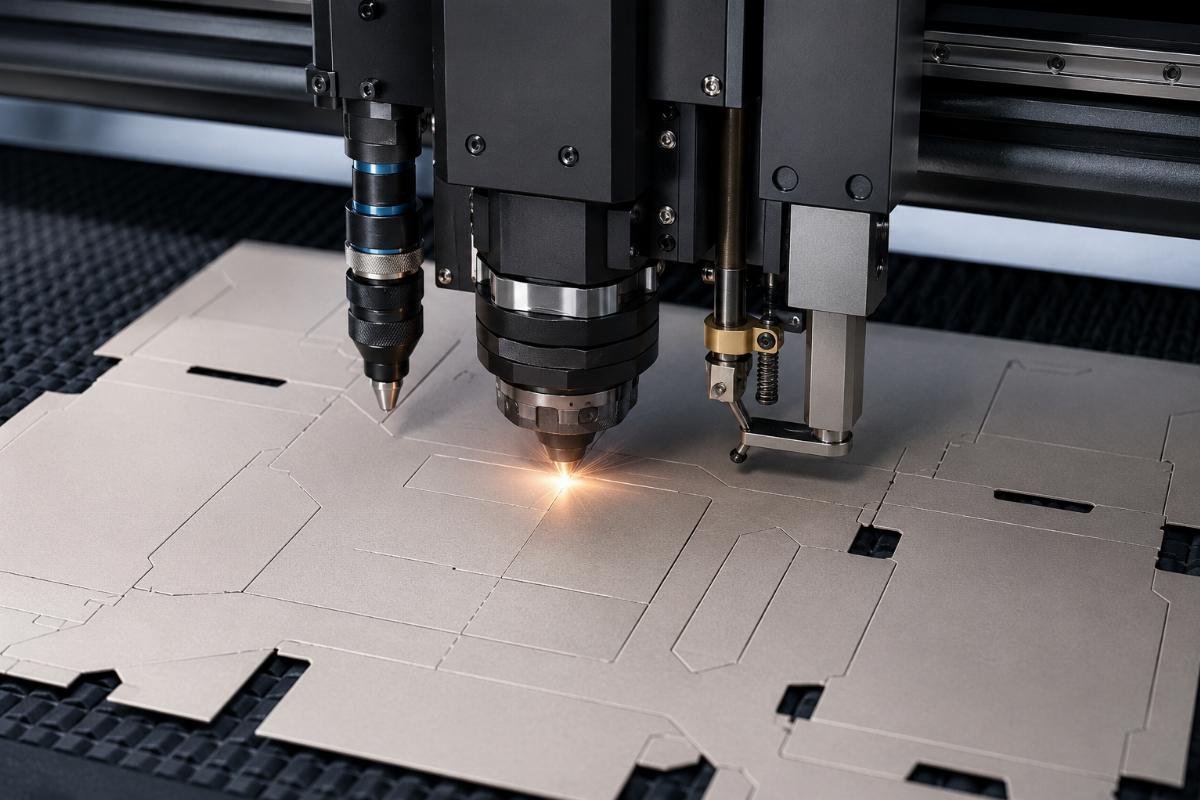
A European packaging manufacturer reached out when their existing cutter could not handle their custom carton and display stand prototype orders. They ordered a custom configuration with integrated knife, creasing and V-cut tools, supporting 50mm maximum cutting thickness, and cut their sample delivery cycle by 70% compared to their previous workflow. [NEED_CITE: A multi-tool CNC cutter with 50mm max cutting thickness reduced sample delivery lead time by 70% for a European packaging producer]
- Waste Tracking – Record daily scrap volume from new material production for 2 consecutive weeks to calculate actual unbudgeted cost
- Downtime Log – Log all unplanned stops related to new material cutting to quantify lost production capacity
- ROI Calculation – Compare monthly cumulative waste cost against the upgrade cost of a purpose-built cutting solution
How to pick a CNC cutter that works for 30+ flexible materials without overpaying?
Prioritize cold cutting technology, verified positioning accuracy and flexible customization capabilities instead of overpaying for unnecessary high-power parameters that do not improve cutting quality for flexible materials. A China-based specialized CNC oscillating knife manufacturer can provide full customization with no minimum order requirement, matching configurations exactly to your production segment without paying for unused features.
| Selection Criterion | Common Overspending Mistake | Cost-Effective Matching Standard |
|---|---|---|
| Customization Terms | Requiring minimum order quantities of 10+ units for custom configurations | 1 unit minimum order with full OEM/ODM support for working area and tooling |
| After-Sales Terms | 1 year limited warranty with paid software upgrades | 3 year warranty with lifelong free software upgrades [NEED_CITE: 3 year warranty and lifelong free software upgrades are standard for specialized flexible material CNC cutters] |
| Tooling Configuration | Pre-packaged fixed tool sets that do not match production needs | Modular tool selection aligned to your specific material and process requirements |
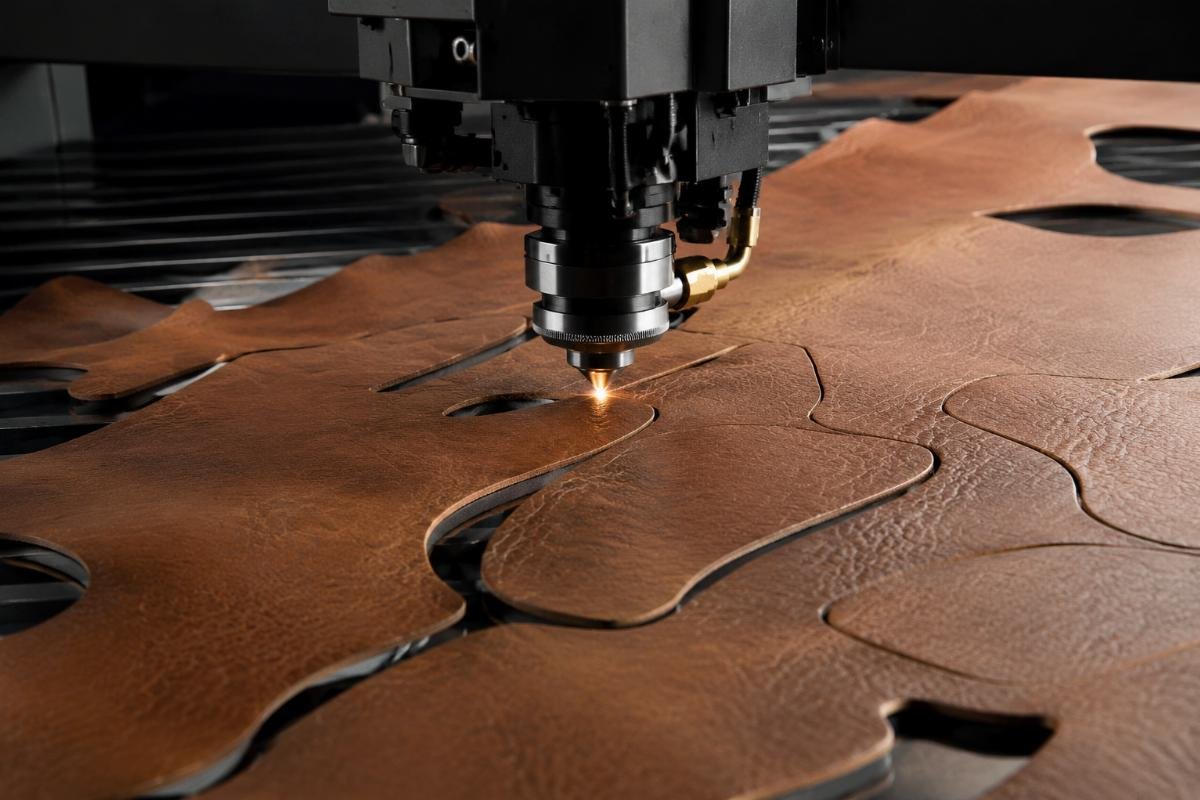
A Chinese leather goods factory serving global luxury brands needed ultra-precise cutting for full-grain genuine leather to minimize waste. They adopted a cold cutting machine with ±0.1mm positioning accuracy, which reduced their genuine leather scrap rate by 20% while delivering cleaner, more consistent cut edges than their previous equipment.
- Configuration Matching – Select only the tooling and working area size that matches your actual production requirements
- Sample Test Requirement – Request free test cutting of your actual production materials before placing any order
- Lead Time Confirmation – Verify custom machine lead time to avoid production schedule disruptions
What terms should you lock in when sourcing a new CNC cutter for multi-material production?
Confirming clear warranty terms, software upgrade policies and sample testing services will eliminate 80% of common post-sourcing risks for multi-material production equipment. Many teams overlook these terms during the purchasing process, only to face unexpected costs when software updates or maintenance are needed later.
| Contract Term | Vague Unclear Agreement | Required Clear Clause |
|---|---|---|
| Warranty Scope | General "quality guarantee" without specific coverage | 3 year full machine warranty with defined exclusion terms |
| Software Policy | No mention of future update support | Lifelong free software upgrades with multi-language interface support |
| Pre-Delivery Verification | No pre-production sample option | Free sample cutting with full test video provided before delivery |
We’ve worked with equipment traders, production factory owners and specialty material processors across 5 core global segments, and the teams that formalize these three terms in their initial supplier inquiry almost never face unexpected issues after machine delivery. The core technical benchmarks to confirm upfront include 30+ flexible material compatibility, 50mm maximum cutting thickness and ±0.1mm repeat positioning accuracy, which align with the tested standards from thousands of global production deployments.
- Warranty Clarification – Get written confirmation of the exact warranty duration and covered components before ordering
- Software Commitment – Confirm that all future software upgrades for the machine will be provided at no additional cost
- Sample Verification – Require the supplier to cut your actual production material and share a full run test video prior to shipping
Conclusion
Most common assumptions about CNC cutter upgrades for new materials are incorrect, and the right solution prioritizes precision and compatibility over unnecessary high-end features. For most production teams, the hidden cost of forcing an existing cutter to handle untested materials far outweighs the one-time investment of a purpose-built flexible material cutting machine. By focusing on the core benchmarks and clear contract terms outlined here, you can avoid