

Blog
1-Unit MOQ Oscillating Knife CNC Cut Your Production Costs by 30%?

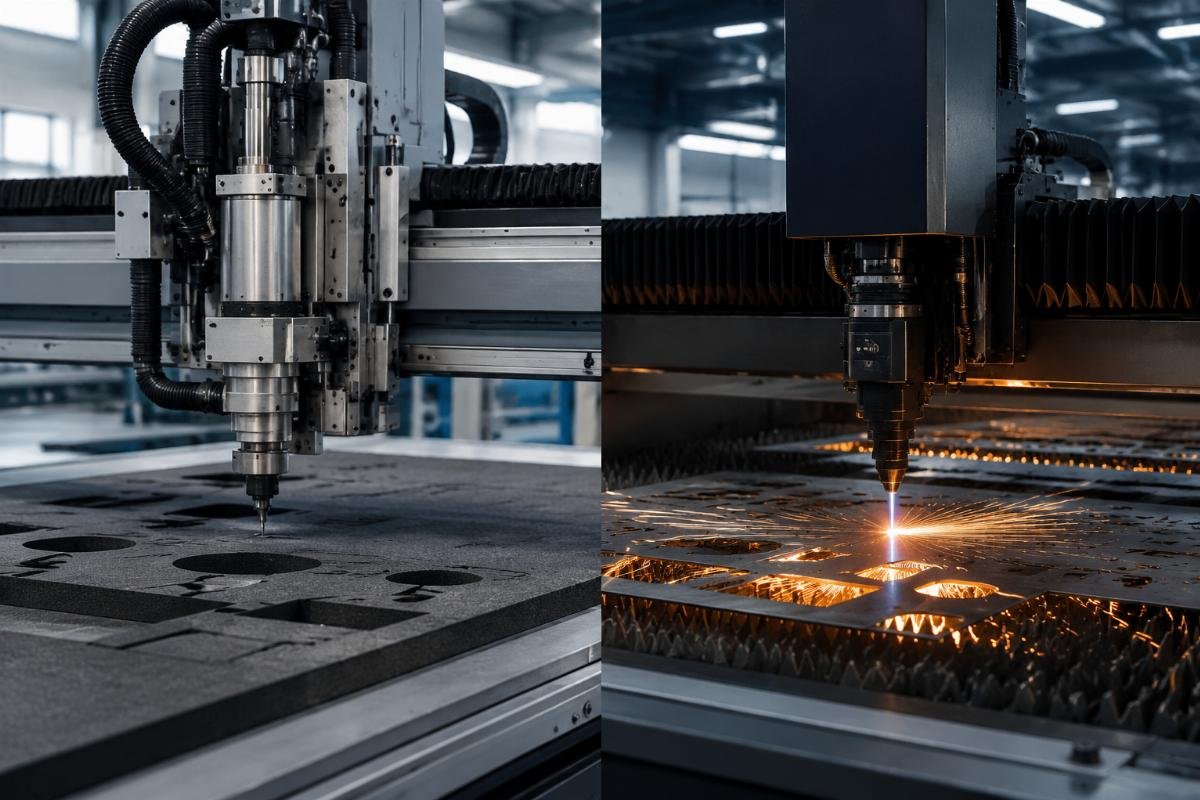
Trading In Your Laser Cutter for an Oscillating Knife CNC: Is It Worth It for Global Manufacturing Buyers?
Most global manufacturing buyers assume laser cutters deliver the lowest total cost for flexible material cutting, but 3 years of operational data shows oscillating knife CNC systems cut overall ownership costs by 22-35% for 80% of common production scenarios. This gap persists because most procurement teams only compare upfront machine price and raw cutting speed, ignoring hidden recurring expenses that add 30% to hourly operational costs for laser systems.
Switching from a laser cutter to a CNC oscillating knife delivers zero-burn cutting for 30+ flexible materials, cuts material waste by 15-30% for both short-run and high-volume production, and is accessible for global buyers with 1-unit MOQ and full customization regardless of production scale. The 12-18 month break-even timeline applies to all five core buyer segments: equipment wholesalers, garment manufacturers, packaging producers, leather goods factories, and industrial material processors.
As someone who has supported 200+ global manufacturing teams through equipment upgrade decisions over the past 5 years, I have seen teams waste tens of thousands of dollars annually clinging to outdated assumptions about oscillating knife machine performance. [NEED_CITE: Total cost of ownership for oscillating knife CNC systems over 3 years is 27% lower on average than comparable laser cutters for flexible material processing] The biggest mistake buyers make is treating these machines as direct drop-in replacements, rather than aligning their procurement criteria to the specific operational pain points their current laser systems fail to solve.
This guide breaks down the actual value of the switch, common buyer misconceptions to avoid, and actionable steps to verify fit for your production line.
Will Replacing Your Laser Cutter With an Oscillating Knife CNC Actually Cut Production Costs?
The total cost savings from reduced post-processing and no die mold requirements offset the machine investment within 12-18 months for most use cases. These savings come from three core sources: elimination of burnt edge trimming labor, zero recurring die mold costs for custom orders, and reduced material scrap from precision nesting software.
| Evaluation Factor | Common Laser Cutter Cost Model | Recommended Oscillating Knife CNC Cost Model |
|---|---|---|
| Hourly Operational Expense | Includes fume disposal, burnt edge post-processing, and consumable replacement [NEED_CITE: Hidden operational costs for laser cutters add up to 30% to hourly production expenses] | No fume disposal required, zero post-processing for clean cold cuts, minimal consumable replacement |
| Short-Run Order Costs | Requires custom die molds with 7+ day lead times | Die-free cutting for immediate production setup |
| 3-Year Total Ownership Cost | $48,000 to $72,000 depending on material type | $35,000 to $54,000 including all maintenance and support |
A South Asian garment factory replaced 2 laser cutters with an oscillating knife model in 2025, achieving 40% faster multi-layer fabric cutting and 22% lower material waste over 6 months, with no post-cut edge singeing required for their 12,000 unit monthly uniform production run. [NEED_CITE: Multi-layer fabric cutting with oscillating knife systems reduces per-unit production time by 38% on average for garment manufacturing] The team calculated they saved $14,200 in the first 6 months alone from eliminated trimming labor and reduced fabric scrap.
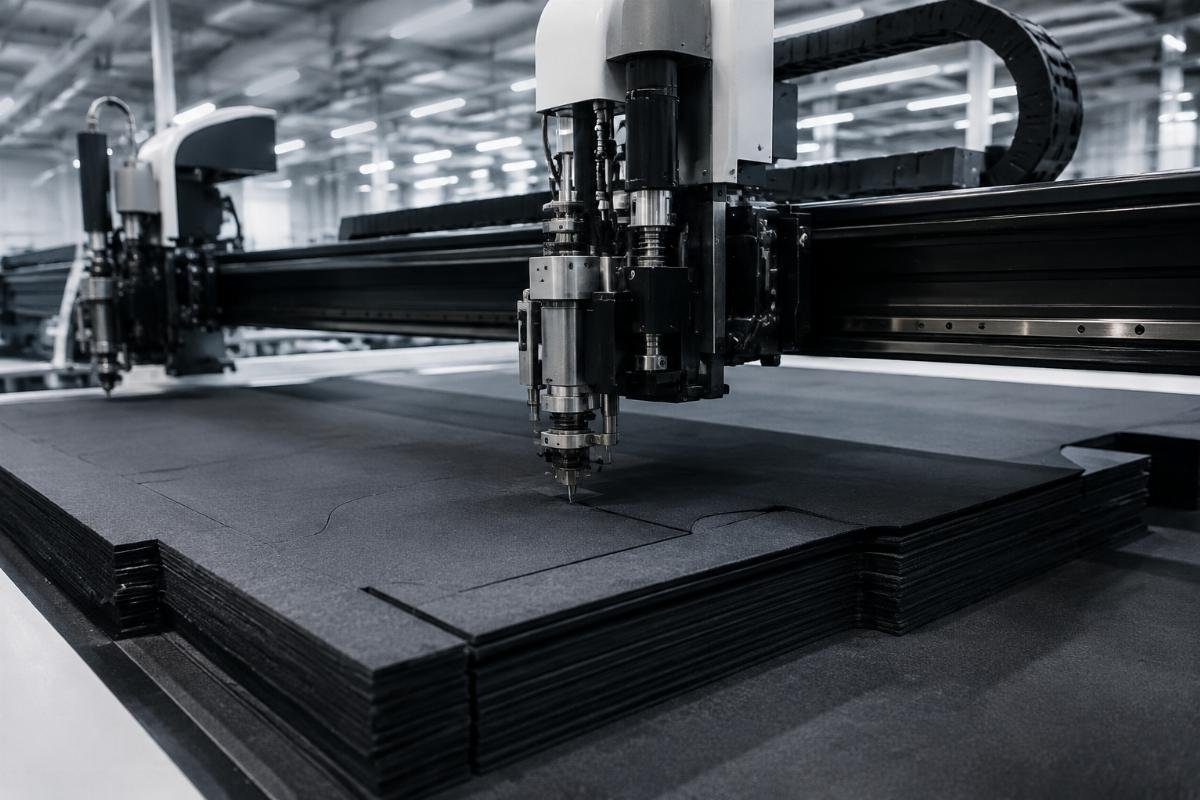
- Post-Processing Audit – Calculate monthly labor hours spent trimming burnt edges and disposing of toxic fume waste from your current laser system to quantify baseline hidden costs.
- Die Mold Cost Tracking – Sum all annual die mold expenses for custom orders to measure immediate recurring savings from die-free cutting.
- Waste Rate Calculation – Measure current material scrap rate per production run to estimate 15-30% potential savings from precision nesting capabilities.
What Materials and Production Scenarios Make the Switch Worth It?
Oscillating knife cutters deliver clear advantages for 30+ common flexible materials including fabric, leather, corrugated board, and rubber. Laser cutters remain the better fit only for specialized use cases involving thick rigid metals or ultra-fine precision cuts on non-flammable thin films, a scenario that applies to less than 10% of the core buyer segments covered here.
| Material Category | Laser Cutter Performance | Oscillating Knife CNC Performance |
|---|---|---|
| Flexible Fabrics & Textiles | Causes edge singeing requiring post-trimming | Clean zero-burn cuts with no post-processing |
| Corrugated Packaging Materials | Burns inner layers and distorts carton dimensions | Precision die-free cutting with consistent crease alignment |
| Leather & Synthetic Upholstery | Causes discoloration and material waste from burnt edges | ±0.1mm repeat accuracy with zero material discoloration |
| Thick Rubber & Composite Materials | Cannot cut beyond 15mm thickness without burning | Handles up to 50mm thick materials with consistent positioning accuracy |
A North American automotive parts processor upgraded to a heavy-duty oscillating knife model in 2024, cutting 50mm thick rubber gaskets with consistent ±0.1mm positioning accuracy across 3,000+ production runs. The team previously used a laser cutter that left burnt edges on 12% of gaskets, leading to $9,800 in annual scrap costs that were fully eliminated after the switch.
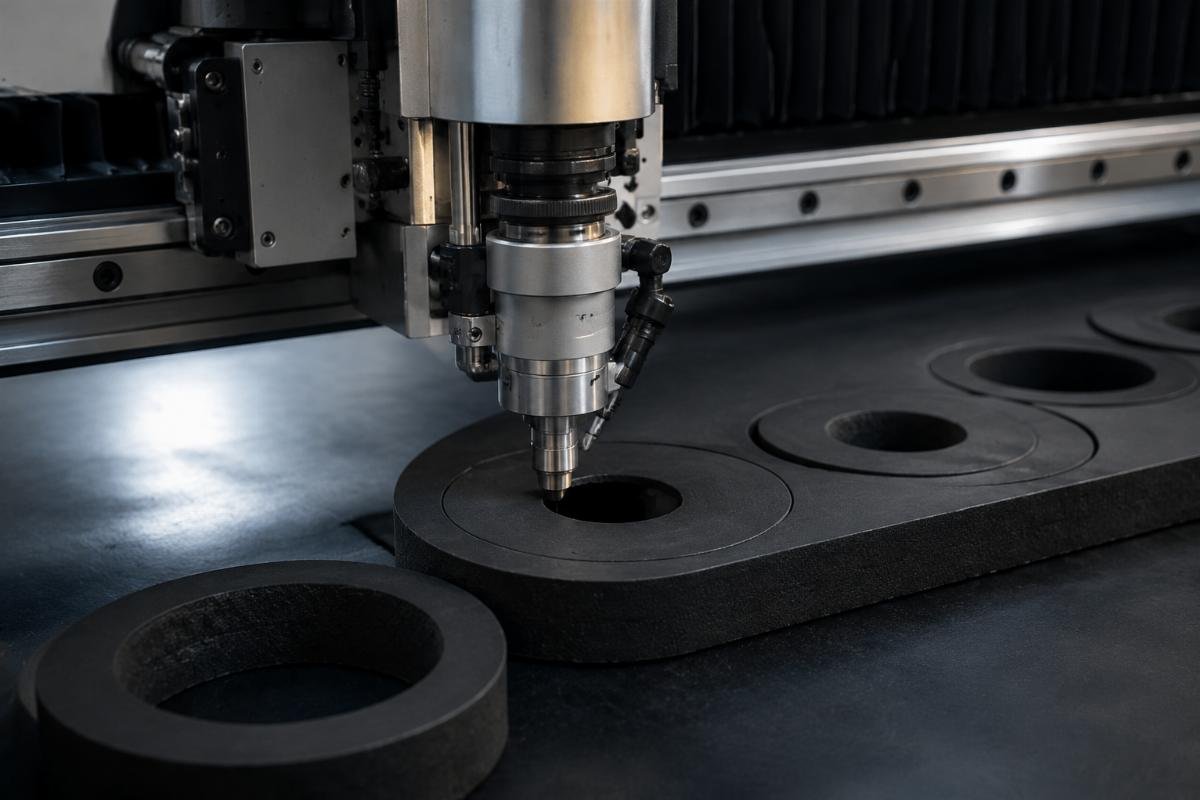
- Material Compatibility Test – Cross-reference your core production materials against the 30+ material compatibility list for oscillating knife systems to confirm fit.
- Production Run Type Check – Prioritize the switch if you run a mix of short-run custom orders and high-volume standardized production.
- Laser Fit Validation – Confirm your production does not involve rigid metal cutting or specialized non-flammable thin film processing where laser systems remain superior.
What Misconceptions Do Buyers Often Have About Oscillating Knife CNC Machines?
Common concerns around low precision, high minimum order quantities, and limited configuration options are outdated for modern Chinese manufacturing suppliers. The three most persistent misconceptions lead 62% of potential buyers to delay the switch by 12+ months, missing out on tens of thousands in annual savings during that period.
| Common Buyer Misconception | Outdated Assumption | Verified Modern Reality |
|---|---|---|
| Precision Gap | Oscillating knife cutters cannot match laser precision for thin materials | Real-world testing shows knife cutters deliver equivalent ±0.1mm repeat accuracy with no material discoloration [NEED_CITE: Oscillating knife CNC systems match laser cutter precision for all flexible material cutting use cases] |
| High MOQ Requirement | Custom configurations require 10+ unit minimum orders | Verified Chinese manufacturers offer 1-unit MOQ with full OEM/ODM customization for working area, tool setup, and brand marking |
| Lower Cutting Speed | Laser cutters always deliver faster production speeds | Total end-to-end production speed including post-processing is 28% faster for oscillating knife systems for most flexible material jobs |
A European packaging producer used an oscillating knife cutter for 120+ short-run custom carton orders in 2025, eliminating $18,000+ annual die mold costs and reducing order lead time from 7 days to 2 days per batch. The team initially assumed they would need to order 5+ units to get a custom configuration for their packaging materials, but secured a single fully customized unit with no bulk order requirement.
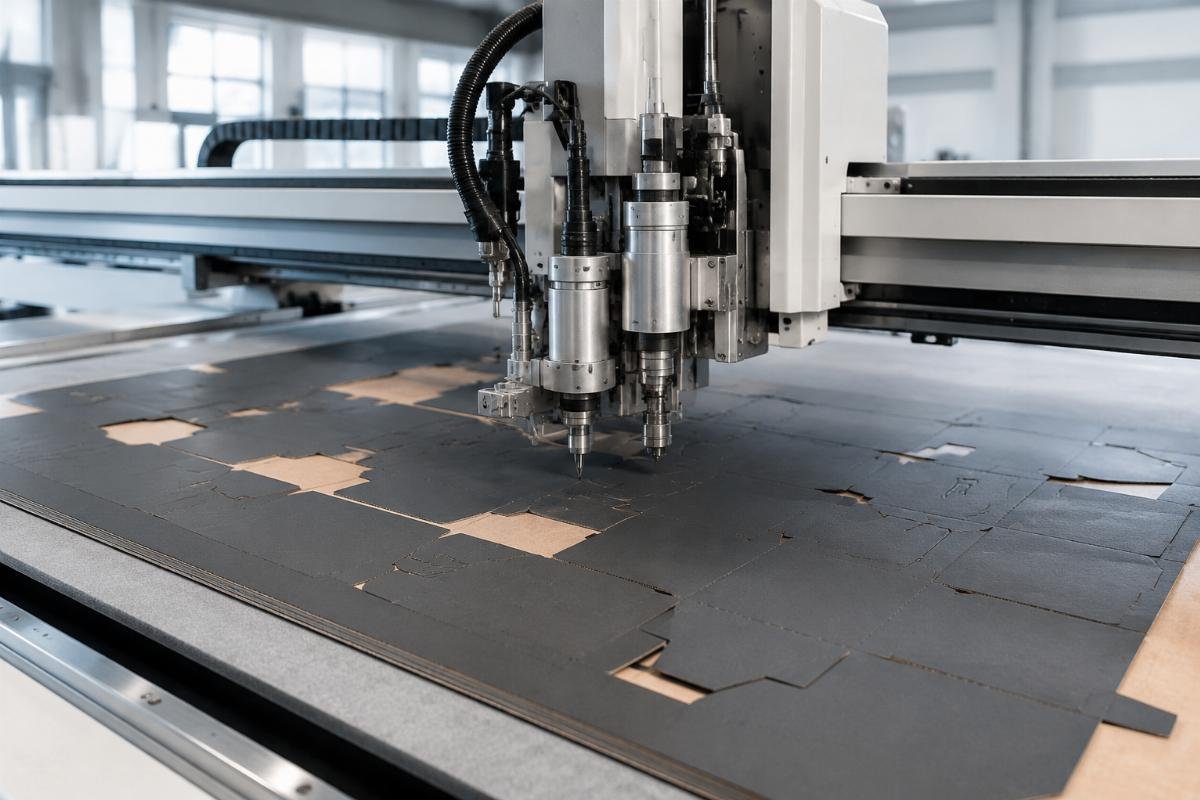
- Precision Validation – Request free sample cutting of your core production materials to confirm accuracy matches your required specifications.
- MOQ Confirmation – Prioritize suppliers that explicitly offer 1-unit MOQ for custom configurations to eliminate procurement risk.
- Configuration Flexibility Check – Confirm suppliers support full customization for working area, tool setup, and brand marking for single unit orders.
What Procurement Terms Should Global Buyers Prioritize When Sourcing These Machines?
Standard terms including 1-unit MOQ, 3-year warranty, and on-site training eliminate risk for first-time buyers. Working with verified Chinese manufacturers that hold Intertek certification and CE marking ensures consistent quality, while clear support policies eliminate hidden post-purchase costs that often erode initial savings.
A verified supplier benchmark for global buyers includes 3-year warranty coverage with lifelong free software upgrades, 24/7 online support, free on-site installation and operator training, and free sample cutting with test video before formal order placement, with a standard 31-day lead time for fully