


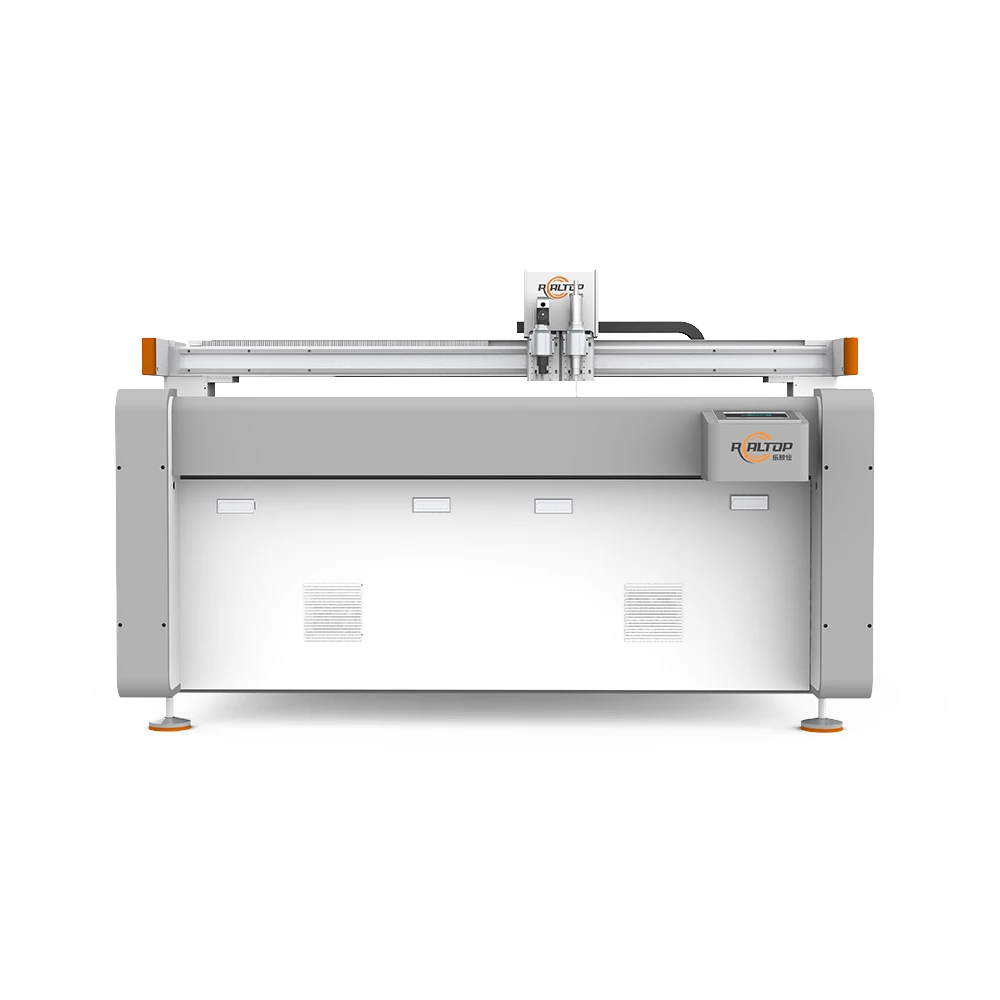
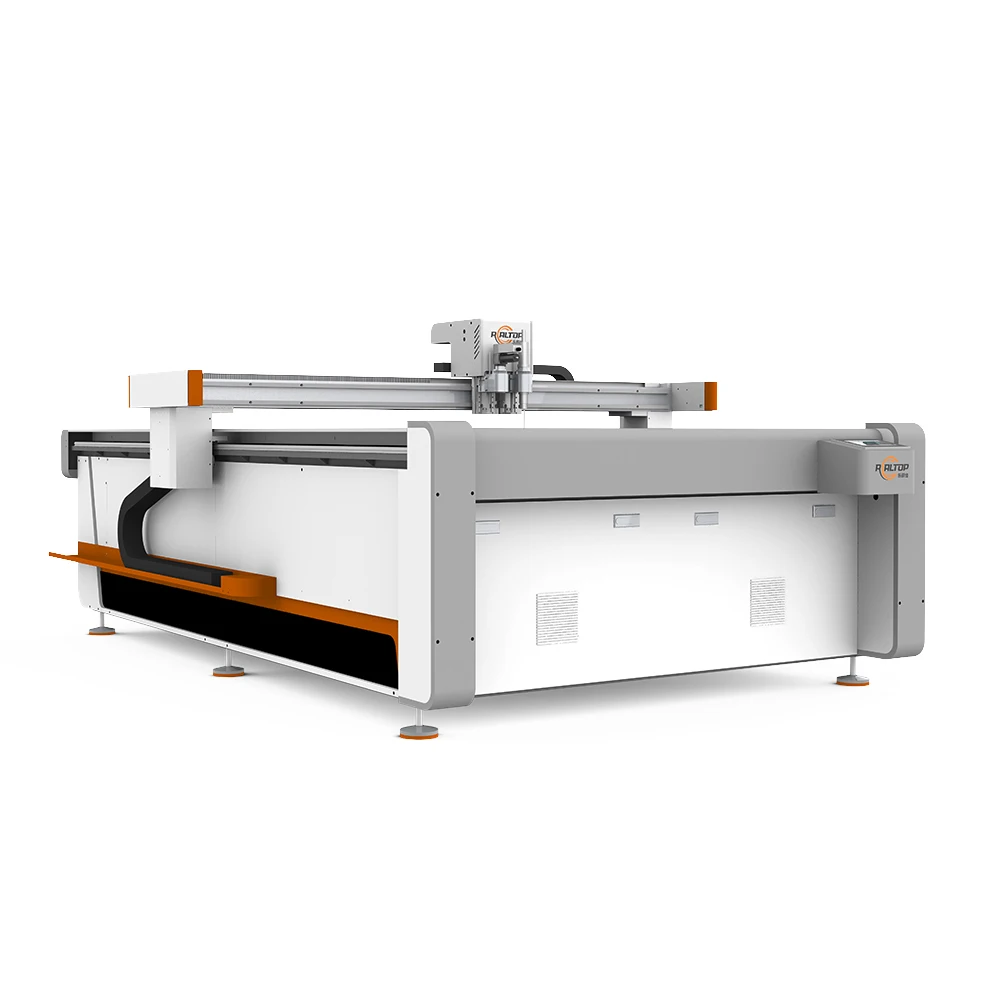
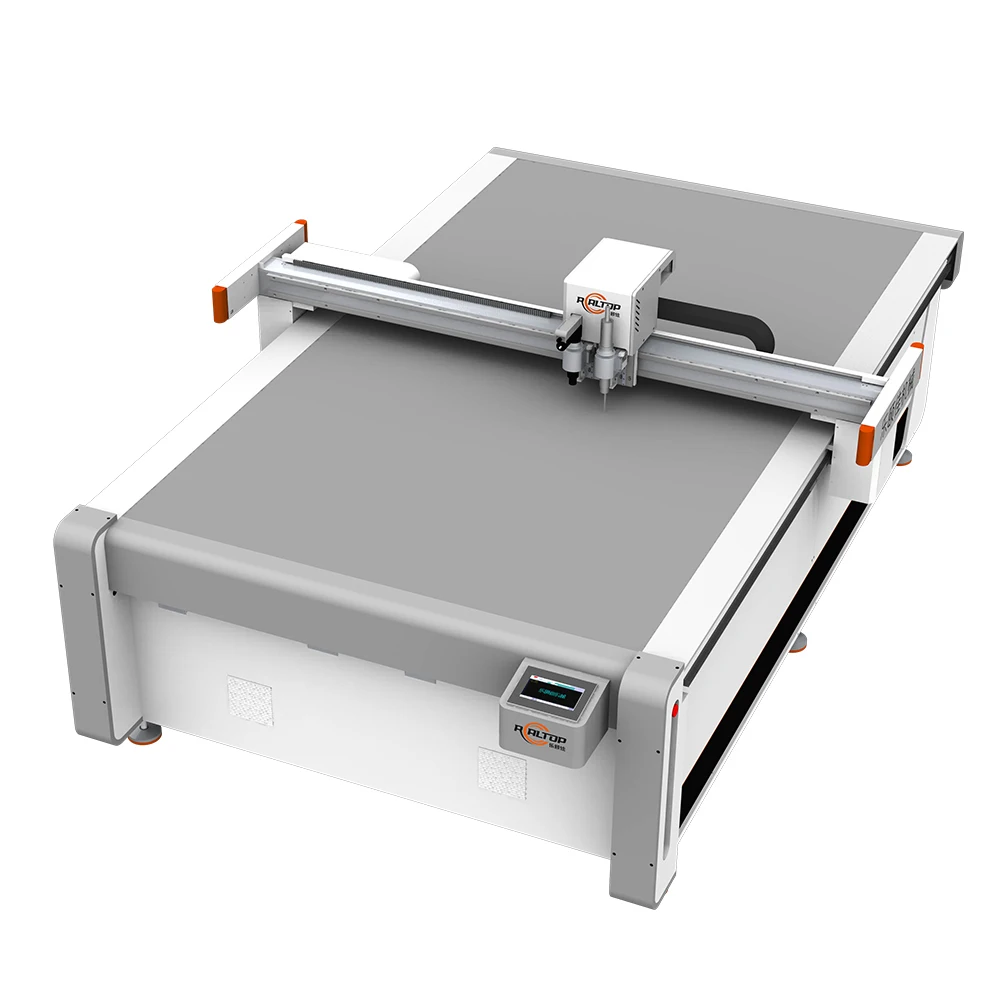

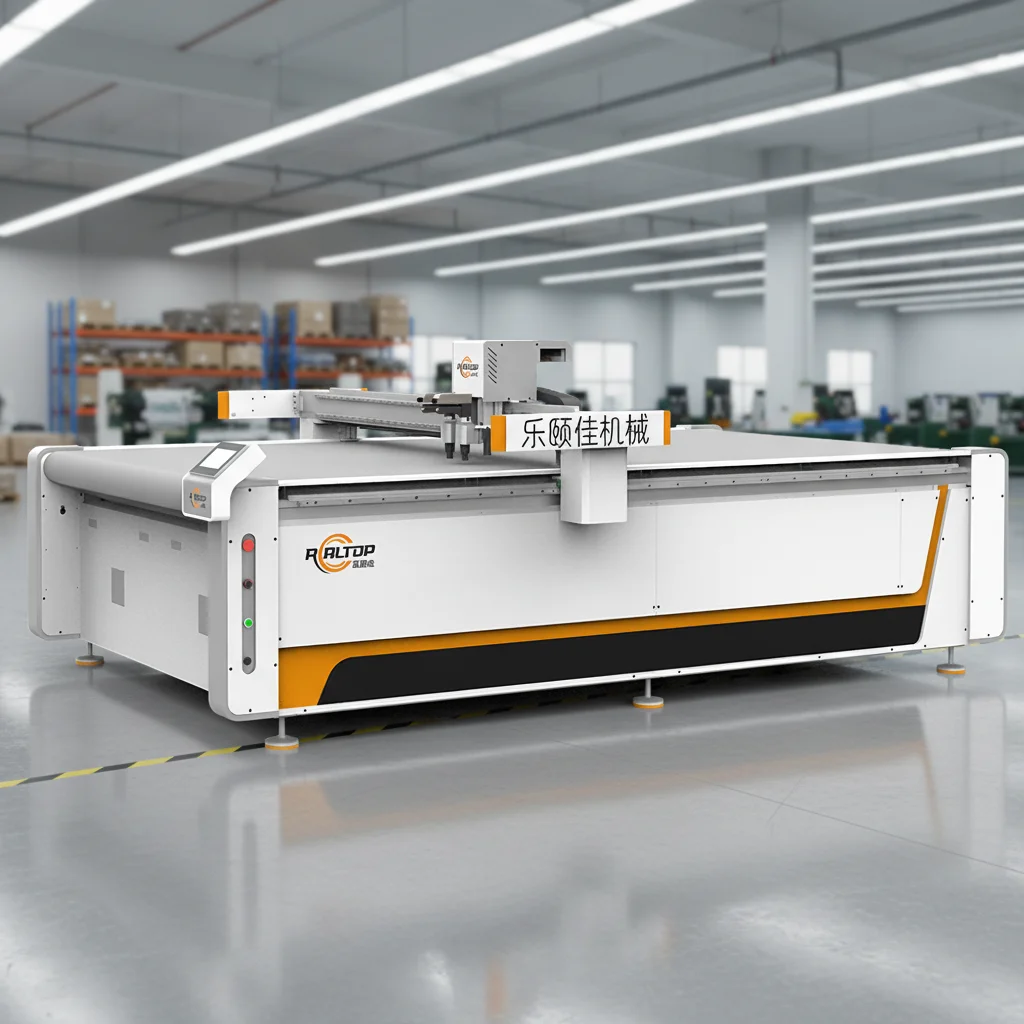
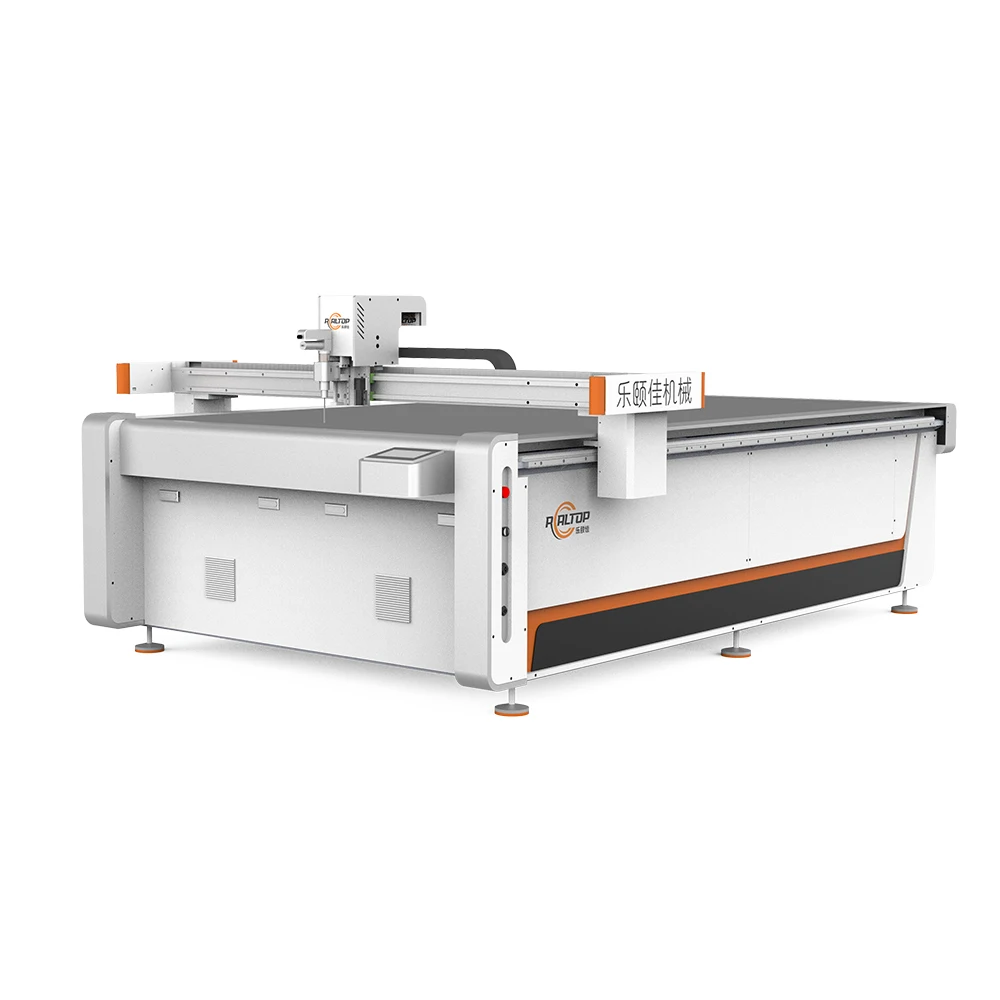
Zoned Vacuum Hold-Down — Small corrugated parts stay flat during high-speed oscillating knife passes because the honeycomb table activates only the zones under the cutting path, preventing lift without requiring a full-sheet seal.
Technical Specifications
| Parameter | Value |
|---|---|
| Model | RT-D2516 / RT-S2516 |
| Product Type | CNC Oscillating Knife Cutting Machine |
| Working Area | 1600 × 2500 mm |
| Machine Footprint | 3450 × 2300 × 1250 mm |
| Rated Power | 9 kW |
| Voltage Requirement | 380V ±10% (50/60 Hz to be confirmed) |
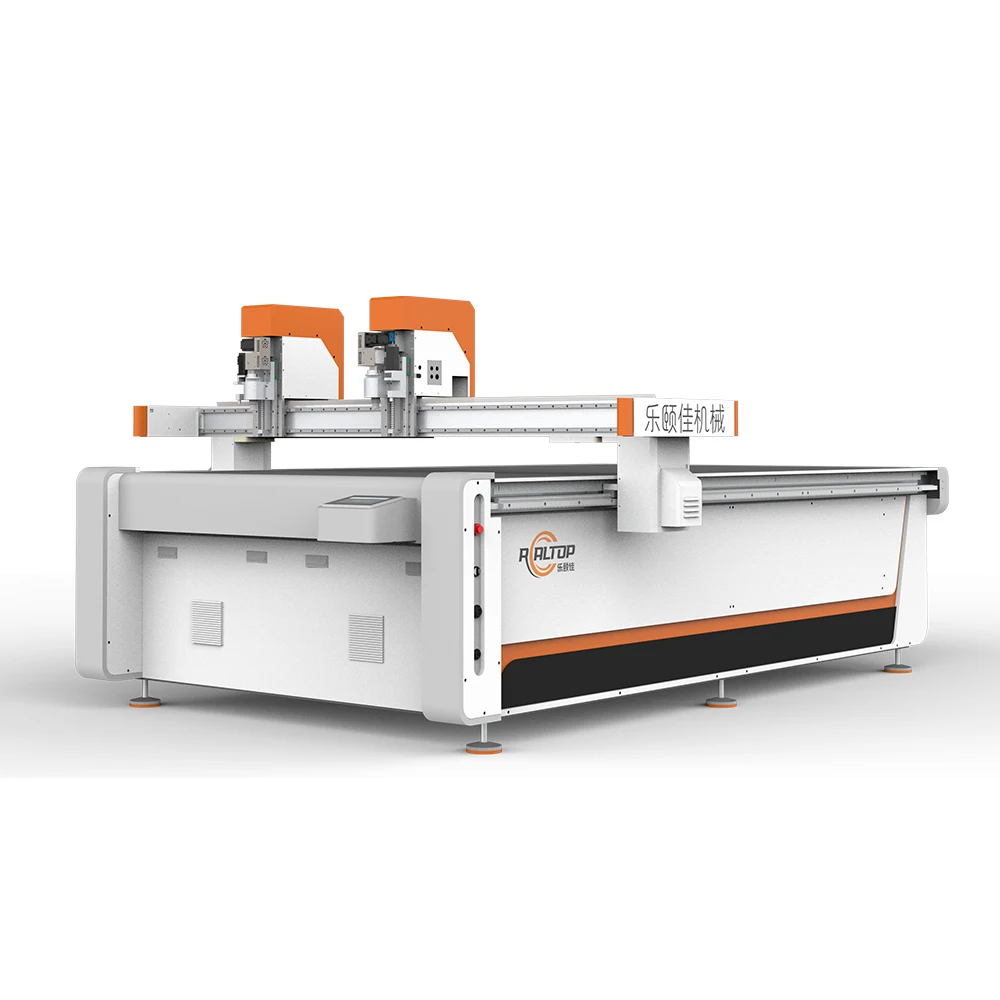
| Tool Head | Swiss imported oscillating knife (full cut, half cut, cursor location) |
| Multifunction Head | Interactive cutting, punching, marking |
| Servo System | Taiwan Delta digital servo motors and drivers |
| Linear Motion | Taiwan Hiwin linear guide rails, synchronous belt, ball screw |
| Vacuum Platform | Aluminum alloy honeycomb structure, zoned follow-up adsorption |
| Vacuum Pump | 7.5 kW |
| Conveyor | Germany imported belt |
| Translational Speed | 800 – 2000 mm/s |
| Cutting Speed | 200 – 800 mm/s (depends on material and thickness) |
| Cutting Thickness | ≤ 100 mm (varies with material) |
| Repeated Accuracy | ≤ 0.1 mm |
| Instruction Format | HP-GL compatible |
| Nesting Software | Professional carton nesting software (included) |
| Control Language | English, Russian, Italian, Chinese (customizable) |
| CCD Camera | Automatic contour positioning for cutting, marking, indentation |
| Safety | Infrared sensors, emergency stop |
| Certification | CE declaration where applicable |
Application Suitability
| Application | Material or Output |
|---|---|
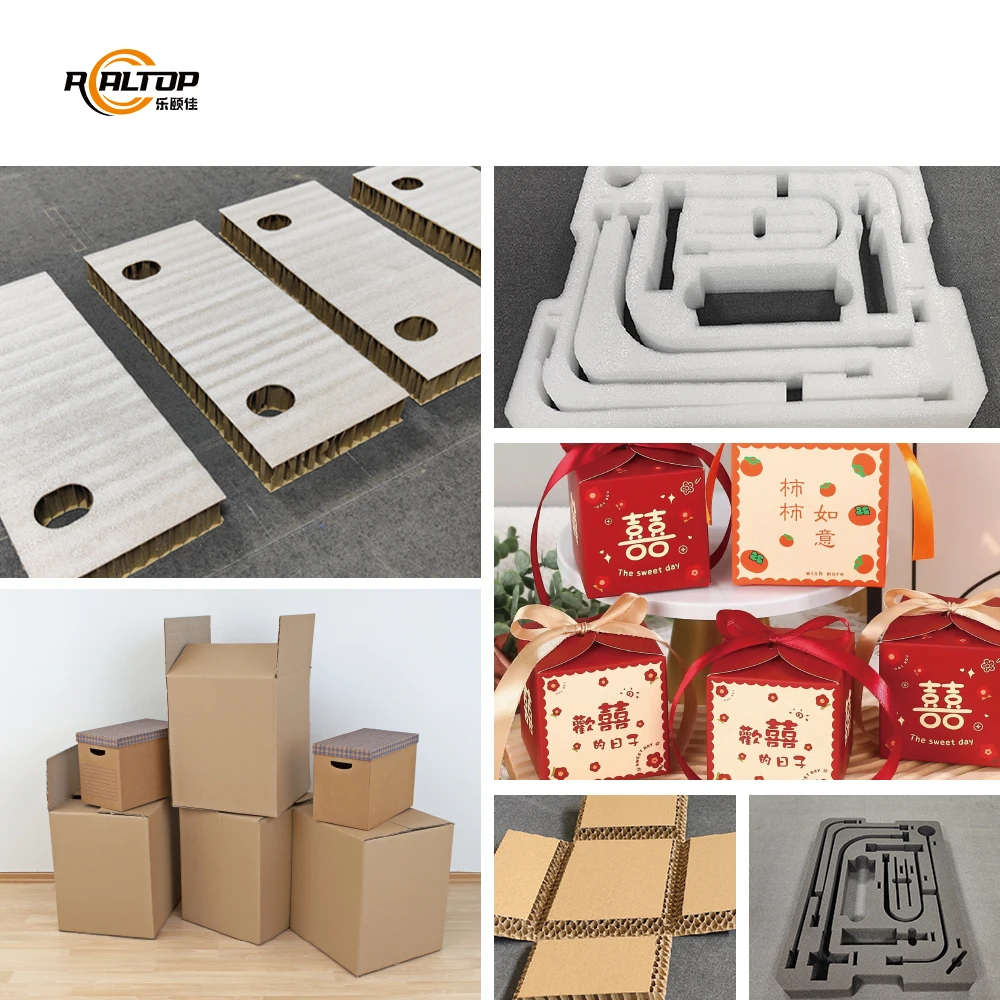
| Corrugated carton sample making | Single, double, and triple-wall corrugated board up to 100 mm |
| Sticker and label contour cutting | Printed vinyl, adhesive-backed paper, PVC film |
| Gift box and rigid packaging | Greyboard, chipboard, folding carton stock |
| Express and shipping carton | Kraft liner, fluted medium, honeycomb paper board |
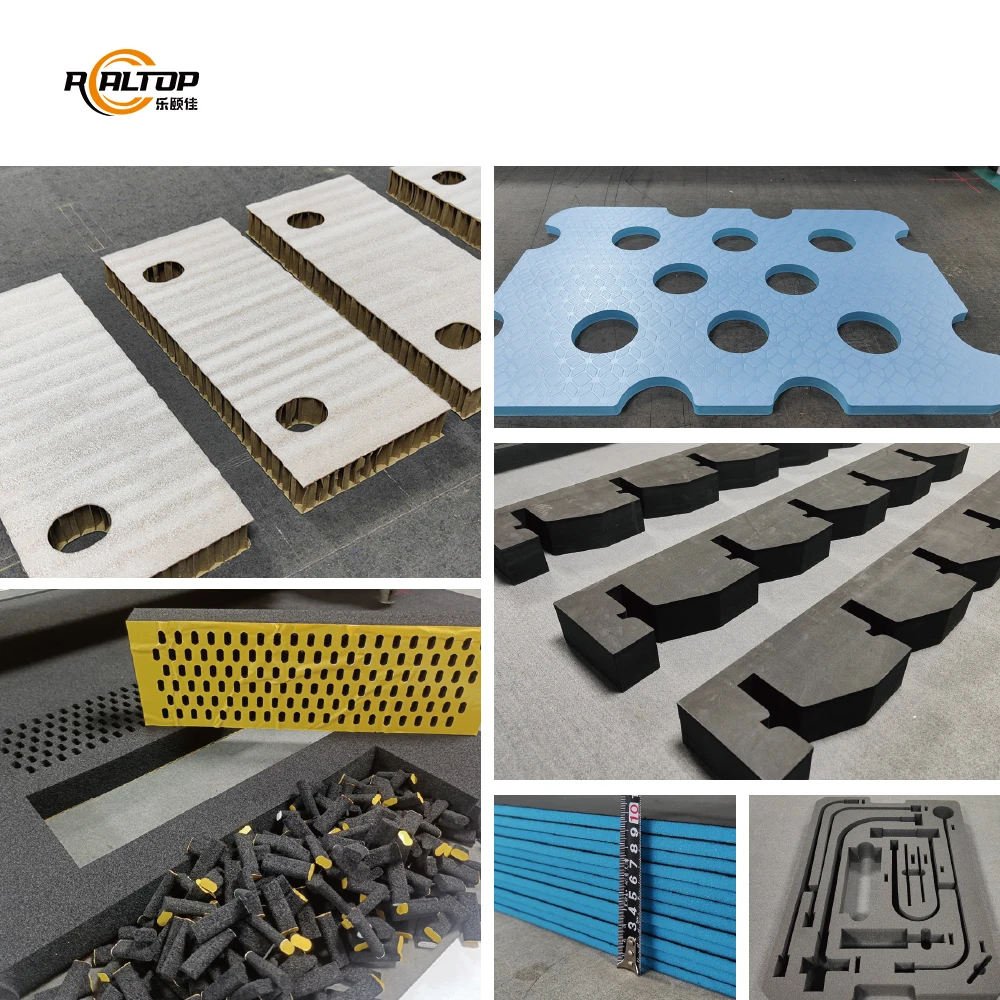
| Gasket and soft composite | Leather, PVC, foam, sponge composite, soft glass, silicone, rubber |
| Garment and textile prototyping | Flexible woven and non-woven fabrics |
Why Printed Marks Disappear at Cutting Speed and What to Do About It
A CCD system either reads marks at production speed or it doesn’t — there is no middle ground on a packaging line.
Cartoon sample makers and sticker producers run printed sheets where registration marks are small, low-contrast, and close to the cut line. If the camera cannot capture and process the mark before the knife arrives, the contour shifts and the run becomes waste. The CNC oscillating knife cutting machine for packaging and carton sample making on this platform uses automatic CCD positioning to locate printed marks, adjust the cutting path, and execute crease, cut, and mark in one pass [NEED_CITE: CCD registration accuracy in digital flatbed cutting]. Asking the supplier for a sample cutting report on your actual printed stock, at your intended running speed, is the only way to verify the system tracks before the machine ships.
Matching the Tool Head to the Board and the Job
Corrugated board crushes if the knife oscillation frequency is wrong for the flute profile. The Swiss imported oscillating knife on the RT-D2516 / RT-S2516 delivers high-frequency vibration for clean full cuts through fluted stock, while the multifunction head adds a creasing wheel for fold lines and a drag knife for sticker contour work. Selecting the correct tool combination means a single setup handles a carton sample from first crease to final cut-out without a tool change, which is where most short-run packaging operations gain or lose their turnaround advantage.
Vacuum Zoning on Small Parts and the Lift Problem
A full-sheet vacuum seal works until the cut path releases a small flap or tuck tab. Once the part is separated, surrounding vacuum zones still pulling air can draw the loose piece sideways into the knife path. The aluminum alloy honeycomb table on this CNC oscillating knife cutting machine for packaging and carton sample making uses zoned follow-up adsorption — only the sections directly under the cutting head engage, so small carton components stay in place while the rest of the sheet remains undisturbed [NEED_CITE: vacuum zoning strategies for flatbed digital cutting tables].
Reading the Specs That Actually Matter on a Cutting Table
The 1600 × 2500 mm working area covers standard full-size corrugated sheets used in carton sample production, allowing a complete box layout to be nested and cut without repositioning. Translational speed of up to 2000 mm/s governs how fast the head moves between cut paths, while cutting speed of 200 – 800 mm/s is the actual production rate through the board — the second number is the one that determines your daily output on a given material thickness. Taiwan Delta servos paired with Hiwin linear guides hold repeated accuracy within 0.1 mm across the full bed, which matters most when crease lines must align with printed graphics for folding carton work. The 7.5 kW vacuum pump supports the zoned honeycomb platform, and its capacity must match the porosity of the material — dense chipboard holds vacuum easily, while open-flute corrugated leaks air and demands more pump volume to keep the sheet pinned.
The Cost of Skipping a Material Test Before the Order
Buyers who specify a machine on working area alone often discover on delivery that the knife head cannot handle their actual board density or that the vacuum table cannot hold small nested parts flat. A sticker producer running thin vinyl may find the oscillating knife tears the material where a drag knife would have sliced it clean. These mismatches surface after the machine is installed, when return shipping is not practical and on-site reconfiguration means days of downtime [NEED_CITE: digital cutting tool selection by material type]. Sending your heaviest corrugated grade and thinnest sticker stock to the factory for a documented sample run costs nothing compared to a week of stopped production.
Why This Machine Is Built for Packaging Workflow
In-house design covers both the oscillating knife mechanism and the CCD positioning system, so the cutting method is matched to the packaging substrate rather than forced through one tool path. Tool head and table configurations are specified per material and production volume before the order is confirmed, not substituted on the assembly floor. Software compatibility with HP-GL and multiple import formats is verified against your existing CAD workflow during the inquiry stage. Voltage, plug type, and control language are locked in before shipment so the machine powers on in your local electrical system. Sample cutting on your own corrugated board and sticker material is standard practice, with a written report provided before you commit.
Documentation & Verification
- Machine specification sheet listing RT-D2516 / RT-S2516 configuration and tool head options
- Electrical schematic confirming 380V ±10% and frequency for your destination market
- Tool head and table configuration list matched to your corrugated and sticker materials
- Sample cutting report on your own board thickness and printed stock before dispatch
- Software licence and file format compatibility note for your CAD nesting workflow
- Factory test record documenting cutting accuracy and vacuum zone performance
Installation, Commissioning & Support
- Floor space of at least 4000 × 3000 mm required around the 3450 × 2300 mm machine footprint for sheet loading access
- Dedicated 380V ±10% circuit with capacity for 9 kW machine load plus 7.5 kW vacuum pump running simultaneously
- Machine ships fully assembled; vacuum pump and conveyor belt connected on-site during commissioning
- First-run parameter setting includes oscillation frequency tuning to your specific flute profile and board grade
- Operator training covers CCD camera calibration, nesting software import, and zone vacuum setup
- Spare parts list includes Swiss oscillating knife blades, creasing wheels, and conveyor belt segments
What to Share When Requesting a Quote
Send your thickest corrugated board specification, your thinnest sticker or label stock, and a sample printed sheet with registration marks so the cutting method, tool head, and CCD calibration can all be confirmed on actual material. Include your local voltage and frequency, preferred control language, and the CAD file formats your design team currently uses. If you are replacing an existing sample table, note its working area and what it cannot handle so the configuration addresses the gap directly.
Frequently Asked Questions
Q: How do I choose between oscillating knife, creasing wheel, and drag knife for my materials?
A: Oscillating knife handles corrugated board and thick foam with clean edges. Creasing wheel scores fold lines on carton stock without cutting through. Drag knife slices thin vinyl and sticker material where oscillation would tear the substrate. The multifunction head supports all three, and the correct combination is determined during sample testing on your specific material stack.
Q: What vacuum zoning do I need for small carton parts?
A: Small flaps, tuck tabs, and partition inserts lift when surrounding vacuum zones pull air through the cut path. The zoned follow-up adsorption system activates only the honeycomb sections under the active cutting head, keeping separated parts flat. The zone layout is configured based on your most common nested layout before the machine ships.
Q: Which file formats does the nesting software accept?
A: The professional carton nesting software supports HP-GL compatible format and multiple additional import formats. File compatibility with your existing packaging CAD system is confirmed during the inquiry stage by exchanging sample files, so your workflow continues without format conversion delays.
Q: How is CCD positioning calibrated for my printed substrates?
A: The CCD camera reads printed registration marks and adjusts the cutting path automatically. Calibration depends on mark size, contrast, and substrate reflectivity. A sample cutting run on your actual printed corrugated and sticker stock verifies that the system tracks marks reliably at your intended production speed before the order is finalized.
Q: What material testing is available before I commit?
A: Send your corrugated board, sticker stock, and printed sheets to the factory. A documented sample cutting report covers cut edge quality, crease alignment, CCD tracking accuracy, and vacuum hold-down performance on your exact materials, provided before you confirm the order.





商品评价
Clear filtersThere are no reviews yet.