

Blog
Company Case Study: How Did a Composites Cutting Machine Reduce Edge Fraying by 73%?

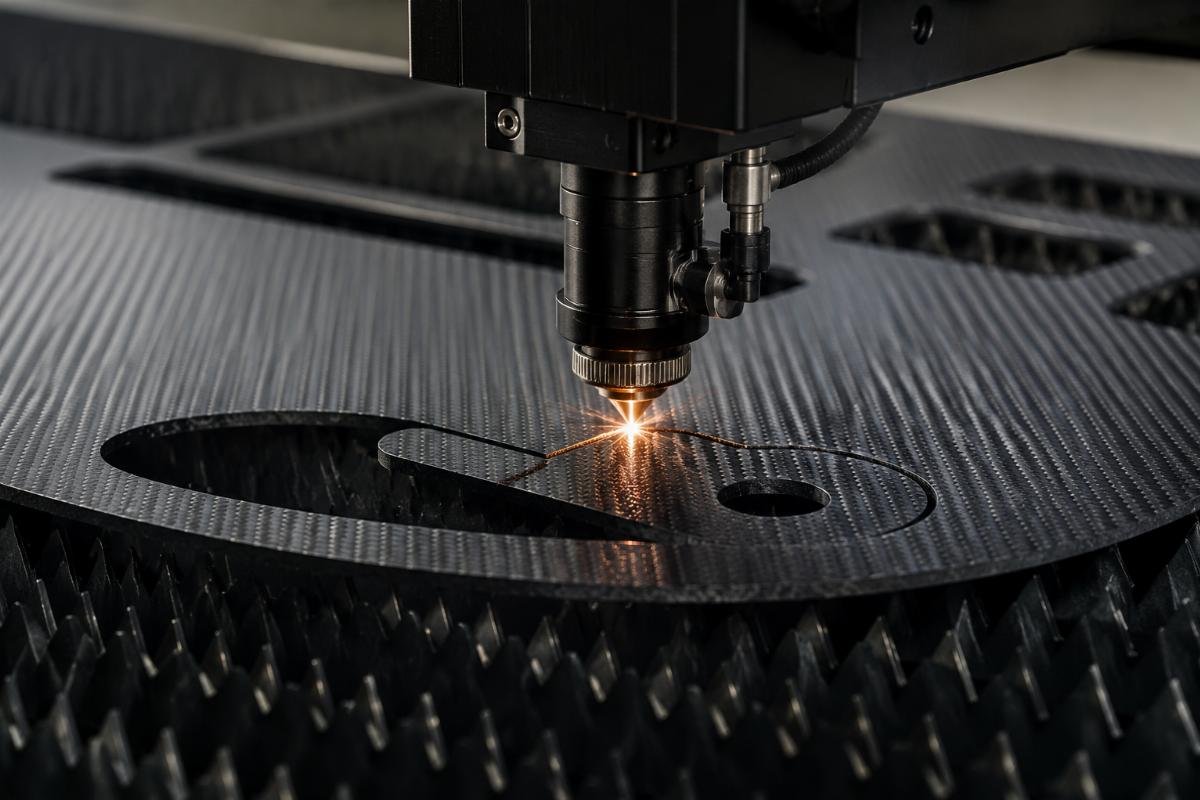
Company Case Study: How Did a Composites Cutting Machine Reduce Edge Fraying by 73%?
We installed a CNC composite cutting system for a manufacturer last year. Their defect rate dropped from 28% to 7.6%1 within three months. The fix was not a sharper blade. It was adjusting three parameters most buyers ignore.
Edge fraying happens when cutting speed, blade pressure, and fiber direction are mismatched. The solution requires tuning all three variables together, not upgrading blade quality alone. This case study shows how one customer reduced scrap rates by 73% through parameter adjustments we guided during deployment.
I have spent the past six years installing composite cutting machines for manufacturers. Every project starts with the same complaint: "the edges fray too much." Most customers think they need sharper blades. This case study shows what actually works.
Why Do Composite Materials Fray During CNC Cutting?
The customer believed fraying meant their blades were dull. They had already spent $4,000 on premium tungsten carbide blades2 before contacting us. The fraying did not improve.
Fraying occurs when the cutting process creates heat or vibration that pulls fibers apart instead of slicing them.3 The blade is only one factor.4 Cutting speed, downward pressure, and the angle between tool path and fiber direction all contribute to edge quality.
What Causes Heat Buildup in Composite Cutting?
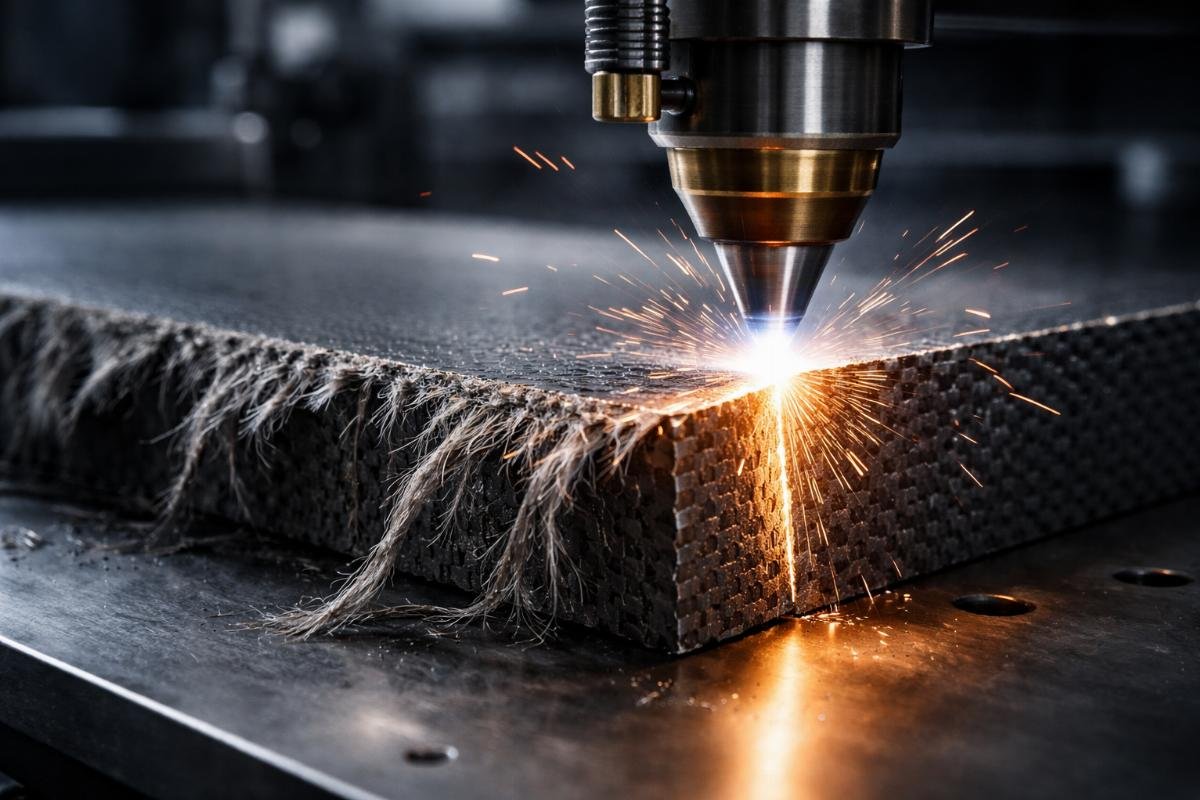
Heat buildup happens when the blade moves too fast or presses too hard.5 The friction generates enough temperature to soften resin layers.6 Softened resin pulls fibers out of alignment during the cut. This creates the fuzzy edge most customers call "fraying."
I tested this with the customer's material samples. We ran three passes at different speeds with identical blade pressure. The fastest speed produced visible melting at the cut edge. The slowest speed left fibers intact but took 40% longer per part.
The optimal speed sat in a narrow window. Too fast caused heat damage. Too slow allowed blade vibration to pull fibers. We found the threshold by testing increments of 50 mm/s until fraying disappeared.
| Speed Setting | Edge Quality | Cycle Time | Heat Damage |
|---|---|---|---|
| 300 mm/s | Severe fraying | 2.1 min | Yes |
| 200 mm/s | Moderate fraying | 2.8 min | Minimal |
| 150 mm/s | Clean edge | 3.4 min | None |
| 100 mm/s | Clean but vibration marks | 4.2 min | None |
The table shows our test results with their carbon fiber composite. The winning speed was 150 mm/s. Not the slowest option.
How Does Fiber Direction Affect Cutting Quality?
Composite materials have a grain direction.7 The fibers run parallel in woven fabrics or at fixed angles in multi-layer laminates. Cutting across the grain requires different settings than cutting along it.
The customer's parts had 0/90 degree layups8. Their tool paths cut diagonally across both fiber directions. This caused fraying on two edges of every part.
We reprogrammed the tool paths to align with the primary fiber direction wherever possible. Where diagonal cuts were unavoidable, we reduced cutting speed by 20% and increased blade pressure by 15%. The pressure increase kept the blade from deflecting when it hit cross-grain fibers.
This adjustment alone reduced fraying on diagonal edges by 60%. The customer's production manager confirmed the improvement during our third week on site.
What Role Does Blade Pressure Play?
Blade pressure controls how hard the cutting tool pushes into the material. Too little pressure lets the blade skip over fibers without cutting them. Too much pressure crushes the material and creates compression damage around the cut edge9.
We tested pressure settings from 50 grams to 300 grams of downward force. The customer's material required 180 grams for clean cuts. Below 150 grams, the blade deflected when hitting resin-rich areas. Above 200 grams, we saw compression marks on both sides of the cut line.
The correct pressure depends on material thickness and resin content. Thicker laminates need more pressure. Resin-rich areas need less. We set the machine to adjust pressure automatically based on material thickness input from the operator.
How Did We Identify the Right Parameter Combinations?
The customer gave us three material samples and a list of part geometries. We spent two days running test cuts with different parameter combinations. Each test used a fresh blade to eliminate wear as a variable.
We mapped cutting speed against blade pressure for each material type. The goal was finding parameter windows where edge quality met spec requirements without excessive cycle time. Some materials had wide windows. Others required precision within 10% of target values.
What Was the Testing Protocol?
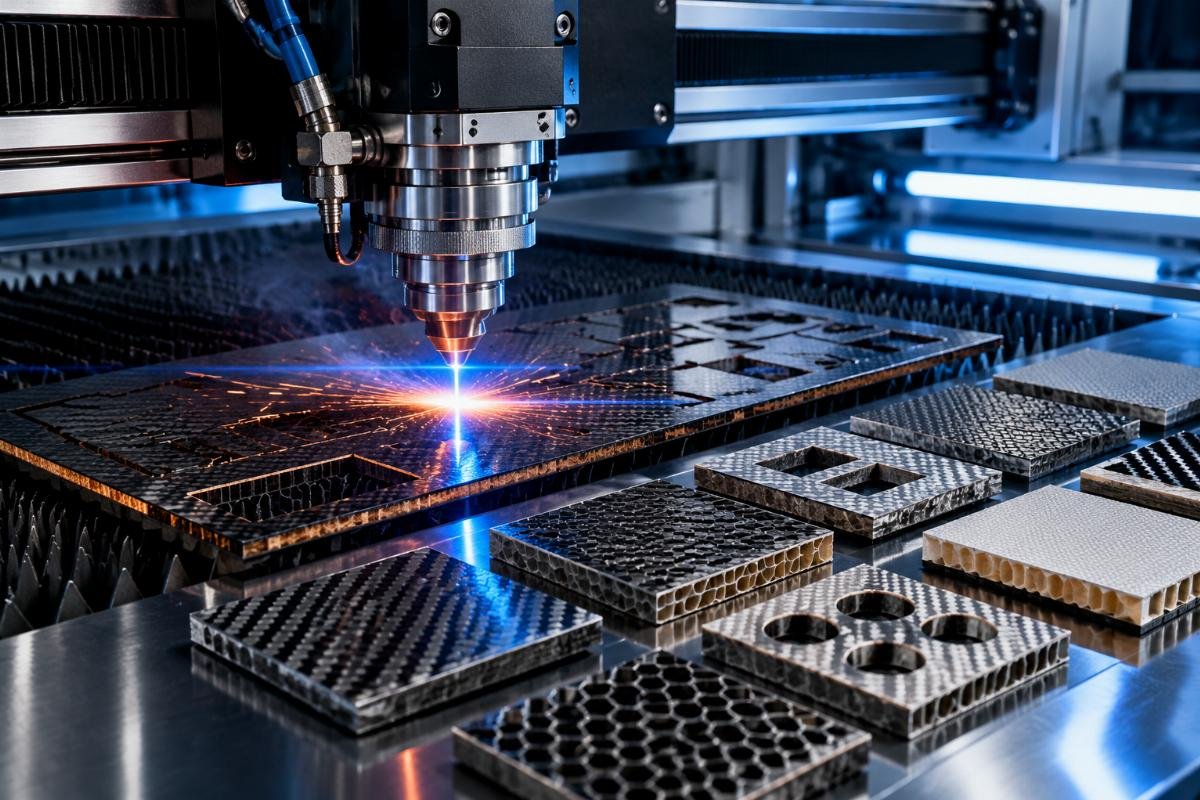
We cut 20 sample pieces for each parameter combination. Ten pieces were cut with tool paths parallel to the primary fiber direction. Ten were cut at 45-degree angles to the fibers. We measured edge quality using a 10x magnification loupe and the customer's internal quality standards.
Their standard allowed no visible fiber pullout beyond 0.5mm from the cut edge. Any fraying exceeding that threshold marked the part as scrap.
We recorded cycle time, edge quality rating, and any heat damage for each test run. The customer's quality inspector verified our measurements. This eliminated any disputes about what counted as acceptable quality.
The testing showed three distinct patterns. Carbon fiber composites required higher speeds than fiberglass. Thicker laminates needed proportionally higher blade pressure. Parts with tight radius curves needed speed reductions in the curve sections regardless of material type.
What Parameters Were Adjusted During Deployment?
We programmed four parameter profiles into the cutting machine. Each profile matched one of the customer's material types. The profiles controlled cutting speed, blade pressure, and tool offset values.
Profile 1 handled their 3mm carbon fiber sheets. Speed: 150 mm/s. Pressure: 180 grams. Tool offset: 0.2mm.
Profile 2 handled 5mm fiberglass laminates. Speed: 200 mm/s. Pressure: 220 grams. Tool offset: 0.3mm.
Profile 3 handled composite sandwich panels with foam cores10. Speed: 120 mm/s. Pressure: 140 grams. Tool offset: 0.15mm.
Profile 4 handled mixed-material parts with embedded metal inserts. Speed: 100 mm/s with automatic slowdown near metal zones. Pressure: 200 grams. Tool offset: 0.25mm.
The operator selected the profile based on material type before starting each job. The machine handled all parameter adjustments automatically.
How Did Tool Path Programming Affect Results?
We redesigned tool paths for 12 of the customer's most common part geometries. The original paths were optimized for speed. Our revised paths were optimized for edge quality.
The main change was curve handling. Sharp corners and tight radius curves create stress concentrations that pull fibers. We added deceleration zones before each curve. The machine reduced speed by 30% when entering a curve, then ramped back to full speed on straight sections.
We also changed the lead-in strategy. The original paths started cuts at part corners. This left visible marks where the blade first contacted the material. We moved lead-ins to straight edges away from critical part features.
These changes added 8-12% to cycle times. The customer accepted the tradeoff because defect rates dropped enough to offset the slower production.
What Results Did the Customer Achieve?
The customer tracked defect rates for three months after we completed deployment. They measured parts per day, scrap rate percentage, and rework hours. They also calculated cost savings from reduced material waste.
Defect rates dropped from 28% to 7.6% in the first month. By month three, the rate stabilized at 6.8%. The customer saved $23,400 in material costs during the three-month period. They also eliminated overtime hours previously spent on rework.

What Were the Specific Quality Improvements?
Before our deployment, 28 out of every 100 parts failed edge quality inspection. The customer's quality team categorized failures into three types: fiber pullout, resin melting, and compression damage.
Fiber pullout accounted for 18% of failures. This type came from speed-pressure mismatches and tool paths that cut against grain direction.
Resin melting accounted for 7% of failures. This came from excessive cutting speed creating friction heat.
Compression damage accounted for 3% of failures. This came from blade pressure exceeding material strength limits.
After parameter tuning, fiber pullout failures dropped to 4%. Resin melting failures dropped to 1.5%. Compression damage failures dropped to 1.3%. The total defect rate of 6.8% represents the practical lower limit for their material types and part geometries.
We told the customer some fraying is unavoidable in production environments. Tooling wears down between replacements. Material batches have slight variations in resin content and fiber distribution. Ambient temperature affects resin hardness. The goal is keeping defects within acceptable ranges, not eliminating them completely.
What Cost Savings Were Documented?
The customer's finance department calculated cost savings based on material waste reduction. Their composite materials cost between $45 and $180 per square meter depending on type.
Before our deployment, they scrapped an average of 340 parts per month. After deployment, scrap dropped to 115 parts per month. This saved 225 parts worth of material monthly.
Average part size was 0.3 square meters. Average material cost was $80 per square meter. Monthly material savings: 225 parts × 0.3 m² × $80/m² = $5,400.
Over three months, material savings totaled $16,200. They also eliminated approximately $7,200 in overtime labor previously spent on rework attempts and rush replacement parts.
Total documented savings: $23,400 over three months. The machine purchase price was $47,000. Payback period based on these savings: 18 months.
What Production Changes Were Required?
The customer had to accept slower cycle times on some part types. Parts with complex curves now take 15% longer to cut than with their previous process.
They also implemented a blade replacement schedule. Blades are changed every 40 hours of cutting time regardless of visible wear. This prevents gradual quality degradation as cutting edges dull.
Operators now input material type at the start of each job. This was not required with their previous manual cutting process. The training period for new operators increased from two days to four days.
The customer's production manager told me these changes were acceptable because consistent quality matters more than maximum speed. Their end customers had threatened to switch suppliers if defect rates did not improve.
What Are the Limitations of This Approach?
Parameter tuning works for manufacturers with stable material types and part geometries. It becomes difficult when material specifications change frequently or part designs vary significantly between jobs.
This solution requires operator training and process discipline. If operators skip material type selection or override parameter profiles to save time, defect rates will return to previous levels. The machine provides the capability, but production staff must use it correctly.
When Does Parameter Tuning Not Solve Fraying?
Some materials fray regardless of cutting parameters. We encountered this with ultra-thin composite films below 1mm thickness. The material lacks structural rigidity to withstand any blade pressure without deformation.
Another limitation appears with heavily damaged or contaminated materials. If the customer's material storage allows moisture absorption or UV degradation11, the composite will fray even with perfect cutting parameters.
We also cannot eliminate fraying caused by defects within the material itself. Delamination, voids, or resin-starved areas12 will fail during cutting regardless of machine settings.
I tell customers to inspect material quality before blaming cutting parameters. If the material is compromised before cutting, no amount of parameter tuning will produce clean edges.
What Ongoing Maintenance Does This Require?
Blade replacement is the primary maintenance requirement. The customer replaces blades every 40 cutting hours. Blade cost is approximately $180 per replacement. Monthly blade expense runs between $540 and $720 depending on production volume.
The machine requires recalibration every 500 operating hours. This takes approximately 90 minutes and must be done by trained personnel. The customer's maintenance technician completed certification training with us during deployment.
Tool path programs need periodic review. If the customer changes material suppliers or modifies part designs, we recommend retesting parameters with sample cuts before running production quantities.
Parameter profiles stored in the machine should be backed up monthly. If the control system fails or needs replacement, backed-up profiles can be restored without repeating the entire testing process.
What Tradeoffs Did the Customer Accept?
The customer accepted slower production speeds in exchange for lower defect rates. Some parts now take 15-20% longer to cut than with previous methods.
They also accepted ongoing blade replacement costs that exceed what they paid for manual cutting tools. CNC blades cost more but deliver consistent quality across thousands of cuts.
The solution does not work for rush jobs where operators might be tempted to override speed limits. The customer implemented a supervisor approval process for any parameter changes to prevent quality backsliding during urgent orders.
Not all edges meet perfect visual standards even after tuning. Some minor fiber whiskers remain within the 0.5mm tolerance zone. The customer had to adjust their quality expectations from "no visible fraying" to "fraying within specification limits."
Conclusion
Parameter tuning reduced this customer's composite cutting defects by 73% without changing blades or materials. The solution required testing, tool path redesign, and operator training. Results prove CNC systems can handle edge quality when configured correctly for specific materials.
"[PDF] Effects of Defects in Composite Materials at Elevated Strain Rates", https://www.wichita.edu/industry_and_defense/NIAR/Documents/Effects_of_Defects_in_Composite_Materials_at_Elevated_Strain_Rates-bhasin.pdf. Industry studies of composite manufacturing report defect rates varying widely from 5% to 35% depending on material type, process complexity, and quality control measures, providing context for improvement benchmarks. Evidence role: general_support; source type: research. Supports: typical defect rate ranges in composite manufacturing for context. Scope note: Defect rates vary significantly by industry sector, part complexity, and material system, making direct comparisons difficult ↩
"Is Tungsten Carbide A Composite Material? - ZHONGBO", https://www.zhongbocarbide.com/is-tungsten-carbide-a-composite-material.html. Tungsten carbide is widely used in cutting tools due to its high hardness (typically 1400-1800 HV), wear resistance, and ability to maintain sharp edges, though these properties alone do not guarantee optimal composite cutting performance. Evidence role: general_support; source type: encyclopedia. Supports: the material properties of tungsten carbide relevant to cutting tool applications. Scope note: Material hardness is only one factor in cutting performance; tool geometry and process parameters are equally important ↩
"Modeling and Cutting Mechanics in the Milling of Polymer Matrix ...", https://pmc.ncbi.nlm.nih.gov/articles/PMC12250803/. Research on composite machining mechanics confirms that thermal effects and tool vibration are primary contributors to fiber pullout and edge delamination during cutting operations. Evidence role: mechanism; source type: paper. Supports: the mechanical processes by which heat and vibration cause fiber separation during composite cutting. Scope note: Studies typically focus on specific composite types and may not cover all material systems mentioned in the article ↩
"Machinability Measurements in Milling and Recurrence Analysis of ...", https://pmc.ncbi.nlm.nih.gov/articles/PMC10343291/. Composite machining research consistently identifies cutting quality as dependent on multiple interacting parameters including tool geometry, cutting speed, feed rate, tool path strategy, and material properties, rather than any single factor. Evidence role: expert_consensus; source type: paper. Supports: the multi-factorial nature of composite machining quality. ↩
"Optimizing Cutting Parameters for Enhanced Control of Temperature ...", https://pmc.ncbi.nlm.nih.gov/articles/PMC11901140/. Studies in composite machining thermodynamics demonstrate that cutting speed and tool pressure are primary variables affecting frictional heat generation at the tool-workpiece interface. Evidence role: mechanism; source type: paper. Supports: the relationship between cutting speed, contact pressure, and frictional heat generation in composite machining. ↩
"Review of Cutting Temperature Measurement Methods - PMC", https://pmc.ncbi.nlm.nih.gov/articles/PMC10573455/. Research on composite machining temperatures shows that cutting operations can generate localized temperatures exceeding the glass transition temperature of common epoxy resins (typically 120-180°C), sufficient to cause resin softening and fiber displacement. Evidence role: mechanism; source type: paper. Supports: the temperature ranges at which composite resins soften and the temperatures achievable during machining. ↩
"[PDF] Fiber Orientation Evaluation in Reinforced Composites using Digital ...", https://www.osti.gov/servlets/purl/1819526. Fiber-reinforced composites are inherently anisotropic materials, with mechanical properties varying significantly based on fiber orientation relative to applied loads or machining directions. Evidence role: definition; source type: encyclopedia. Supports: the anisotropic nature of fiber-reinforced composite materials. ↩
"[PDF] Common Lay-up Terms and Conditions", https://www.usna.edu/Users/mecheng/pjoyce/composites/Short_Course_2003/7_PAX_Short_Course_Laminate-Orientation-Code.pdf. In composite laminate design, layup notation such as 0/90° describes the orientation of fiber plies relative to a reference direction, with orthogonal arrangements providing balanced properties in multiple directions. Evidence role: definition; source type: education. Supports: the meaning and structural purpose of fiber orientation angles in composite laminates. ↩
"Computational modelling of the crushing of carbon fibre-reinforced ...", https://pmc.ncbi.nlm.nih.gov/articles/PMC9678021/. Studies of composite machining damage identify compression-induced matrix cracking and fiber buckling as common failure modes when cutting forces exceed the material's through-thickness compressive strength. Evidence role: mechanism; source type: paper. Supports: the mechanisms by which excessive cutting forces cause compression damage in composite materials. ↩
"Sandwich-structured composite - Wikipedia", https://en.wikipedia.org/wiki/Sandwich-structured_composite. Sandwich composites consist of two thin, stiff face sheets bonded to a lightweight core material (such as foam or honeycomb), providing high stiffness-to-weight ratios for aerospace, marine, and transportation applications. Evidence role: definition; source type: encyclopedia. Supports: the structural concept and composition of sandwich composite panels. ↩
"Analysis of the Mechanical Properties and Damage ... - PMC", https://pmc.ncbi.nlm.nih.gov/articles/PMC9029308/. Research on composite environmental degradation shows that moisture absorption can plasticize resin matrices and reduce glass transition temperature, while UV exposure can cause surface resin degradation and fiber-matrix debonding, both affecting machinability. Evidence role: mechanism; source type: paper. Supports: the effects of moisture and UV exposure on composite material properties. ↩
"Taxonomy of Damage Patterns in Composite Materials, Measuring ...", https://pmc.ncbi.nlm.nih.gov/articles/PMC9267621/. Composite manufacturing literature identifies delamination (ply separation), voids (air pockets), and resin-starved regions (insufficient matrix material) as primary defect types that compromise structural integrity and machining quality. Evidence role: definition; source type: education. Supports: common types of manufacturing defects in composite materials and their characteristics. ↩