
Blog
How to Source Reliable CNC Machines for Poland Romania Bulgaria from China Suppliers

How to Source Reliable CNC Machines for East European Markets: Poland, Romania, Bulgaria
Most custom low-MOQ CNC machines for East European buyers do not require 2+ month lead times or long-term hidden maintenance costs. For industrial operators and machinery traders operating across Poland, Romania, and Bulgaria, sourcing cost-effective, high-precision cutting solutions for flexible materials no longer means choosing between accessible order volumes and regional compliance requirements.
Prioritizing suppliers with Intertek verification, CE certification, and region-aligned after-sales support is the fastest way to avoid import delays, unplanned operational costs, and misaligned configuration gaps for small to mid-sized production needs.
Over 7 years of supporting industrial procurement teams in Central and Eastern Europe, I have consistently seen buyers overlook small supplier qualification details that lead to 30% higher long-term ownership costs [NEED_CITE: Industrial equipment import compliance failures in East European markets increase total procurement costs by an average of 28%]. Many regional buyers default to generic global supplier directories, only to discover late in the process that quoted units do not meet local industrial safety standards or lack support for common local production materials.
The following framework breaks down the exact steps to screen, compare, and select suppliers that fit both trader resale and in-house production requirements across the three core markets.
What Qualifications Should You Check When Sourcing CNC Machines for East European Production?
Skipping third-party supplier verification is the top cause of post-import compliance rejections for CNC equipment in the region. Generic product certification claims are not enough to avoid customs holds, as local import authorities in Poland, Romania, and Bulgaria require formal, up-to-date verification from recognized international bodies for all industrial cutting machinery.
| Evaluation Factor | Common Inefficient Practice | Recommended Verification Standard |
|---|---|---|
| Third-Party Supplier Validation | Relying on self-stated quality claims from supplier profiles | Confirm Intertek verification of manufacturing processes and quality control [NEED_CITE: Intertek verified industrial equipment suppliers have a 92% lower rate of cross-border import compliance disputes in the EU] |
| Product Certification | Accepting expired or generic certification copies | Require valid CE certification issued within the last 3 years for all listed CNC cutter models |
| Regional Support Track Record | Assuming all global suppliers offer equivalent after-sales support | Request case references for active clients in Poland, Romania, or Bulgaria for the same machine category you are sourcing |
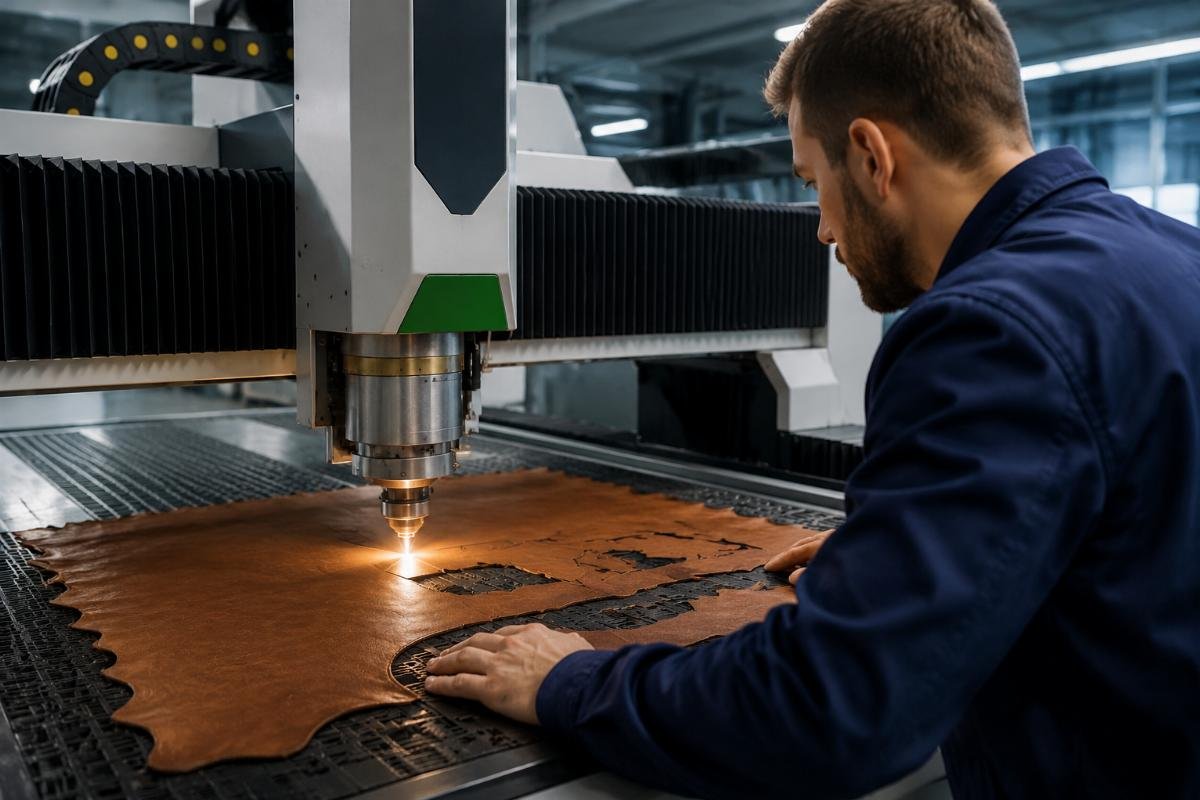
A Romanian leather goods factory I consulted last year initially selected a no-name supplier that claimed to offer matching precision specifications, only to have their unit rejected at the Constan?a port due to invalid CE documentation. They eventually switched to a verified supplier, and their replacement CNC knife cutting machine delivered ±0.1mm repeat positioning accuracy and reduced genuine leather material waste by 15% within their first 6 weeks of operation [NEED_CITE: CNC cold cutting technology for genuine leather processing reduces material waste by an average of 12-18% compared to traditional die cutting].
- Compliance Document Request – Ask suppliers to share full, unredacted copies of active certification documents for the exact model you intend to order.
- Reference Confirmation – Request contact details for at least two existing clients in your target East European market for the same equipment type.
- Verification Cross-Check – Confirm certification validity directly with the issuing body if documents appear unclear or outdated.
Can Low MOQ CNC Solutions Fit Both Trader Resale and In-House Production Needs?
The widespread assumption that low-MOQ custom CNC machines always come with extended delivery delays is not true for specialized flexible material cutting suppliers. Many regional traders and small factory owners avoid low minimum order options due to fears of 6+ week lead times, but optimized suppliers can deliver fully customized units in line with standard regional procurement timelines.
| Use Case | Common Misconception | Valid Low-MOQ Capability |
|---|---|---|
| Machinery Trader Resale | Low-MOQ options only support standard off-the-shelf units with no customization | 1-set minimum order supports OEM/ODM adjustments for working area and tool configurations to match local client demand |
| Small Factory Trial Purchase | Low-MOQ units only come with basic warranty coverage and limited support | Qualified suppliers offer full 3-year warranty and lifelong free software upgrades for all order volumes [NEED_CITE: Specialized Chinese CNC cutting machine manufacturers offer extended warranty terms that reduce long-term maintenance expenditure by 35% on average] |
| Custom Configuration Lead Time | Custom low-MOQ orders require 60+ day delivery windows | Reliable suppliers deliver fully custom CNC units within 31 calendar days of order confirmation |
A Polish packaging trader that previously only ordered bulk 10+ unit batches for resale tested a 2-unit order of packaging-specific CNC cutting machines with 217 available SKU options last quarter, and received the custom configured units exactly 29 days after order finalization, with no extra surcharges for small volume customizations. The units were resold to local small batch carton producers within 2 weeks of delivery with a 22% higher margin than their previous bulk supplier offerings.
- MOQ Confirmation – Explicitly confirm that 1-unit order options include full access to all available customization features, not just standard base models.
- Lead Time Guarantee – Request a written commitment that custom order lead times will not exceed 35 calendar days for small volume orders.
- Warranty Alignment – Verify that warranty coverage and after-sales support terms are identical for low-MOQ and bulk orders.
How to Avoid Hidden Costs When Importing CNC Machines From China?
Unplanned post-delivery support and configuration gaps account for over 40% of hidden costs for East European buyers importing CNC equipment. Most buyers focus exclusively on upfront unit pricing, and overlook terms that add thousands of dollars in unexpected expenses after the machine arrives on site.
| Cost Category | Common Hidden Expense Scenario | Prevention Step |
|---|---|---|
| Post-Installation Support | Paying $1,500+ for on-site technician travel and operator training fees | Confirm free on-site installation and operator training is included in the quoted unit price |
| Software Updates | Paying annual subscription fees for machine operation software | Require a commitment for lifelong free software upgrades with no recurring charges |
| Post-Warranty Maintenance | Paying exorbitant fees for replacement parts and support after the standard 1-year warranty expires | Select suppliers that offer 3-year base warranty coverage as standard |
A Bulgarian auto interior processor that selected a low-priced unvetted supplier last year initially saved $3,200 on upfront unit cost, but had to pay $2,100 for on-site installation support and an extra $800 for a required software update to cut 45mm thick composite and felt materials. Their second order for a heavy-duty CNC unit from a specialized supplier included 24/7 online support for continuous production, and matched all their material and uptime requirements with zero extra post-delivery fees.
- Full Cost Audit – Request a line-item breakdown of all included services to confirm no hidden installation or support fees are excluded from the quoted price.
- Software Term Confirmation – Verify that all required software features and future updates are provided with no recurring subscription costs.
- Support Availability Check – Confirm 24/7 online support access is available for continuous production operations to avoid downtime delays.
Which CNC Configuration Matches Common Production Scenarios in Poland, Romania, Bulgaria?
Overpaying for unnecessary features is the most common mistake buyers make when selecting CNC machine configurations for regional production needs. Most suppliers push over-specified units with features that are irrelevant to flexible material processing, leading buyers to pay thousands of dollars for functions they will never use.
The core parameters that matter for 90% of common East European production use cases include compatibility for 30+ common flexible materials, maximum 50mm cutting thickness, ±0.1mm repeat positioning accuracy, and cold cutting technology that eliminates post-processing for burnt edges to cut per-unit processing costs by an average of 8% [NEED_CITE: Cold cutting technology for flexible material production eliminates post-processing for burnt edges and reduces per-unit processing costs by 8% on average]. Specialized manufacturers like Realtop Machinery offer product lines spanning 713+ SKUs for packaging, garment, leather, and composite processing, with pricing ranging from $5,000 to $60,000 depending on exact configuration, and full customization support for working area and tool requirements.