

Blog
How wholesalers test knife cutting machine adaptability to thick materials?

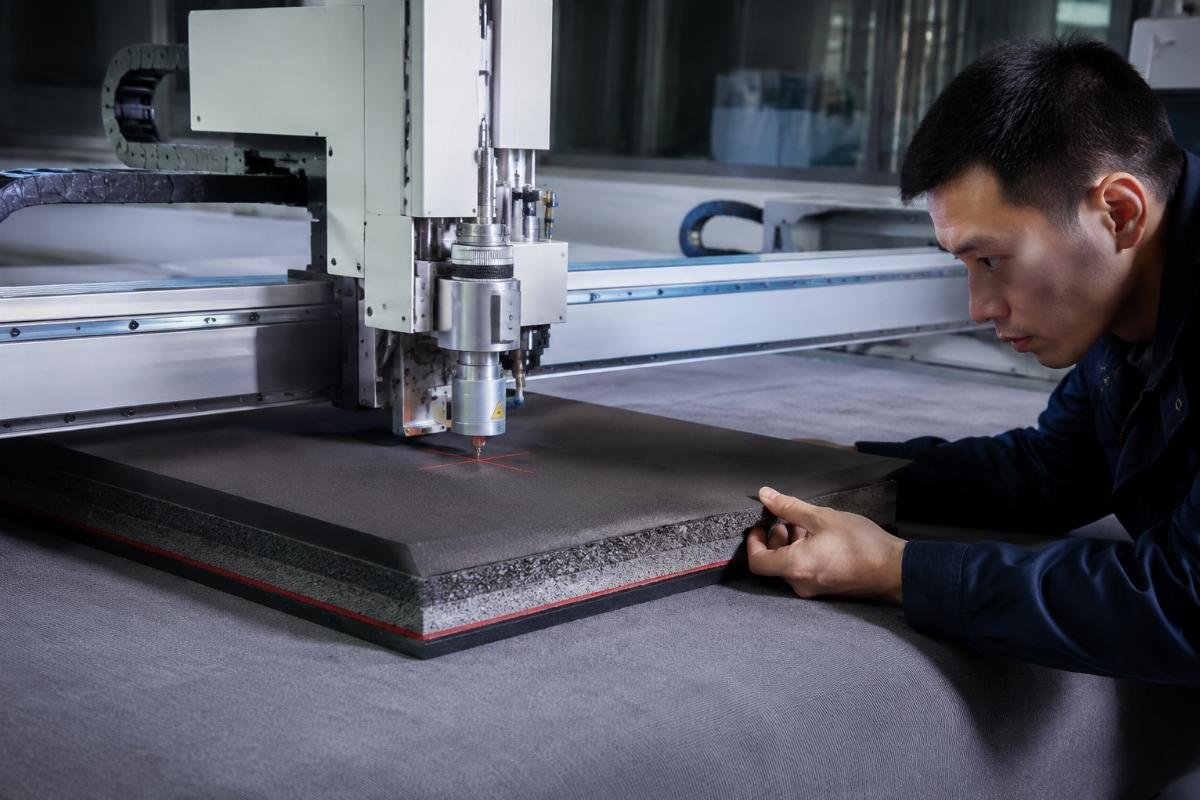
How wholesalers test knife cutting machine adaptability to thick materials?
You're about to invest in CNC knife cutting machines for resale, but your downstream buyers keep asking: "Will it really handle our 50mm foam consistently?" One failed batch demonstration could cost you the entire contract—yet most wholesalers still rely on single-pass tests that hide the truth.
Wholesalers can't just verify that the machine cuts thick materials once—you must prove to your buyers that it cuts consistently across batches using their actual materials. The critical validation is continuous multi-sample cutting at maximum claimed thickness, which reveals blade wear patterns and parameter drift1 that single-pass tests never show.
Most equipment distributors discover these stability problems only after purchase, when their factory customers reject machines during on-site demonstrations. I've spent years handling these test requests at Realtop, and I've seen the same pattern repeat: wholesalers who skip stress testing end up with unsellable inventory, while those who run proper validation protocols close deals faster and build stronger buyer relationships.
What makes thick material testing different for wholesalers versus end-users?
End-users test for their own production needs. Wholesalers test for resale proof—which changes everything about validation requirements.
When factory buyers visit your warehouse or attend demonstrations, they're not evaluating technical specifications. They're looking for evidence that the machine will survive their real production conditions without causing batch failures that shut down their lines.
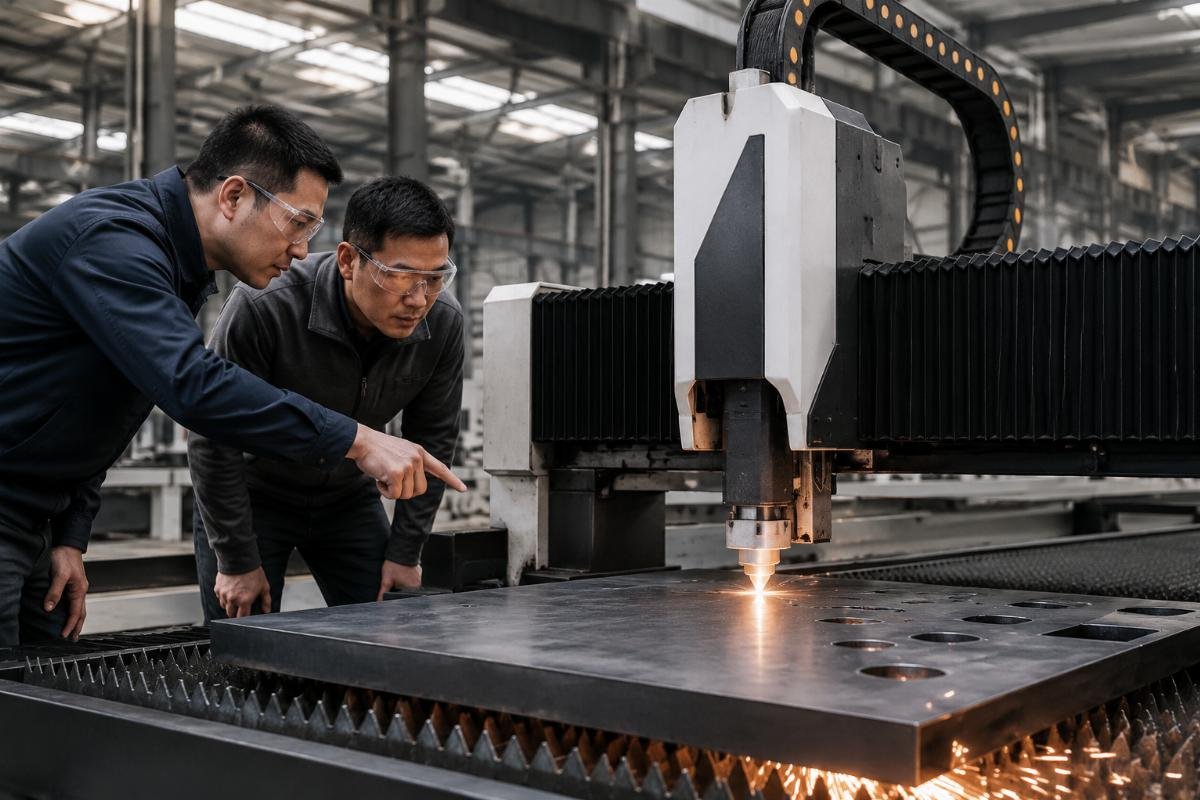
Why single-pass tests create false confidence
In our pre-sales meetings, wholesalers often say they tested the machine by cutting one piece of 40mm rubber foam—it went through cleanly, so they approved the purchase. Then their buyer brings 50 samples for validation, and by piece 15, the cuts start showing frayed edges. The blade dulled, the pressure drifted, and nobody noticed because the initial test didn't stress the system.
I've processed dozens of these failure reports. The pattern is always the same: wholesalers verify capability in ideal conditions, but their buyers operate in production conditions. One successful cut proves the machine has enough power. Twenty consecutive cuts prove the blade-pressure-speed combination stays stable—which is what factory buyers actually need before they commit to orders.
The resale proof requirement most distributors miss
Your downstream customers don't just want thickness capacity. They want to see batch reliability on their materials. This means you need to bring their actual samples to your supplier tests—not generic materials that might behave differently.
We regularly host wholesaler test sessions where distributors bring customer materials: automotive interior foam with backing layers, composite textiles with varying densities, gasket materials with embedded fibers. These aren't standard samples. They're the actual production inputs your buyers use, and they often reveal cutting challenges that standard tests miss. The wholesaler who tests with customer materials can demonstrate results the buyer trusts. The one who relies on supplier-provided samples ends up defending performance claims with no evidence.
How do you validate blade-parameter stability across continuous cutting?
Factory buyers reject machines when they see performance inconsistency. You prevent this by testing the same conditions that cause batch failures: sustained operation at claimed thickness limits.
The validation protocol wholesalers need is continuous multi-sample cutting with measurement verification. Cut 20-30 pieces of the target material at maximum thickness, measuring edge quality and dimensional accuracy every 5 pieces. If parameters drift or blade wear appears before piece 20, the configuration won't survive buyer production requirements.
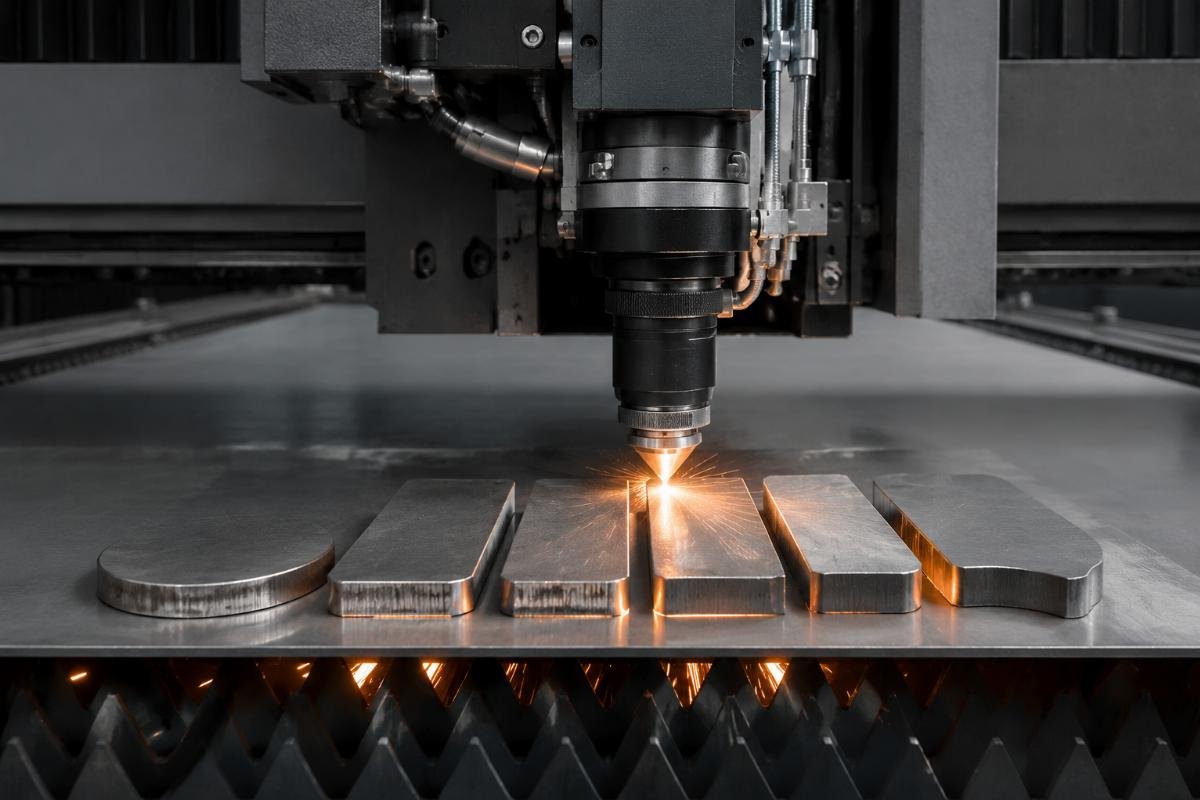
The three-stage stability test protocol we recommend
When wholesalers visit Realtop for thick material validation, we run a three-stage protocol that simulates buyer production conditions:
Stage 1: Baseline capability verification (5 samples) Cut 5 pieces at claimed maximum thickness using recommended blade and parameters. All cuts must complete without blade deflection, incomplete penetration, or motor strain2. This stage confirms the machine has sufficient power—but it doesn't prove reliability.
Stage 2: Sustained operation test (20 samples) Cut 20 consecutive pieces without stopping or adjusting parameters. Measure edge quality and dimensional accuracy at pieces 5, 10, 15, and 20. If blade wear shows before piece 15, the blade type or pressure setting is wrong for continuous operation. If dimensional accuracy drifts more than ±0.5mm, the parameter combination isn't stable. Factory buyers will see these problems during demonstrations—catching them now prevents order losses later.
Stage 3: Material variation stress (10 samples with thickness variations) Use samples with ±10% thickness variation3 to test parameter adaptation. Thick materials rarely come perfectly uniform. If the machine requires manual adjustment for every thickness change, your buyers will face production bottlenecks. The machine should handle minor variations without intervention—this is what separates resellable equipment from problematic units.
I've seen wholesalers measure only whether the cut completed, missing the quality indicators that buyers actually check. Factory customers inspect three validation points:
| Measurement point | Acceptance criteria | What it reveals |
|---|---|---|
| Edge cleanness | No fraying or deformation across all samples | Blade sharpness retention and pressure adequacy |
| Dimensional accuracy | ±0.5mm consistency4 from piece 1 to piece 20 | Parameter stability and vibration control |
| Cutting speed maintenance | No automatic speed reduction after piece 10 | Motor capacity and thermal management |
When any of these indicators fail during continuous testing, it signals a blade-parameter-material mismatch that will cause buyer rejections. The wholesaler who catches this during supplier validation can request configuration changes before purchase. The one who discovers it during customer demonstrations loses the deal.
What blade-parameter mismatches cause wholesaler acceptance failures?
Suppliers claim their machines handle thick materials, but they don't always specify which blade-parameter combinations work for continuous operation. This is where most wholesaler purchases fail validation.
The critical mismatch wholesalers miss is blade type selection for material density. Oscillating blades work for soft foam up to 40mm, but dense rubber requires vibration blades even at 30mm5. Using the wrong blade type means the machine cuts once successfully but fails batch consistency tests—exactly the scenario that costs you buyer contracts.
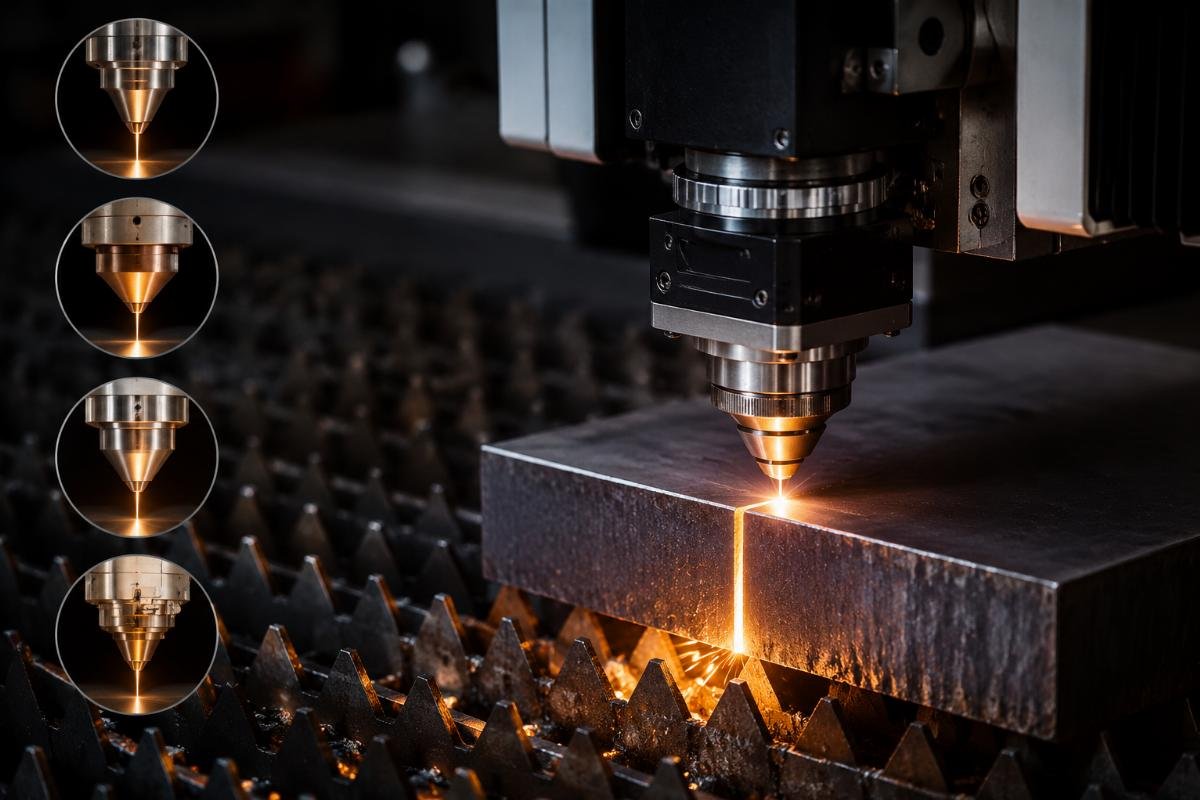
The four configuration errors that create resale problems
In our pre-sales support work, we've identified four configuration mistakes that cause wholesaler test failures:
Error 1: Using soft-material blades on dense materials A wholesaler tested 35mm leather with standard oscillating blades—first cut looked perfect. By cut 12, edges showed tearing because blade vibration amplitude wasn't sufficient for material density. The supplier never specified that dense leather above 25mm requires reinforced vibration blades with higher amplitude settings. The wholesaler discovered this during a buyer demonstration, not during supplier validation.
Error 2: Setting cutting speed too high for thickness Speed sells machines—"cuts 40mm foam at 800mm/s" sounds impressive. But continuous cutting at that speed causes blade heating and parameter drift6. We recommend wholesalers test at 60% of claimed maximum speed for thick materials7. If the machine maintains quality at reduced speed, it's configured correctly. If it only works at maximum speed, it won't survive production conditions.
Error 3: Trusting verbal pressure claims without verification Suppliers say "pressure adjusts automatically for thickness." Wholesalers need to verify this by cutting materials with ±10% thickness variation without touching parameters. If the operator must manually adjust pressure for every thickness change, your factory buyers will face production delays. Automatic pressure adaptation sounds like a feature—but it's actually a requirement for thick material resale.
Error 4: Not testing blade life expectancy Blade replacement cost affects buyer total ownership expense. A machine that requires blade changes every 50 samples might meet technical specs but fail buyer economics. We tell wholesalers to track blade condition across the 20-sample continuous test. If noticeable wear appears before sample 20, calculate replacement frequency and cost—then present this to buyers as part of total ownership planning. The wholesalers who provide this data close deals. The ones who don't lose to competitors who thought ahead.
Which parameter combinations pass wholesaler acceptance in real tests?
I can't give you universal parameters because every material behaves differently—but I can tell you what parameter relationships work in our test sessions. These aren't technical recommendations; they're validation patterns we've seen succeed when wholesalers bring customer materials for testing.
For foam materials 30-50mm thick: blade speed 400-600mm/s, pressure 60-80% of maximum capacity, vibration frequency 8000-10000 times per minute8. Higher speeds cause compression. Lower pressure allows blade deflection. These ranges consistently pass continuous cutting tests.
For rubber materials 20-40mm thick: blade speed 300-500mm/s, pressure 70-90% of maximum, vibration frequency 10000-12000 times per minute. Dense rubber requires more pressure and higher frequency than foam, but slower speed to prevent heating.
For composite textiles 25-45mm thick with backing layers: blade speed 500-700mm/s, pressure 50-70% of maximum, oscillating angle 30-45 degrees. Composites behave unpredictably—the backing layer affects cutting resistance more than total thickness. This is why testing with customer materials matters so much for composites.
Should wholesalers conduct factory tests or remote validation?
You face a practical decision: travel to supplier factories for hands-on validation, or request remote video demonstrations. Each approach has resale implications.
Factory testing gives you the evidence buyers trust, but requires travel investment. Remote validation saves cost but leaves knowledge gaps that surface during buyer demonstrations. The wholesalers who succeed long-term choose factory validation for their first major purchase, then use remote testing for reorders with proven configurations.
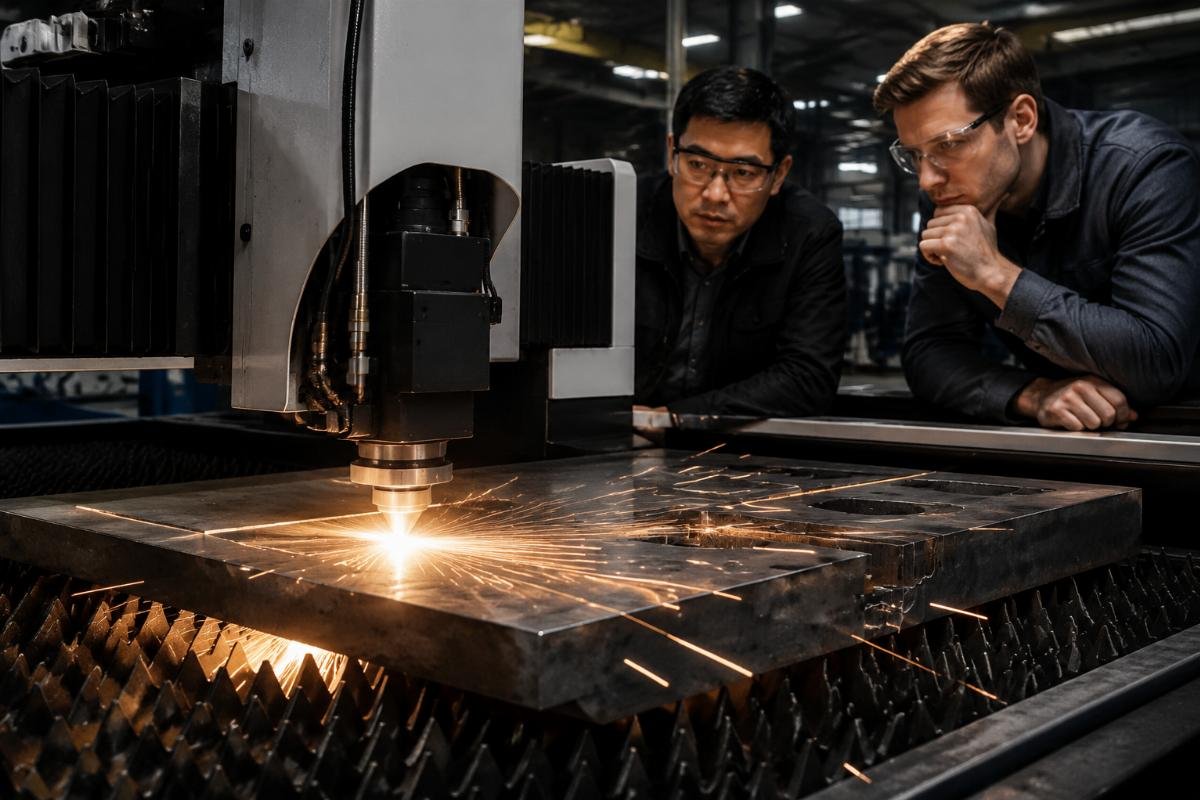
What you gain from on-site validation that video can't show
When wholesalers visit Realtop for thick material tests, they learn configuration knowledge that becomes competitive advantage. You see which parameter adjustments the operator makes during setup. You hear the motor sound when blade encounters resistance9. You feel material vibration that signals pressure problems. Video demonstrations don't capture these operational details—but your factory buyers will notice them during their own tests.
I've watched wholesalers who did factory validation confidently adjust parameters during buyer demonstrations, proving system expertise. The ones who relied on remote video couldn't answer buyer questions about noise levels, vibration characteristics, or setup time—losing credibility exactly when it mattered most.
The validation documents wholesalers need for buyer presentations
Factory buyers don't accept verbal claims. They want documented test results from your supplier validation. When you conduct on-site thick material tests, request these validation documents:
Continuous cutting test report: Sample count, thickness measurements, edge quality ratings, parameter settings used, blade type and condition. This report proves batch stability—the core claim buyers need verified.
Material variation test data: Results from ±10% thickness variation samples, showing parameter adaptation capability. Factory buyers know their input materials vary—this data proves the machine handles real conditions.
Blade life documentation: Samples cut, blade condition assessment, estimated replacement frequency. This helps buyers calculate total ownership cost and compare your offering to competitors who don't provide economic data.
Video alone can't replace these documents. When your factory buyer asks "how many continuous samples did you test?", saying "I watched them cut five pieces on video" loses the deal. Saying "we ran 30 continuous samples and here's the measured data" wins contracts.
How do thick material test results affect wholesaler pricing strategy?
Equipment specifications determine list price, but validation results determine the premium buyers will pay. This is where wholesaler test investment creates profit advantage.
Wholesalers who conduct thorough thick material validation can charge 10-15% premium over competitors10 who rely on supplier claims, because documented test results reduce buyer risk—and factory customers pay for risk reduction when it's backed by evidence they trust.
Why test documentation justifies higher wholesale margins
I've seen this pattern repeatedly in our sales channel: wholesalers who bring buyers to supplier factories for joint validation close deals at higher prices than distributors who present catalog specs. The difference isn't product quality—it's proof quality.
When you show buyers your continuous cutting test report with 30 sample results, you're not just demonstrating machine capability. You're demonstrating that you did the validation work they would otherwise have to do themselves. Factory buyers value this risk reduction because failed equipment purchases delay production launches and waste capital budgets. The 10-15% premium covers their internal validation cost and timeline acceleration—making it an easy ROI decision.
The competitive positioning thick material tests enable
Wholesalers often ask whether expensive validation testing is worth the investment. The answer depends on your market positioning. If you compete primarily on price, minimal validation might be sufficient—but you'll face margin pressure from every competitor with lower costs. If you position as a technical solution provider, thorough validation becomes your competitive moat.
In our channel network, the most successful wholesalers use thick material test results as sales tools. They create capability portfolios showing different material-thickness-blade combinations they've validated, backed by measured data and sample photos. When buyers request quotes, these wholesalers respond with relevant test reports from their validation library—proving they understand the buyer's specific application before the first meeting. This approach turns technical validation into sales acceleration, justifying the upfront testing investment through faster deals and reduced price sensitivity.
Conclusion
Wholesalers who test knife cutting machines with continuous multi-sample protocols using customer materials build resale proof that single-pass tests never provide—turning thick material validation from a procurement checkbox into a competitive advantage that justifies premium pricing and accelerates buyer decisions.
"Effects of Process Cutting Parameters on the Ti-6Al-4V Turning with ...", https://pmc.ncbi.nlm.nih.gov/articles/PMC9331866/. Research on cutting tool wear demonstrates that progressive degradation follows predictable patterns during extended operation, with parameter drift occurring as tool geometry changes affect cutting forces and system response. Evidence role: mechanism; source type: research. Supports: how blade wear and parameter drift develop during continuous cutting operations. Scope note: Studies typically focus on metal cutting rather than soft materials, though wear mechanisms share fundamental characteristics across applications ↩
"Tool Failure in Machining | Modes, Physics, Causes & Remedies",
. Mechanical engineering principles identify blade deflection, incomplete material penetration, and motor overload as common indicators of insufficient cutting force or power capacity relative to material resistance. Evidence role: mechanism; source type: education. Supports: how mechanical failure modes manifest in cutting operations. ↩"[PDF] TOLERANCE HANDBOOK", https://fpg.phys.virginia.edu/fpgweb/useful_info/tolerances_steel.pdf. Manufacturing standards for sheet materials specify thickness tolerances that vary by material type and production method, with variations commonly falling within ranges that require processing equipment to accommodate dimensional inconsistency. Evidence role: general_support; source type: institution. Supports: typical thickness variation ranges in production materials. Scope note: The ±10% figure represents a general testing parameter rather than a universal material specification; actual variation depends on material type, supplier quality control, and application requirements ↩
"Dimensional Accuracy and Measurement Variability in CNC-Turned ...", https://pmc.ncbi.nlm.nih.gov/articles/PMC12194426/. Industrial cutting equipment standards typically specify dimensional tolerances in the sub-millimeter range for production applications, with specific requirements varying by material type and application. Evidence role: general_support; source type: institution. Supports: typical dimensional accuracy expectations for industrial cutting equipment. Scope note: Standards vary by industry sector and material category; the ±0.5mm threshold represents one point within a broader range of acceptable tolerances ↩
"Vibrating vs Oscillating Knife Cutting Machine: Which is Better for ...", https://bangzhengcutter.com/vibrating-vs-oscillating-knife-cutting-machine-which-is-better-for-flexible-material-processing/. Cutting mechanics research indicates that blade motion characteristics must match material properties, with oscillating motion effective for low-density materials while higher-frequency vibration provides better penetration in denser substrates. Evidence role: mechanism; source type: research. Supports: how blade motion type affects cutting performance in materials with different densities. Scope note: Specific thickness thresholds depend on multiple factors including blade geometry, frequency settings, and exact material composition ↩
"On the problem of heat generation in bone cutting ... - PubMed", https://pubmed.ncbi.nlm.nih.gov/1991747/. Manufacturing research demonstrates that increased cutting speeds generate higher thermal loads through friction, which can affect tool dimensions, material properties, and system calibration, leading to measurable parameter drift. Evidence role: mechanism; source type: research. Supports: the relationship between cutting speed, heat generation, and system parameter stability. ↩
"Preferred Reliability Practices - EEE Parts Derating", https://extapps.ksc.nasa.gov/Reliability/Documents/Preferred_Practices/1201.pdf. Engineering practice commonly applies derating factors when testing equipment under sustained or demanding conditions, with reduced operating parameters providing margins for thermal effects, wear, and long-term reliability. Evidence role: general_support; source type: education. Supports: engineering principles for equipment testing and operational derating. Scope note: The specific 60% figure represents a practical testing guideline rather than a standardized derating factor; appropriate margins depend on equipment design, application requirements, and risk tolerance ↩
"A Fast and Accurate Frequency Tracking Method for Ultrasonic ...", https://pubmed.ncbi.nlm.nih.gov/34936553/. Studies on vibration-assisted cutting indicate that frequency selection significantly impacts cutting quality and force requirements, with optimal ranges depending on material properties, though specific values vary by application and equipment design. Evidence role: general_support; source type: research. Supports: how vibration frequency affects cutting performance in soft materials. Scope note: The cited frequency range represents application-specific parameters rather than universally optimal values; actual requirements depend on blade geometry, material composition, and machine characteristics ↩
"Decomposing and Modeling Acoustic Signals to Identify Machinery ...", https://pmc.ncbi.nlm.nih.gov/articles/PMC12389989/. Condition monitoring research demonstrates that acoustic emissions correlate with mechanical stress, tool wear, and operational anomalies, enabling experienced operators to detect performance issues through auditory assessment. Evidence role: mechanism; source type: research. Supports: how acoustic signatures relate to machine operating conditions. ↩
"Process Industries Boost Profit Margins With Value-Based Pricing", https://www.forbes.com/sites/sap/2024/04/25/chemical-and-mill-industries-boost-profit-margins-with-value-based-pricing/. Business research on B2B pricing indicates that suppliers who reduce buyer uncertainty through documentation and validation can command price premiums, with the magnitude depending on market conditions, buyer risk aversion, and competitive alternatives. Evidence role: general_support; source type: research. Supports: how technical documentation and risk reduction affect B2B pricing power. Scope note: The specific 10-15% range represents an illustrative estimate rather than empirically validated pricing data; actual premiums vary by market segment and competitive context ↩