

Blog
What is the best tool for cutting leather?

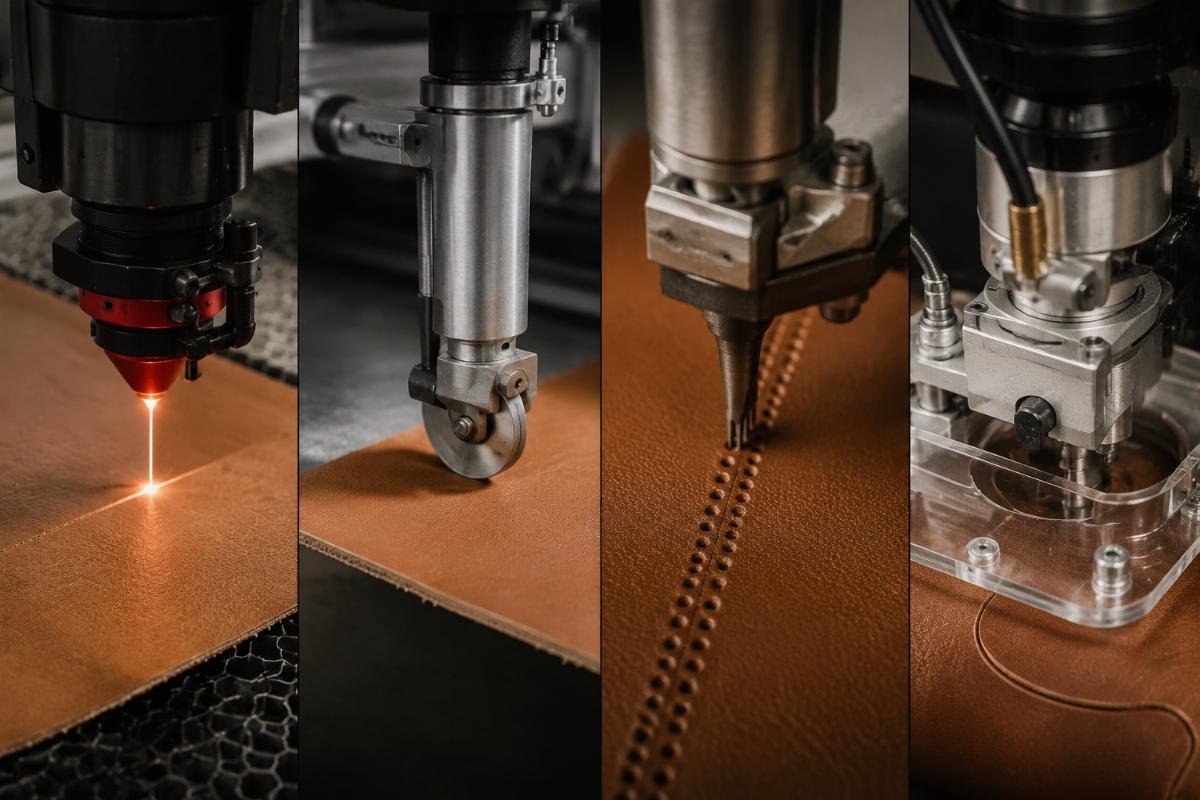
What is the best tool for cutting leather?
Choosing the best leather cutting tool feels overwhelming when you see conflicting advice online. Manual tools seem slow, laser cutters sound advanced but expensive, and CNC machines promise precision without clear proof. You need a decision framework that matches your actual production needs, not just feature lists.
The best tool for cutting leather depends on four variables: leather thickness and finish type, pattern complexity level, daily production volume, and your current workflow transition risk. CNC knife cutting works best for thick vegetable-tanned leather with complex patterns at medium-to-high volumes. Laser cutting suits thin chrome-tanned leather with simple shapes but leaves char marks. Manual tools remain viable for low-volume custom work under 50 pieces per day.
This answer comes from testing cutting methods across automotive upholstery leather, furniture leather, and bag-making materials in our factory. I will show you how to match tools to your specific leather type and production scenario, not which brand to buy.
Why does leather type determine tool compatibility before speed matters?
You cannot pick a cutting tool before identifying your leather category. Salespeople push speed specs first, but material compatibility blocks you before speed becomes relevant. This mistake costs factories weeks of rework.
Leather thickness, surface coating, and grain structure determine which cutting methods physically work with your material. Vegetable-tanned leather over 3mm thick requires blade cutting because laser heat causes uneven charring through dense fiber layers. Chrome-tanned leather under 2mm works with most methods but shows different edge quality with each tool type.
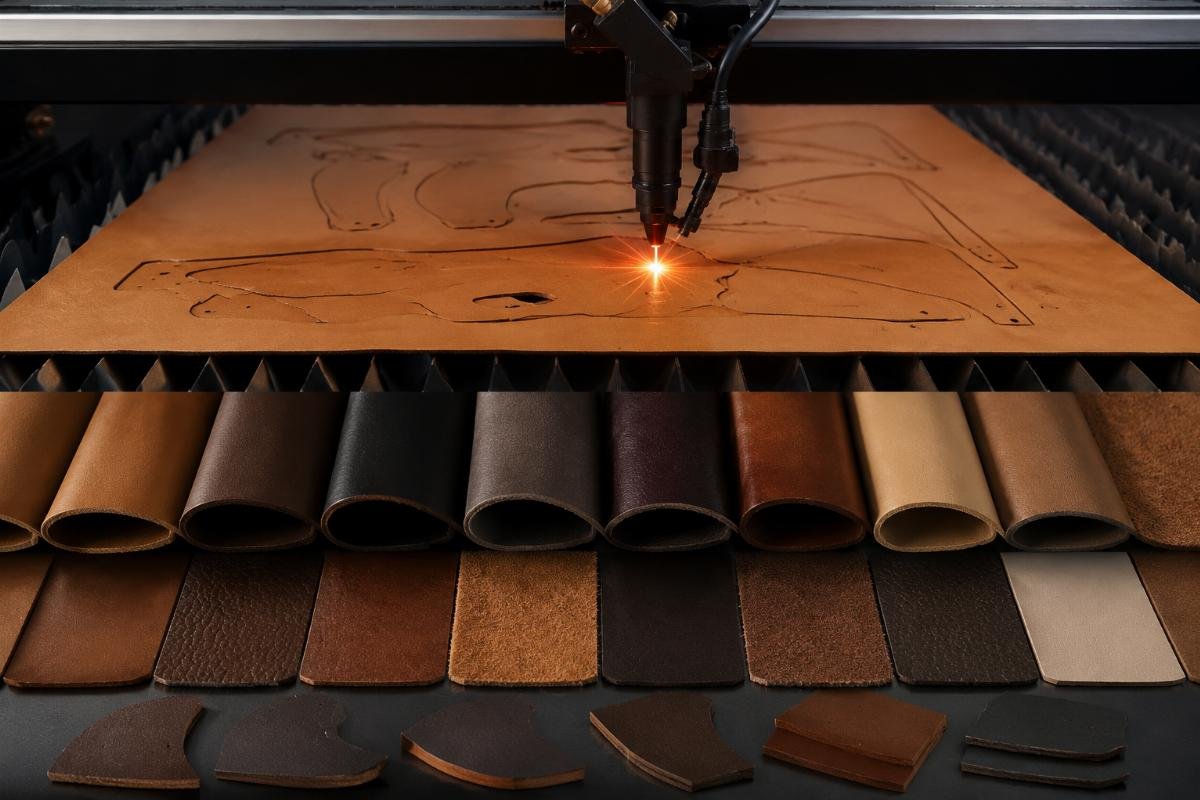
I tested this by running the same wallet pattern on five leather types using manual rotary cutters, CNC knife systems, and CO2 lasers. Here is what happened with each material category:
| Leather Type | Thickness Range | Manual Rotary Cutter | CNC Knife Cutter | CO2 Laser |
|---|---|---|---|---|
| Vegetable-tanned tooling leather | 3-5mm | Clean cut, hand fatigue after 20 pieces | Clean edge, no delamination, 200 pieces/day stable | Char marks, uneven depth, fiber burning |
| Chrome-tanned upholstery leather | 1.2-1.8mm | Clean but inconsistent curve accuracy | Precise curves, sealed edge from blade heat | Clean cut, slight edge darkening acceptable |
| Nubuck finish leather | 1-1.5mm | Surface fuzzing from blade drag | Minimal surface disturbance with sharp blade | Surface melting destroys nubuck texture |
| Patent leather (polyurethane coated) | 0.8-1.2mm | Coating cracks along cut line | Clean separation if blade angle correct | Coating melts and sticks to surrounding area |
| Oil-tanned pull-up leather | 2-3mm | Acceptable for straight cuts only | Requires multiple passes to avoid stretching | Heat causes oil migration and color change |
Vegetable-tanned leather showed the biggest difference. Laser cutting created a brown char line that penetrated 0.5mm into the leather fiber. This char layer became brittle and cracked when we flexed the cut edge during bag assembly. CNC knife cutting left a compressed edge from blade pressure but no color change or brittleness. Manual cutting matched CNC quality but took 15 minutes per piece versus 3 minutes with CNC.
Chrome-tanned automotive leather behaved differently. The thinner material and chemical tanning process meant laser cutting produced acceptable edges for most interior trim applications. The slight darkening along the cut line disappeared once we assembled parts together. CNC knife cutting still delivered better edge quality but at slower speeds because the blade needed frequent sharpening from the dense fiber structure.
Coated leathers exposed the biggest compatibility trap. Patent leather's polyurethane top coat melted under laser heat and created sticky residue that damaged adjacent areas. We had to manually scrape off melted coating from five sample pieces before realizing laser cutting was incompatible with this material. CNC knife cutting worked only when we adjusted blade angle to 35 degrees and reduced cutting pressure by 40 percent. Standard settings caused coating delamination from the leather base.
What happens when you mismatch tool type with leather properties?
Material compatibility failures show up as edge defects that ruin finished products or force manual rework steps. I watched a furniture factory try to laser cut 4mm vegetable-tanned leather for sofa armrests after their salesperson promised "no-contact cutting eliminates blade wear costs." The laser created char marks that customers rejected during quality inspection. The factory switched to CNC knife cutting and lost three weeks of production time during equipment transition.
Another common mismatch happens when factories buy CNC knife cutters without checking blade type compatibility with their specific leather finish. A bag manufacturer contacted me after their new CNC system left fuzzy edges on nubuck leather. Their equipment used standard drag knife blades designed for smooth leather. We switched them to oscillating knife blades that vibrate at 8,000 strokes per minute while cutting. This blade motion prevents surface fiber disturbance on nubuck and suede materials. Their edge quality problems disappeared but they lost two months of production capacity during the investigation process.
Does pattern complexity change which cutting tool makes economic sense?
Pattern complexity determines whether manual cutting speed becomes a production bottleneck or remains acceptable. Simple geometric shapes do not justify automation costs in most scenarios. Complex curves and multi-piece nesting patterns create the economic threshold where CNC systems deliver measurable ROI.
Manual cutting works for patterns with fewer than 8 corners and straight lines over 10cm long when producing under 50 pieces per day. CNC knife cutting becomes cost-effective when patterns include curves tighter than 2cm radius, require precise notch placement under 1mm tolerance, or need material nesting optimization to reduce waste by over 15 percent.
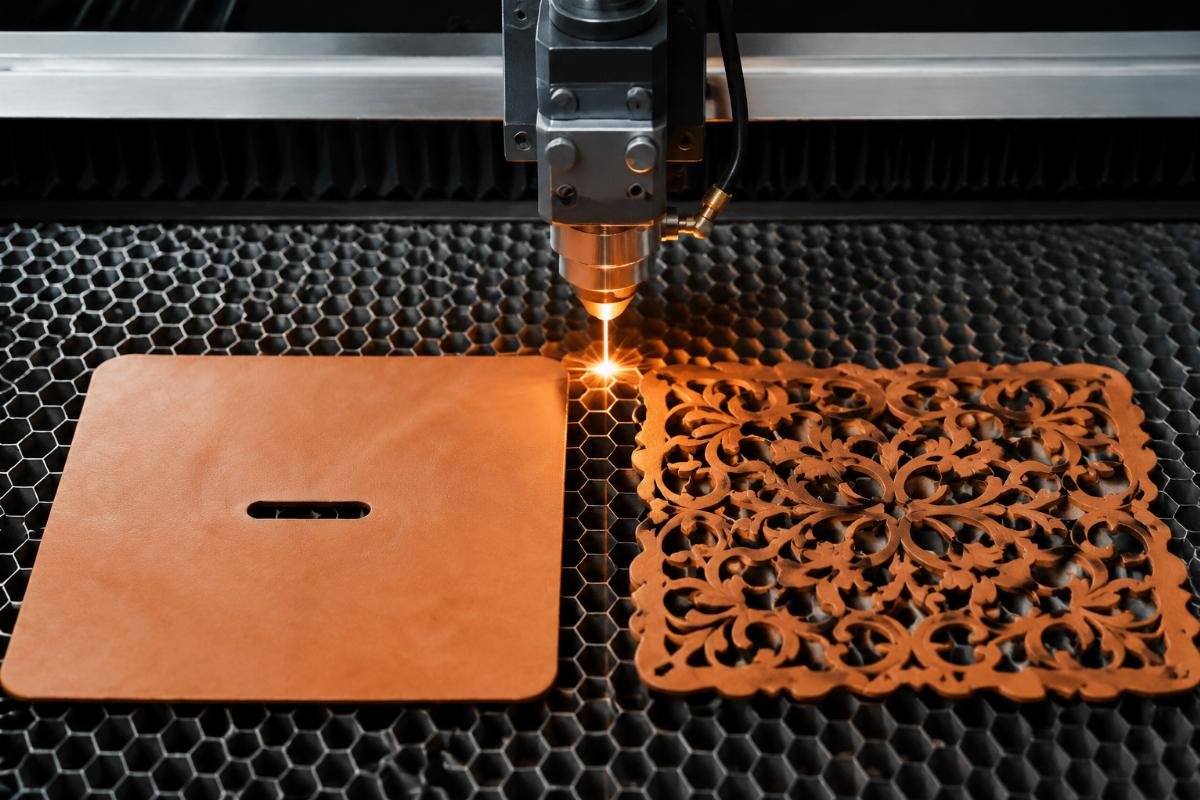
I created a pattern complexity decision framework by analyzing cutting time differences across 15 common leather goods patterns. Here are the threshold points where tool transitions make financial sense:
Manual cutting remains viable when patterns meet these conditions:
Simple wallet patterns with 6-8 pieces total take 12-15 minutes to cut manually by an experienced worker. Each piece uses mostly straight cuts with gentle curves at corners. Material waste stays around 25-30 percent because manual nesting relies on worker judgment rather than software optimization. A factory making 40 wallets per day needs two workers to maintain this output. Total labor cost runs approximately $180 per day for these two positions in our region.
Installing a CNC knife cutter for this scenario costs around $25,000 for entry-level equipment plus $3,000 for training and workflow setup. The CNC system reduces cutting time to 3 minutes per wallet and improves nesting efficiency to 18 percent waste. However, you still need one worker to load leather sheets and remove cut pieces. Labor cost drops to $90 per day but equipment amortization adds $35 per day over a 5-year period. Net savings equal $55 per day, meaning ROI takes 18 months to break even.
This calculation changes dramatically when pattern complexity increases.
CNC cutting delivers clear ROI advantages for complex patterns:
Automotive seat cover patterns include 25-40 individual pieces with curved edges, precise notch locations for assembly alignment, and perforation patterns for ventilation. Manual cutting takes 45-60 minutes per seat cover set. Pattern nesting depends entirely on worker skill, typically achieving 30-35 percent material waste. A factory producing 30 seat covers per day needs four experienced cutters working full shifts.
CNC knife cutting reduces production time to 8-12 minutes per seat cover set. Software nesting optimization brings material waste down to 15-18 percent. The same factory needs only one worker to operate the CNC system. Labor cost drops from $360 per day to $90 per day. Material savings add another $120 per day from improved nesting efficiency. Combined savings total $390 per day, meaning the same $25,000 CNC investment breaks even in just 64 days.
I tested this ROI model with an automotive supplier who switched from manual to CNC cutting for their truck seat covers. They tracked actual results over six months and confirmed the break-even timeline matched our calculation within two weeks. The hidden benefit they discovered was consistent cut quality. Manual cutting variation caused assembly problems with notch alignment between pieces. CNC precision eliminated these fit issues and reduced their assembly rejection rate from 8 percent to under 1 percent.
What pattern features specifically favor CNC versus manual methods?
Tight radius curves expose the biggest productivity gap between manual and CNC cutting. Any curve with radius under 3cm requires slow, careful cutting by hand to maintain smooth edges. Manual cutters must reposition their hand grip multiple times through a single curve, creating slight angle changes that show up as bumps in the finished edge. CNC knife cutters trace these curves in one continuous motion at consistent blade angle and pressure. The quality difference becomes obvious when you stack cut edges from both methods side by side.
Notch precision for assembly alignment creates another decision point. Many leather products use small notches or drill holes along edges to align pieces during sewing. Manual marking and cutting of these features introduces 1-2mm variation in position. This tolerance might seem small but causes visible misalignment in finished products with multiple seams. CNC systems place notches within 0.1mm accuracy repeatedly across hundreds of pieces. This precision eliminates assembly fitting problems and reduces rework.
Material nesting optimization delivers the most overlooked economic benefit. Manual cutters arrange pattern pieces on leather sheets based on experience and visual judgment. Even skilled workers struggle to achieve optimal nesting when patterns include 15+ pieces with varying orientations. CNC nesting software tests thousands of arrangement combinations in seconds and selects the layout that minimizes waste. I have seen this software reduce material consumption by 12-20 percent compared to manual nesting on complex automotive interior projects. At $8-15 per square foot for automotive leather, this waste reduction often exceeds direct labor savings.
How does production volume determine tool investment timing?
Production volume directly controls ROI timeline but most factories calculate this wrong. They only count piece quantity without considering setup time, material changeovers, and workflow disruption costs. This incomplete analysis leads to premature automation investments that never break even.
Break-even analysis for cutting tool investments must include setup time per production run, material changeover frequency, learning curve productivity loss, and existing workflow integration costs. CNC knife cutting becomes financially justified at 100+ pieces per day for complex patterns or 300+ pieces per day for simple patterns, assuming 80 percent equipment utilization and stable order volumes.
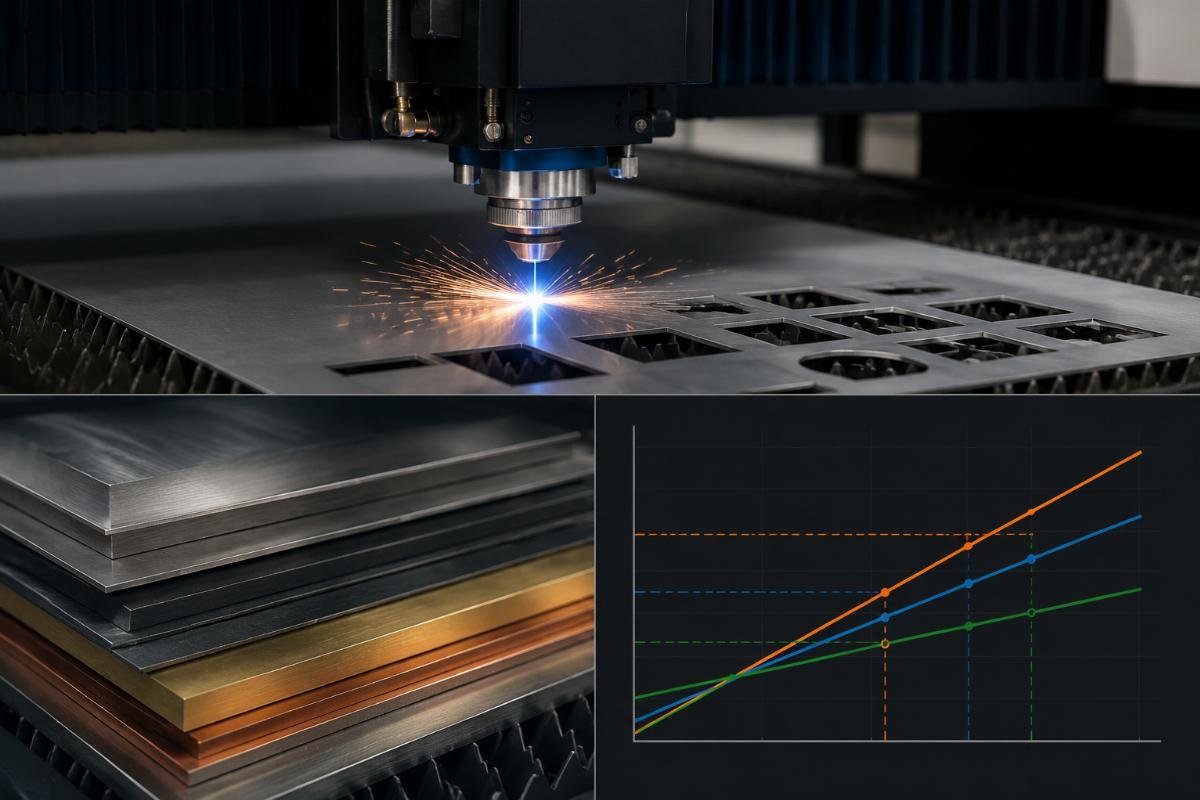
I have helped 20+ leather factories calculate realistic ROI timelines for CNC equipment purchases. Here is the complete cost structure that determines actual break-even points:
Hidden costs that extend ROI timelines beyond basic calculations:
Equipment purchase price represents only 60-70 percent of total automation investment. A $25,000 CNC knife cutter requires additional costs that most factories underestimate during purchase decisions. Installation and electrical setup add $1,500-2,500 depending on facility layout. Initial blade inventory costs $800-1,200 because you need backup blades for different leather types and thicknesses. Software training takes 2-3 days and costs $1,000-1,500 for on-site instruction.
The biggest hidden cost is productivity loss during transition. Your production output will drop 40-60 percent during the first 2-3 weeks as workers learn CNC operation, troubleshoot cutting issues, and adjust blade settings for different materials. If your factory produces $2,000 per day in finished goods value, this learning curve costs $800-1,200 per day in lost output. Over three weeks, transition costs add up to $12,000-18,000 in reduced productivity.
These numbers assume smooth transitions. Equipment breakdowns, incorrect blade selection, and software compatibility problems extend learning curves beyond three weeks in many cases. I tracked one bag manufacturer who took seven weeks to return to pre-automation productivity levels because they purchased a CNC system without understanding their leather type required oscillating blades instead of the standard drag blades included with the machine.
Volume thresholds where automation investment makes sense:
Calculate your current daily labor cost for cutting operations. Include wages, benefits, and overhead allocation for workspace. Divide this total by daily piece output to find per-piece labor cost. Compare this against CNC cost per piece using realistic equipment utilization rates.
Most factories assume 100 percent equipment utilization when calculating CNC economics. This assumption fails in real production environments. Equipment requires material loading time, blade changes, maintenance stops, and job changeovers that reduce actual cutting time to 70-80 percent of available hours. Use 75 percent utilization as a realistic baseline for ROI calculations.
For simple patterns with mostly straight cuts, manual cutting costs typically run $1.50-2.50 per piece including labor and material waste. CNC knife cutting reduces this to $0.80-1.20 per piece after including equipment amortization, maintenance, and reduced material waste. The $0.70-1.30 per piece savings means you need to cut 19,000-36,000 pieces to recover a $25,000 equipment investment. At 300 pieces per day with 75 percent utilization, break-even takes 85-160 working days.
Complex patterns shift these economics dramatically. Manual cutting costs rise to $4.50-7.50 per piece while CNC costs stay at $1.50-2.50 per piece. Savings jump to $3.00-5.00 per piece, reducing break-even to just 5,000-8,300 pieces. At 100 pieces per day, ROI happens in 50-83 working days.
What production variables disqualify CNC investment regardless of volume?
High product variety with frequent pattern changes creates setup time overhead that undermines CNC productivity advantages. Loading new cutting patterns, calibrating blade settings, and test cutting samples takes 15-30 minutes per job changeover. If you produce 15 different products per day in small batches, you spend 4-8 hours daily on setup versus actual cutting. This setup overhead makes manual cutting more productive despite slower cutting speeds.
Seasonal production cycles create another disqualifying factor. If your factory runs at full capacity for 4-5 months per year and minimal volume the rest of the year, CNC utilization drops below 30 percent annually. Equipment amortization costs remain constant regardless of utilization, extending ROI timelines beyond acceptable limits. Lease or contract cutting services during peak seasons instead of purchasing equipment.
Unstable order volumes prevent accurate ROI forecasting. I have seen factories invest in automation based on 6-month order history only to see volumes drop 60 percent within a year. The equipment sits idle while they continue making loan payments. Require 18-24 months of stable order history before committing to CNC investments, or structure equipment financing with volume-based payment terms.
What transition risks do factories ignore when switching cutting methods?
Equipment purchases receive all the attention while workflow redesign gets ignored until production problems emerge. I have watched factories install CNC systems and expect immediate productivity gains without changing how workers prepare materials, track production, or handle quality control. These workflow gaps cause most automation projects to miss ROI targets.
Successful cutting method transitions require material handling redesign, worker role redefinition, quality control process updates, and maintenance protocol establishment before equipment installation. Factories that skip workflow redesign experience 40-60 percent longer ROI timelines and 25-35 percent lower equipment utilization rates compared to properly planned transitions.
I have developed a transition checklist based on helping factories avoid common workflow redesign failures:
Material preparation workflows need complete restructuring for CNC systems:
Manual cutting allows workers to grab leather pieces directly from storage and start cutting immediately. CNC systems require flat, wrinkle-free material loaded onto cutting tables with precise alignment. This material preparation step takes 3-5 minutes per sheet and must happen before cutting begins.
Most factories underestimate this preparation time impact. They calculate CNC cutting speed without including material loading, alignment verification, and table cleaning between jobs. Actual production rates fall 30-40 percent below theoretical cutting speeds once you include these required steps.
One furniture manufacturer I worked with purchased a CNC knife cutter to reduce cutting time from 45 minutes to 12 minutes per sofa panel set. Their ROI calculation showed break-even in 4 months. After installation, actual production time averaged 25 minutes per set because workers struggled with material loading and alignment procedures. Break-even extended to 11 months, missing their financial targets and causing cash flow problems with equipment loan payments.
Worker roles shift from skilled cutting to machine operation monitoring:
Manual cutting requires 2-3 years of experience to develop consistent quality and speed. Workers take pride in their cutting skill and efficiency. Switching to CNC operation eliminates this skill requirement and changes the worker's role to material loading, machine monitoring, and part removal.
This role change creates unexpected resistance and turnover. Experienced cutters feel devalued when their specialized skill becomes unnecessary. Some workers adapt to machine operation roles but others leave for positions where manual skill still matters. I have seen factories lose 30-40 percent of their cutting department workers within six months of CNC installation.
Replacement hiring becomes difficult because new workers view CNC operation as low-skill work without career development potential. Wage expectations drop but so does worker motivation and attention to quality details. This motivation problem shows up as increased defect rates from careless material loading, ignored error messages, and skipped maintenance procedures.
Plan for worker role transitions before equipment arrives. Offer experienced manual cutters first opportunity to train as